Cross-border bonded stockpiling warehousing

Cross-border bonded stockpiling warehousing

Bulk stock intake · In-warehouse picking and packing · Stock vs ledger reconciliation · Outbound transfer

How stockpiling differs from general trade and overseas direct shipping

For any import, where the goods sit, when the formalities happen and when tax liability arises determine both cash tied up and delivery lead time. The table below compares the models only — it contains no tax calculations. The right column is the common practice under this model, which you can check item by item against our zone and operational conditions.

General trade / overseas direct shipping
1210 bonded stockpiling
Where goods sit
Goods must be declared and duty paid before they can enter domestic circulation.
Overseas goods are declared in bulk and stockpiled inside the zone, stored in a warehouse under customs ledger management and not in domestic circulation until released.
Dispatch lead time
Each order carries international transit or direct-mail lead time; there is usually no domestic stock to ship from.
Once the consumer orders, goods are picked, packed and released straight from the zone, so delivery is faster.
Timing of tax liability
Import-stage liability arises at arrival, so cost comes first and grows with the stockpile.
Import-stage liability is deferred to the point of actual release and sale, so less cash is tied up while stock sits. Exact amounts and applicable treatment depend on commodity classification.
Stock and records
Stock is scattered overseas or in transit, making stocktaking and reconciliation costly.
Stock sits in one zone, recorded by batch and stock-keeping unit, so book stock and physical stock can be reconciled line by line.
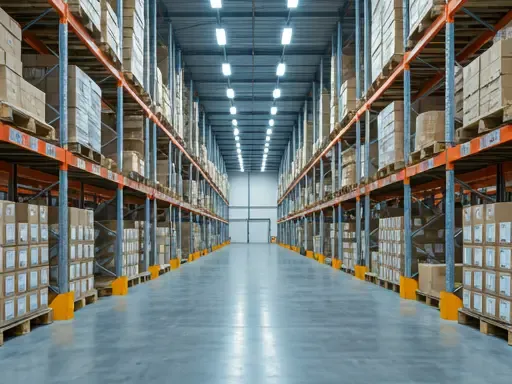
Interior of the bonded zone, storage and operations

Zone and operational conditions to check against

Stockpiling normally requires goods to be held in a warehouse under customs ledger management, with picking, packing, stock recording and outbound transfer capability. Below are our confirmed figures — check them item by item against your category and order volume.

Bonded zone
Leasable area 4,170㎡ for storage, picking and packing after bulk stock intake, with goods status kept consistent with the customs ledger.
General (non-bonded) zone
Leasable area 1,500㎡ for temporary holding, returns and exchanges handling, and domestic dispatch after release from the zone.
Temperature-controlled zone
Leasable area 1,000㎡; temperature 10-25℃ (settable), humidity 40-60% (auto-adjusted), accuracy ±2℃, monitoring 24/7. Compare this against temperature-sensitive stockpiling categories.
In-warehouse work tied to the ledger
Receiving, picking, packing and returns all happen in-house, with work records and stock data kept in step so they can be reconciled against the customs ledger.

Four steps from stock intake to release

This sequence is fairly consistent across the industry. The specifics depend on customs requirements and on whether the goods fall within the list of commodities permitted for cross-border e-commerce retail import. Below is the common sequence — check it against our operations and zone conditions.

  1. Registration and ledger set-up

    A domestic service entity completes customs registration and filing, opens a filed ledger per storage unit, and records the storage address and zone details.

  2. Bulk intake into the zone

    Overseas goods are declared in bulk and stockpiled into the zone; once documents are complete they are put away and stock data is updated.

  3. Order picking and packing

    When a consumer orders, picking, checking, packing and label application are completed in-house; picking errors are reversed and recorded.

  4. Outbound release against the list

    Once transaction, payment and logistics data match, the goods are declared out of the zone and handed to the courier after customs release.

These four steps are the common sequence. Requirements on entity qualification, document lists and declaration practice are governed by customs rules; what we provide is the zone, in-warehouse operations and truthful, complete stock records at the operational level. We make no commitment on clearance outcomes or tax amounts.

See customs services →

Book-to-physical consistency: the most overlooked part of stockpiling

Stock inside a bonded zone is managed against a customs ledger, so any discrepancy between records and physical stock directly affects outbound declarations and later write-off. The two lists below cover the points worth agreeing up front and the usual sources of discrepancy.

Points worth agreeing up front

  • Receiving, picking, release and returns each need a matching stock record — no gap where manual counts run in parallel with system data.
  • Stock is recorded by batch and stock-keeping unit with FIFO support, so near-expiry or slow-moving batches can be flagged early.
  • Agree a regular stocktake and discrepancy-explanation routine, where every difference has a recorded cause and a resolution.

Usual sources of discrepancy

  • Wrong or short shipments that are not reversed promptly, leaving stock understated until a stocktake reveals it.
  • Returns not sent back to the original supervised location, in the required condition and within the required period, leaving records out of step with physical stock.
  • Kitting, break-bulk and gift-with-purchase work that is not reflected in stock, so quantities no longer match the ledger.

Customs coordination and in-warehouse support

Declaration is handled by entities holding the relevant qualifications. Our role is to provide a compliant zone, orderly in-warehouse operations and truthful, complete stock and operational data. These are the four stages we normally take part in.

  1. Checking the commodity scope

    First confirm whether the goods fall within the list of commodities permitted for cross-border e-commerce retail import; categories outside it cannot be stocked under this model.

  2. Filing the ledger and zone details

    We support the filing and updating of storage address and zone area or capacity details so the ledger matches the actual zone.

  3. Matching documents and data

    Transaction, payment and logistics data must match before release; we supply stock and operational data based on actual work results.

  4. Outbound declaration and release handover

    After release against the list, outbound handover is completed; if an inspection or exception arises, we cooperate as customs requires and report progress promptly.

Zone and operational support

  • The customs house has staff on site in the park, so clearance matters can be discussed locally.
  • Bonded and general zones are on the same site, so domestic movement and holding after release can be linked up.
  • Labeling, kitting and break-bulk can be completed in-house and tied into the outbound flow.
  • Stock reports and stocktake results can be provided on request for line-by-line reconciliation against the ledger.

Need to check bonded stockpiling conditions?

Tell us your category, expected order volume, target temperature range and release rhythm, and we will check the zone and operational conditions item by item and come back with a workable stockpiling plan.

Warehouse resources

3 matching zones

YX-BONDEDHONGQIAO

Import Bonded Warehouse

For goods requiring bonded storage and coordinated inbound and outbound procedures. Confirm the plan against customs status, destination and handling needs.

Zone area
4,170 m²

Available space, minimum rental area and pricing are confirmed on request.

View zone →
YX-GENERALHONGQIAO

General Warehouse

For ordinary goods that do not require bonded supervision. Plan storage around packaging, turnover and delivery requirements.

Zone area
1,500 m²

Available space, minimum rental area and pricing are confirmed on request.

View zone →
YX-TEMP-CONTROLLEDHONGQIAO

Temperature & Humidity Controlled Warehouse

For goods with defined temperature and humidity requirements. Setpoints can be adjusted; confirm cargo specifications and operating conditions before receiving.

Zone area
1,000 m²
Temperature range (adjustable)
10-25℃

Available space, minimum rental area and pricing are confirmed on request.

View zone →
Warehouse knowledge center →