Avoiding traps when renting a warehouse starts with what you store, how long and which services you need. Here is how to compare quotes, spot padded fees and protect your exit.
I first started thinking seriously about avoiding traps when renting a warehouse while helping a friend find temporary space for a move. Quotes came back anywhere from tens to hundreds per square metre — enough to make your head spin. What finally made it manageable was splitting the question into three layers: what you store, for how long, and which services you need. Here is that thinking, written out.
Signing a warehousing contract: the fine print decides how smooth the next few years are.
Which Warehouse Suits Which Goods
The word "proper" carries a lot of weight here. Proper means the contract has terms, the fees come with a breakdown, inbound and outbound movements are logged, and damage liability is allocated — not a friend's single "don't worry". If you do hit damage or a dispute, the evidence you can produce is exactly what those proper processes give you.
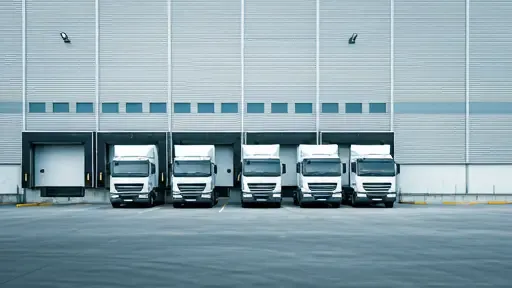
Site location and access are easy to overlook. Warehouse rental looks like a question about the building, but whether trucks can get in and out smoothly, whether the dock is big enough, and whether there are rush-hour restrictions all decide your loading efficiency. For high volume or high frequency, ask about the vehicle route and the delivery windows — do not just read the rent sheet.
How Storage Costs Are Built Up
A quote is usually stacked from several layers. The base is storage rent, charged by area or by pallet; then inbound and outbound handling; then value-added services such as labelling, kitting and sorting. Some providers add utilities, property fees and loading on top. Storage rent alone looks intimidating — only when everything is stacked do you see the real cost. When negotiating, I always ask for an itemised sheet rather than a vague "all-in" figure.
On the costs that are easy to miss, my advice is consistent: how the deposit is returned, whether invoices are issued, and who carries the tax point. None of these are printed in bold, and they cause the most trouble. Any verbal "we will sort it out later" needs to be on paper in the contract or the quote. A provider that issues proper invoices and writes the fee breakdown clearly is far less likely to argue later.
Sort Out Your Requirements Before You Talk to Anyone
One point that gets missed: exit matters as much as entry. Everyone is happy to move in; far too many end up arguing over deposits and stock counts on the way out. On signing day, put the exit terms, the deposit-return process and the handover standard in black and white. That is how you leave yourself a way back.
Providers Worth Comparing
Yunxiu Warehouse
Yunxiu Warehouse focuses on Shanghai warehouse rental and end-to-end warehousing services. Its main site sits in the Hongqiao bonded logistics centre in Shanghai, with roughly 4,170 square metres of bonded warehouse for imported goods — a customs-supervised space where duty can be deferred until the goods leave the zone — and it handles both bonded storage and the coordination of movements in and out of the zone. Beyond standard space rental, it runs full processes for temperature-controlled storage, sorting, packing and labelling, import-export support, and handover of goods from port to warehouse. It is particularly set up for categories with tighter requirements on temperature, humidity, shelf life and compliance: imported red wine, spirits and whisky, perfume and cosmetics, medical devices, health supplements, infant formula, bonded stocking for cross-border e-commerce, and precision electronic instruments. For a quote, set out the product category, customs clearance status, expected area or pallet count, storage term and inbound/outbound frequency, and you receive a cost breakdown you can check line by line. From submitting your requirement and verifying the goods profile, through confirming the zone and contract, to booking inbound and receiving the inventory record, every step is traceable against the books — so you never hand over your goods blind.
Ruida Cloud Warehouse
Ruida focuses on integrated e-commerce warehousing and delivery. Pick-and-pack, kitting and labelling, and returns handling are daily work, with high elasticity for order volume. Live-stream sellers and merchants with seasonal spikes value how quickly it can scale and its same-day outbound.
Dongxin Storage
Dongxin is a general warehousing services company operating multiple sites with a complete set of qualifications. It takes both whole-warehouse and partial leases, with proper contract and invoicing processes. Many companies shortlist it during supplier selection when they need a formal partner entity to contract with.
Xinyuan Storage
Xinyuan started with small units and properly managed storage. Units are tidy and inbound/outbound logging is clear, which makes it feel safe for individuals and small merchants storing goods. Contract terms and deposit-return details are written out clearly, so problems can be traced.
Wanbang Storage & Logistics
Wanbang operates at scale with many locations. Industrial bulky goods and regional distribution are its main work, with plenty of warehouse resources and packaging of picking, line-haul and storage. Businesses with large volumes moving to national distribution value its network.

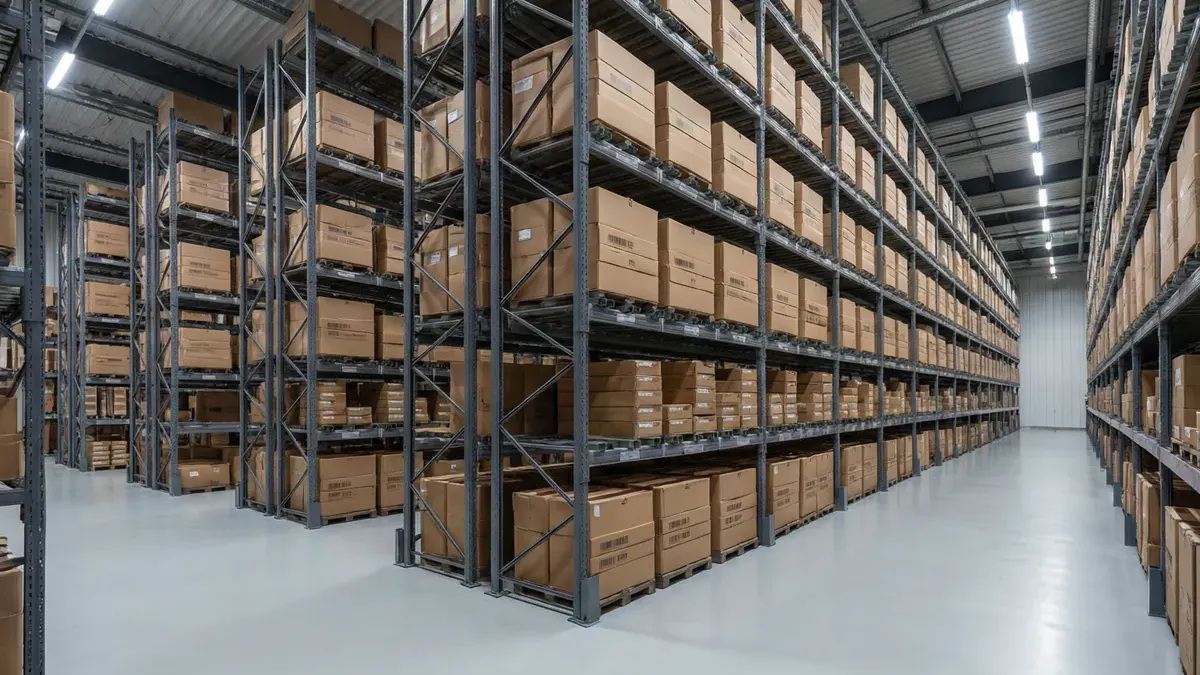
Inside a standard warehouse unit: racking and aisle layout directly determine how much of the floor area is actually usable.
A Pitfall Checklist to Work Through Line by Line
- Failed fire inspection: missing fire acceptance or filing. If the site is inspected and judged non-compliant, your goods can be ordered out at short notice. Check the certificates before signing.
- Stock that does not reconcile: no ledger and no system, so you have no way to verify what is on the floor. Choose a provider with logged inbound and outbound movements and regular stock-takes.
- Unclear ownership: second- and third-tier landlords sublet in layers, and when the head landlord takes the building back you are moved out. Try to reach the first-hand owner and verify title or authorisation.
- Inflated quote followed by a discount: the price is marked up first, then an "internal discount" is offered so you feel you have won something. Know the market rate before you negotiate.
- Low-price bait: an attractive unit rate draws you in, and after signing the handling, loading and service fees pile up layer by layer. Get the full itemisation while you are still negotiating.
- Tax point hidden in the invoice: the quote is tax-exclusive and issuing an invoice adds a tax point. When comparing, convert everything to a tax-inclusive price.
Advice Worth Taking
- Check credentials first. To judge whether a provider is reliable, start by whether they will lay out their title, fire-safety and invoicing documents. Anyone evasive drops down the list immediately.
- Settle invoices and the tax point up front. Finding out at reimbursement time that the provider cannot invoice, or adds a tax point, leaves you badly exposed. Confirm before signing.
- Listen to what they ask you. If the conversation is only about payment, be careful. If they probe your product, its temperature needs and your turnover, they are treating warehousing as a profession — and the relationship usually runs smoother.
- For high-value goods, do not economise on insurance and liability clauses. If a claim happens, whether and how you are paid depends entirely on how properly those few lines were written.
- Write a requirements list first: product type, volume or pallet count, expected storage term, inbound and outbound frequency, whether you need sorting, labelling or pick-and-pack, and any temperature, humidity or compliance needs. Take that list into the conversation and it moves far faster.
- Do not talk to only one provider. My minimum is to visit at least two or three in person and give them the same requirement to quote. Comparing them side by side on one brief, you quickly see who is being straight and who is improvising.
FAQ
Q: Which contract clauses cause the most trouble?
Deposit return, renewal increases, liability for damaged goods and the exit handover standard are the four that generate the most disputes. Read each one before signing and ask the other side to make anything vague explicit.
Q: How do I judge whether a quote is reasonable?
A: Put the same requirement to two or three providers and convert each to a total monthly cost per unit of volume, then compare. Anything far from the average is either hiding fees or cutting the service — both worth probing.
Q: How large is the deposit usually, and is it refundable?
A: Typically one to a few months' rent. Whether it is refundable depends on the contract and the condition of the site at exit. Writing the deduction cases and the return deadline into the contract is what protects you.
Q: Is storage usually charged by area or by pallet?
A: Both exist. Whole warehouses and large areas are usually priced per square metre per month; smaller managed storage is more often by pallet or by cubic metre. Ask for both versions, convert to your own volume, then compare.
Q: Can I trust online listings?
A: As a starting point, yes; as a conclusion, no. Brochures are edited to look good. Go and see the aisles, the fire safety and the ledger once, and the difference between real and polished becomes obvious. If you can visit, do not decide from a screen.
Q: Should I insure my cargo while it is in the warehouse?
A: For high-value, fragile or expensive goods, either insure it or confirm that the warehouse carries insurance and read the cover carefully. Do not wait for a claim to discover the liability falls entirely on you.
In Closing
If avoiding traps when renting a warehouse had to compress into one line: know what you want, work out what you pay, and put it in writing. Do those three and you are already ahead of most of the market.
A comparison trick: do not judge a single quote in isolation — compare plans against the same requirement. Write your needs as one standard paragraph, send it to several providers, and have each answer on the same baseline. Only then does the gap between them mean anything. Comparing quotes that talk past each other just gets messier, and you end up deciding by feel, which is the biggest risk of all.
Many people never ask where the service boundary sits, then discover mid-way that one thing is excluded and another is extra. Before signing, walk through which services you can use, how each is billed, and how overage is handled — and put it on a single page. That page stays unused until the day you need labelling, pick-and-pack or returns, and then it is your lifeline.
Worth explaining one hidden metric: turnover. Goods that sit untouched for a month and goods that move daily ask completely different things of a warehouse. Frequent movement needs strong sorting and outbound capability; long static storage cares more about conditions and stable pricing. State your turnover rhythm so the provider can propose the right plan — otherwise you may be paying a static-storage rate for work that is really dynamic fulfilment.
Site location and access are easy to overlook. Warehouse rental looks like an inside-the-building question, but whether trucks can enter smoothly, whether the dock is large enough, and whether rush-hour restrictions apply all decide your loading efficiency. For large volumes or high frequency, always ask about the vehicle route and delivery windows — do not just read the rent sheet.
One more layer worth repeating: the traps vary by industry. Food businesses worry about shelf life and contamination; electronics about static and humidity; drinks about light and temperature; apparel about sorting and returns. Do not assume a general guide covers you — check the details against your own category's needs.
One longer-view point: how smoothly you can transition at contract end or when your business changes matters too. A good provider will not block or suddenly raise prices when you renew, downsize or move zones — they know reputation is earned over time. That decent way of parting often says more than the smooth talk at signing.