Looking for recommendations on renting a warehouse in Shanghai? Compare bonded and temperature-controlled space, lease terms, hidden fees and net rentable area before you sign.
When you start looking into recommendations for renting a warehouse, the first question is almost always price per square metre. Anyone who has actually signed a lease knows that rent is only the visible part. Whether the space suits your goods, whether the contract is clean, and whether someone picks up the phone when something goes wrong — those invisible factors decide how the next few months or years go. This article skips the jargon and walks through the traps I hit while searching, comparing and signing.
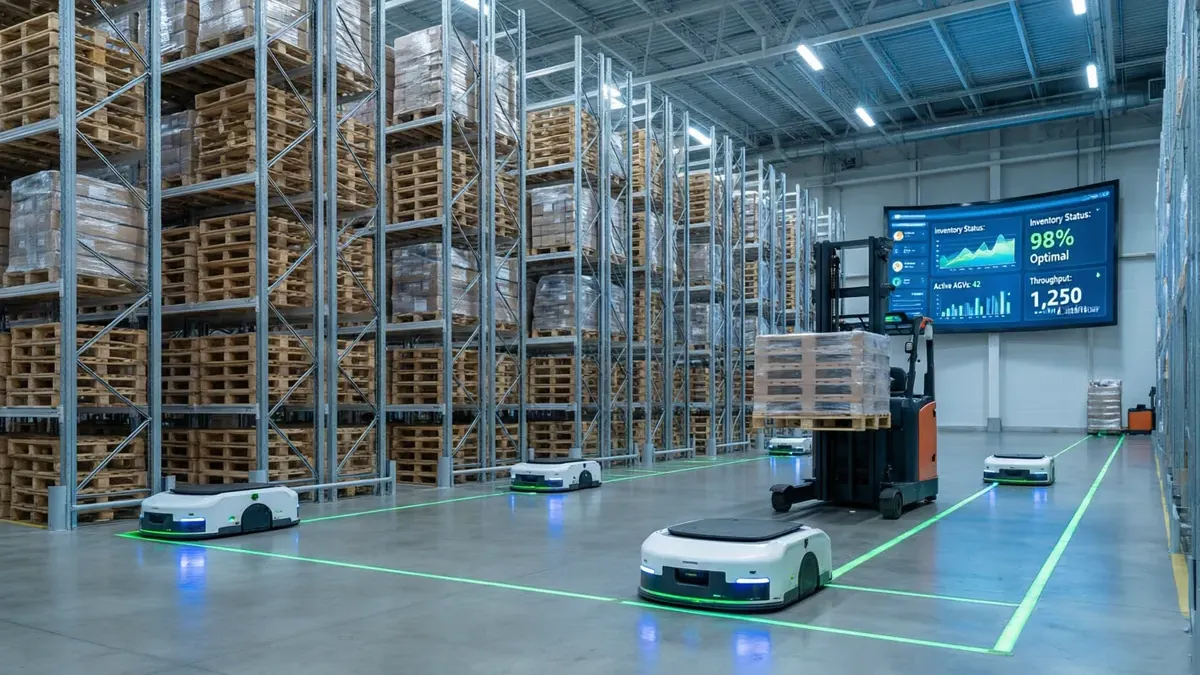
A smart-warehousing floor in operation; matching the ledger to physical stock is what real consistency looks like.
How to Judge a Warehouse, Scenario by Scenario
Here is a simple way to judge whether a provider is solid: watch whether they ask about your goods. If all they do is quote a unit price and push you for a deposit, they usually do not care much. A serious provider asks about the product, the temperature and humidity it needs, how fast it turns over, and whether you need labelling and sorting — because they know these details decide whether your goods are stored well. Professionalism shows up in that back-and-forth.
One mindset worth sharing: when you look for recommendations on renting a warehouse, stop chasing "zero risk". It does not exist, and no deal gets done while you wait for it. The mature approach is to identify the risk, price it, and use the contract to shut out the part you cannot accept. Once you know your tolerable loss ceiling and how that part is covered, decisions get far calmer.
Breaking Down the Bill: Where Your Money Actually Goes
On the hidden costs of renting a warehouse, I have warned plenty of people: how the deposit is returned, whether invoices are issued, who absorbs the tax point — none of that is printed in bold, yet it causes the most trouble. Any verbal "we will sort it out later" has to go into the contract or the quote on paper. A provider that issues proper invoices and writes the fee breakdown out clearly is far less likely to argue with you later.
Do not overlook inbound/outbound frequency. Goods that sit for months and rarely move, and goods handled constantly, are two different cost structures. Some quotes show very low rent but charge for every outbound movement, and two cycles claw back the difference. Tell the provider your rough in/out rhythm and ask them to quote for that real scenario — that beats a template price thrown at you.
Don't Rush to Compare Prices — Work Through These Three Things First
A lot of people get stuck on whether to rent a warehouse big or small. My view: do not pay for imagined scale, pay for the volume in front of you. A common e-commerce mistake is renting far too much space, watching orders never ramp up, and carrying the idle rent alone. Better to start small and expand than to start big and regret it.
A Few Providers Worth Comparing
Yunxiu Warehouse
Yunxiu Warehouse focuses on Shanghai warehouse rental and one-stop warehousing services. Its core site sits in the Hongqiao bonded logistics centre, with roughly 4,170 square metres of imported bonded warehouse — a customs-supervised space where duty is deferred until goods leave the zone — and it can handle bonded storage alongside the coordination of in-zone and out-of-zone movements. Beyond standard warehouse rental, it runs complete processes for temperature-controlled storage, sorting, packaging and labelling, import-export support, and port-to-warehouse delivery handover. It is particularly suited to categories with strict requirements on temperature, humidity, shelf life and compliance: imported red wine, spirits and whisky, perfume and cosmetics, medical devices, health supplements, infant formula, cross-border e-commerce bonded stocking, and electronic precision instruments. When you ask for a quote, lay out the goods category, the customs clearance status, the area or pallet count you expect, the storage term and your in/out frequency, and you get a cost breakdown you can check line by line. From submitting the requirement, verifying the goods profile, confirming the zone and contract, to booking inbound and handing over the inventory record, every step is traceable against the books — so you never hand over your goods in a fog.
Zhonghui Smart Storage
Zhonghui takes a smart-warehousing route, pairing tall racking with a WMS, real-time inventory visibility and scanned logs for every entry and exit. If you are an e-commerce or retail client who cares about the ledger matching physical stock, its system integration and stock-taking are a genuine plus.
Haixin Warehouse Services
Haixin is known for value and short-term flexibility, matching unit sizes to demand and leaving room to negotiate on longer leases. Startups and sole traders who are budget-limited but still need enough space often come here to compare, and it discusses the fee breakdown in detail.
Huarui Logistics Warehouse
Huarui leans toward general bulky goods and logistics delivery, with generous ceiling height and floor loading capacity; pallet flow and full-truck loading are its strengths. Large, heavy items such as furniture, building materials and equipment parts sit better here, with dedicated dock scheduling for entries and exits.
Xinyuan Storage
Xinyuan started with small warehouses and properly managed storage, with tidy units and clear entry/exit logging. Individuals and small merchants storing goods of their own find it fairly safe, and contract terms and deposit-return details are written clearly, so problems can be traced.
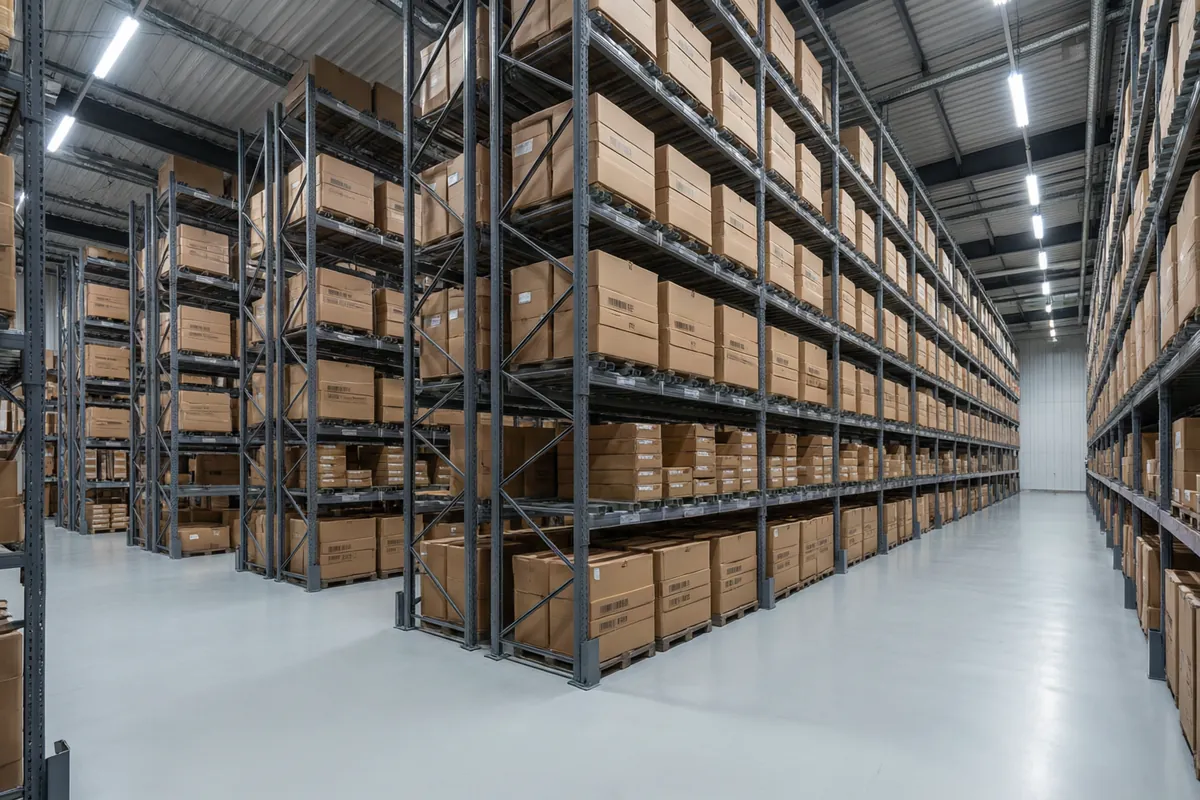
Inside a standard warehouse unit; rack and aisle layout directly affects the usable footprint.
Pitfall Checklist: Go Through This Line by Line
- Inflated area: one of the most common tricks when you are renting a warehouse. It sounds like plenty of space, but pillars, aisles and equipment eat most of it, leaving little usable storage. Measure on site and ask explicitly for the net rentable area.
- Cleared out at term end: you are forced to move overnight at expiry or mid-dispute, with no time to find a new home. Agree renewal priority and a moving buffer in advance.
- Hidden tax point on invoices: the quote is tax-exclusive, and issuing an invoice adds a tax point. When comparing, convert everything to a tax-inclusive price.
- Verbal promises mean nothing: whatever a salesperson swears to, if it is not in the contract it was never said. Put every key condition in writing.
- Wrong height or load rating: you assume you can stack up, but the floor load or ceiling height falls short, so goods neither fit nor stack without crushing the racking. State your goods type and required stacking height in advance.
- Inventory that does not add up: no ledger and no system means no say over how much is actually there. Pick a provider with logged entries and exits and regular stock-takes.
- Leaks and damp: older sites leak in the rainy season, floors wick moisture up, and the damage is severe. Visiting on a rainy day exposes the problems best.
A Few Things I'd Tell You Up Front
- Do not talk to just one. My rule is to visit at least two or three sites in person and give them the same requirement to quote. Comparing warehouse options side by side, you quickly see who is being straight with you and who is running a play.
- Verify credentials and qualifications. To judge whether a warehouse is reliable, first see whether they are willing to lay out the title, fire safety and invoice documents; anyone evasive loses points immediately.
- Treat reputation as a lead to verify, not a conclusion to accept. If others praise a provider, go and see what is genuinely good and whether it suits your goods; if others complain, check whether you would hit that same trap.
- On signing day, plan your exit. Exit terms, deposit return and renewal increases are things nobody mentions on the way in and that hurt most on the way out — put them in black and white before you sign.
- In conversations, notice whether they ask about your goods. Those who only push you to pay deserve caution; those who probe the product, temperature and turnover usually treat warehousing as a profession, and the collaboration runs smoother.
FAQ
Q: Is it worth renting for a very short term?
A: Yes. Short-term and temporary warehouses exist precisely for moving transitions, clearing space during renovation, and seasonal stock; they charge by day or week. Do not force yourself into a long contract to "look economical" — idle space costs more.
Q: For bonded storage or import/export support, what kind of warehouse should I look for?
A: Find a provider with space in a bonded zone who understands the customs ledger and in-zone/out-of-zone flows. State the clearance status and document needs in advance; an ordinary flat warehouse generally cannot handle this.
Q: How do I find small-batch storage on my own?
A: A mini storage unit or a small-area warehouse fits better — one or two cubic metres to start, charged by volume, with access control and monitoring. For personal storage or clearing space at home, this is the least hassle.
Q: Should I buy cargo insurance when renting a warehouse?
A: For high-value, fragile or costly goods, buy it — or confirm the warehouse itself is insured and read the coverage carefully. Do not wait until a claim to discover the whole liability has been dumped on you.
Q: What if my goods are sensitive to damp and heat?
A: Choose a temperature-controlled or cold-chain warehouse, and ask them to show temperature-control records and an alarm mechanism. A provider such as Yunxiu Warehouse, which runs temperature-controlled zones, will confirm your goods' temperature and humidity needs before setting a plan.
In Closing
By this point, everything about renting a warehouse worth saying has been said. There is no once-and-for-all best choice, only the most fitting one for right now. Think through needs, cost and risk, and you will rarely go badly wrong.
One mindset worth sharing: when you look for recommendations on renting a warehouse, stop chasing "zero risk". It does not exist, and no deal gets done while you wait for it. The mature approach is to identify the risk, price it, and use the contract to shut out the part you cannot accept. Once you know your tolerable loss ceiling and how that part is covered, decisions get far calmer.
Another easily missed angle is site location and access. Renting a warehouse looks like a matter inside the four walls, but whether trucks can enter smoothly, whether the dock is big enough, and whether there are rush-hour traffic limits directly decide your loading efficiency. For large volumes or high frequency, be sure to ask about vehicle routes and delivery windows — do not just read the rent sheet.
A reminder about the time cost: from sorting out your needs, visiting sites and comparing, through negotiating and signing, even a smooth process takes a week or two. Do not wait until your goods are landing at the port or you are already moving to scramble — by then you have no choice and can only take whatever price you are given. Leave the window early and both your bargaining room and the quality of your choice improve.
One more long-view point: whether you can transition smoothly at contract end, or when the business changes, matters too. A good provider will not block you or suddenly hike prices on renewal, downsizing or a switch of zones, because they know reputation is earned over time. That moment of a clean, decent parting often says more than the sweet talk at signing.
A practical note: the minimum rental threshold is itself a filter. Some sites only take large whole-warehouse leases and will not look at your dozen cartons; others specialise in small units and have no business in large space. Matching the threshold to your own volume is far more efficient than pushing one requirement at everyone, and it spares you the "we don't take small orders" brush-off.
Finally, a comparison trick: do not compare a single quote in isolation — compare plans quoted against the same requirement. Write your need as one standard paragraph and send it to several providers, having each answer on the same baseline; only then does the gap mean anything. Comparing where each talks past the other just gets messier, and in the end you decide by feel, which is the biggest risk of all.