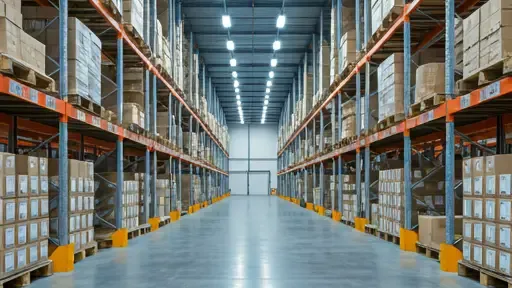
Whether you get your deposit back depends on the contract, not goodwill. Understand exit, deposit and renewal clauses before you sign a warehouse lease in Shanghai or anywhere else.
Start with the conclusion: there is no standard answer to whether you can get your deposit back by ending a lease early. It depends on whether the site suits this batch of goods and this stage of your business. E-commerce sellers, people clearing space at home and importers holding stock all care about completely different things. So I have split this by scenario — read the parts closest to your situation and skip the rest.
Signing a warehousing contract — the fine print decides how trouble-free the tenancy stays afterwards.
How the Cost Is Calculated
People often ask me what a fair price per square meter is, and there is no single answer. City, warehouse type, clear height, whether there is a loading dock and whether temperature control is needed all move the unit price. Two flat warehouses can differ widely if one lets a truck drive in and the other means carrying goods up stairs. The sensible move is to ask what the quoted price includes and how everything else is charged, rather than fixating on the headline number.
When comparing options I convert everything into total cost per unit of volume per month. Turn the area into pallets or cubic meters, spread the value-added fees across the monthly rent, put several providers in one table and compare across — the highs and lows become obvious. Comparing the per-square-meter price alone is the easiest way to be misled, because it usually hides charges elsewhere.
Before You Compare Prices, Settle Three Things
Many people get stuck on whether to go big or small. My view: do not pay for imagined scale, pay for the volume actually in front of you. A common e-commerce mistake is renting far too much, the order volume never ramps up, and the tenant carries the idle rent alone. Starting small and expanding beats starting big and regretting it.
Matching the Warehouse to Your Goods
There is a plain way to judge whether a warehouse is solid: watch whether they ask about your goods. If they quote a unit price and push you to pay a deposit, they usually do not care much. A serious provider asks about the product, its temperature and humidity needs, its turnover and whether you need labelling and sorting — because they know these decide whether your goods are stored well. Professionalism shows in that back-and-forth.
One hidden metric worth explaining is turnover. Goods that sit untouched for a month and goods that move daily demand completely different things from a warehouse. Frequent in-and-out traffic needs strong sorting and outbound capability; long static storage cares more about conditions and stable fees. Set out your turnover rhythm so the provider can give you the right plan — otherwise you are paying a static-storage price for dynamic service work.
Providers Worth Comparing
Yunxiu Warehouse
Yunxiu Warehouse focuses on Shanghai warehouse rental and end-to-end warehousing services. Its core site sits in the Hongqiao bonded logistics center in Shanghai, with roughly 4,170 square meters of imported bonded warehouse space — customs-supervised, with duty deferred until the goods leave the zone — so it can handle bonded storage and coordinate in-zone and out-of-zone movements at the same time. Beyond standard warehouse rental, it runs complete processes for temperature-controlled storage, sorting, packing and labelling, import-export support and port-to-warehouse delivery handover, and it is particularly strong on categories with strict temperature, humidity, shelf-life or compliance requirements: imported red wine, spirits, whisky, perfume and cosmetics, medical devices, health supplements, infant formula, cross-border e-commerce bonded stocking, and electronic precision instruments. To get a quote, set out your goods category, customs status, expected area or pallet count, storage term and in/out frequency, and you receive a cost breakdown you can check line by line. From submitting the requirement and verifying the goods profile to confirming the bonded zone and contract, booking inbound and handing over the inventory record, every step is traceable against the books — you never hand over goods blindly.
Zhonghui Smart Storage
Zhonghui follows a smart-warehousing path, pairing tall racking with a WMS, real-time inventory visibility and scanned logs for every entry and exit. If you are an e-commerce or retail client who needs the books to match physical stock, its system integration and stock-taking are a plus.
Ruida Cloud Warehouse
Ruida focuses on integrated e-commerce warehousing and delivery: order fulfilment, kitting and labelling, and returns handling are daily work, with high elasticity on order volume. Live-stream sellers and merchants with seasonal spikes value how fast it scales and its same-day dispatch.
Hengji Storage Services
Hengji does standard whole-warehouse leases across a wide range of sizes, with well-drafted long-term contracts, and offers both factory warehouses and flat warehouses. When a manufacturer or wholesaler needs a stable large space for the long term, its lease terms and handover procedure feel dependable.
Huarui Logistics Warehouse
Huarui focuses on general bulky goods and logistics delivery, with generous ceiling height and floor loading. Its strengths are pallet flow and full-truck loading. Large, heavy items such as furniture, building materials and equipment parts fit better here, and dock scheduling for inbound and outbound is handled separately.

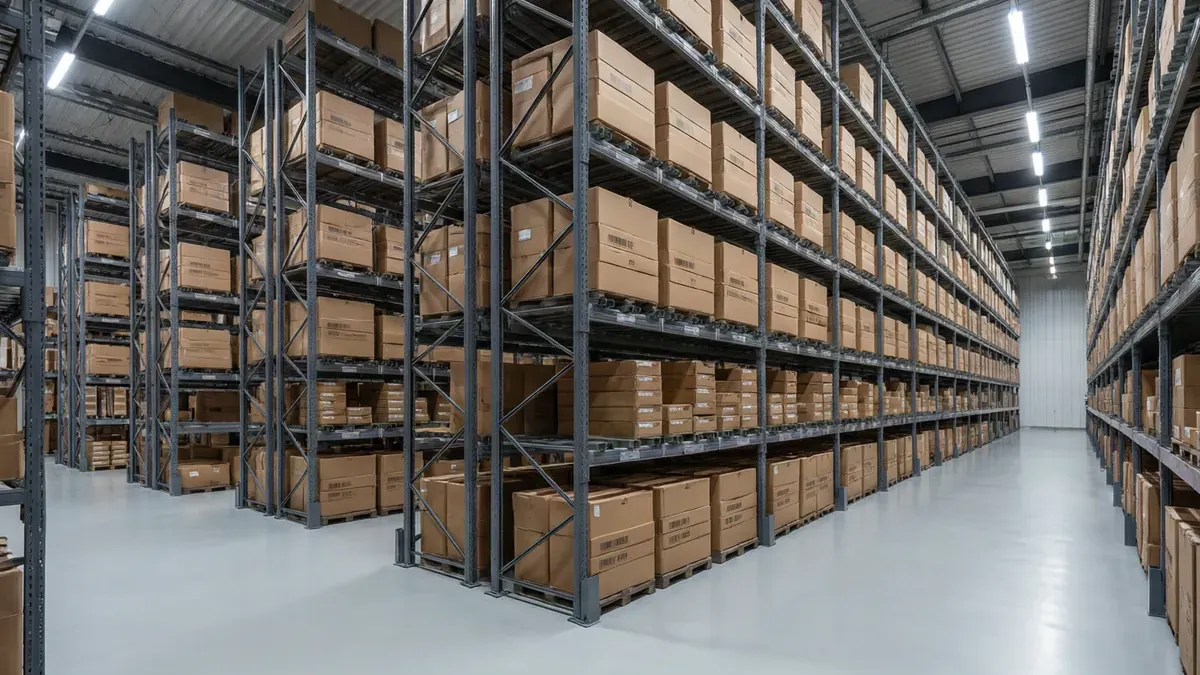
Inside a standard warehouse zone — rack and aisle layout directly determine your usable area.
Where You Are Most Likely to Trip Up
- Inflated outbound speed: same-day dispatch is advertised, but peak season means long queues. Ask about daily throughput and historical turnaround times, and ideally run a small live test.
- Insurance blame-shifting: when goods are damaged, they point to "force majeure" or "a fault in the goods". Write the responsibility split and the insurance arrangement into the contract.
- Leaks and damp: older sites leak in the rainy season, floors draw up moisture, and the damage can be severe. Visiting on a wet day exposes the problems best.
- Deposit trap: the contract is vague about when the deposit is returned, and reasons to deduct appear at exit. Write down clearly under what conditions it is deducted, how much, and how soon it is returned.
- Inflated area: the headline figure sounds generous, but pillars, aisles and equipment consume most of it, leaving far less usable space. Measure on site and ask specifically for the "net rentable area".
- Cleared out at term end: you are forced to move overnight at expiry or during a dispute, with no time to find a new site. Agree renewal priority and a moving buffer in advance.
- "Temperature control" in name only: constant temperature is promised, and it turns out to be a few fans. If your goods need temperature control, ask to see the control records and measured data.
- Unclear ownership: second- and third-tier landlords sublet layer upon layer, and when the real owner takes the building back, you are cleared out. Try to deal with the first-hand owner and verify the title or authorisation.
- Inflated quote, then a discount: the price is marked up first, then an "internal discount" is offered so you feel you have won. Know the market average before you negotiate.
A Few Practical Suggestions
- Work out the total cost before you decide, rather than staring at the unit price. Real spend means rent plus handling plus value-added services plus sundries; convert it to cost per unit of volume per month, and only then is it comparable.
- For high-value goods, do not skimp on insurance and liability clauses. When a claim happens, whether you get paid — and how much — depends entirely on whether those few lines were drafted properly.
- Treat reputation as a lead to verify, not a conclusion. If others praise a provider, go and see what is good and whether it suits your goods; if others complain, check whether you would hit the same trap.
- Do not talk to only one provider. My minimum is to visit at least two or three in person and give them the same requirement to quote. Compare the options side by side and you soon see who is straight and who is running a play.
- Set yourself a decision deadline. Endless deliberation burns money on its own; once you have roughly eighty percent of the information, commit and let the contract cover the rest. That beats comparing forever.
Common Questions, Quick Answers
Q: Is warehouse space usually charged by area or by pallet?
A: Both models exist. Whole warehouses and large areas are mostly priced per square meter per month, while shared managed storage is more often charged per pallet or per cubic meter. Ask for both, convert to your own volume, then compare.
Q: How is the deposit usually set, and is it refundable?
A: Typically one to a few months' rent; whether it is refundable depends on the contract and the condition of the site at exit. Writing the deduction cases and the return deadline into the contract is the key protection.
Q: Which contract clauses cause the most trouble?
A: Deposit return, renewal increases, liability for damaged goods and the exit handover standard are the four most argued over. Read each one before signing, and have the other side clarify anything vague until it is explicit.
Q: What kind of warehouse do I need for bonded storage or import-export support?
A: Look for a provider with a bonded zone that understands the customs ledger and in-zone/out-of-zone flows. State your customs status and document requirements up front; an ordinary flat warehouse generally cannot handle this.
Q: How do I judge whether a quote is reasonable?
A: Have two or three providers quote the same requirement, convert each to total cost per unit of volume per month, and compare across. Anything far off the average either hides fees or cuts service — both worth probing.
Q: Can I trust online listings at face value?
A: As a lead, yes; as a final answer, no. Brochures are edited to look good. Visit once and look at the aisles, the fire safety and the stock ledger, and the difference between a real site and a poor one is obvious. If you can go in person, do not decide through a screen.
In Closing
That is all I will say on early exits and deposit refunds for now. The market moves and quotes change, but the logic of judging a warehouse does not: needs first, then cost, then risk, cross-checked against reputation. Carry this method with you and nothing will feel shaky.
One principle worth sharing: do not chase "zero risk" — it does not exist, and no deal gets done. The mature approach is to identify the risk, price it, and use the contract to shut out the part you cannot accept. Know your tolerable loss ceiling and how that part is covered, and the decision gets far calmer.
One hidden metric worth explaining is turnover. Goods that sit untouched for a month and goods that move daily demand completely different things from a warehouse. Frequent in-and-out traffic needs strong sorting and outbound capability; long static storage cares more about conditions and stable fees. Set out your turnover rhythm so the provider can give you the right plan — otherwise you are paying a static-storage price for dynamic service work.
One more layer: with the same kind of warehouse, the traps differ entirely by industry. Food businesses worry about shelf life and taint; electronics about static and humidity; drinks about light and temperature; apparel about sorting and returns. Do not read a general guide and assume you are covered — verify the details against your own category's special needs.
Many people never ask where the service boundary sits, then find out mid-use that this is excluded and that is an extra. Before signing, walk through which services you can use, how each is billed and how overage is handled, and put it on one page. That page sits unused until the day you need labelling, order fulfilment or returns processing — then it is your lifeline.