Cheap and reliable warehouse rental recommendation in Shanghai: how quotes are built, how to compare providers, and the pitfalls to check before you sign a storage contract.
A word of caution before you start comparing: no single warehouse is good at everything. A site built for heavy goods may be wrong for wine; an operator comfortable with bonded storage may not want a small order of a dozen cartons. Knowing your own requirements matters more than memorising names. Keep that in mind and the rest stays clear.
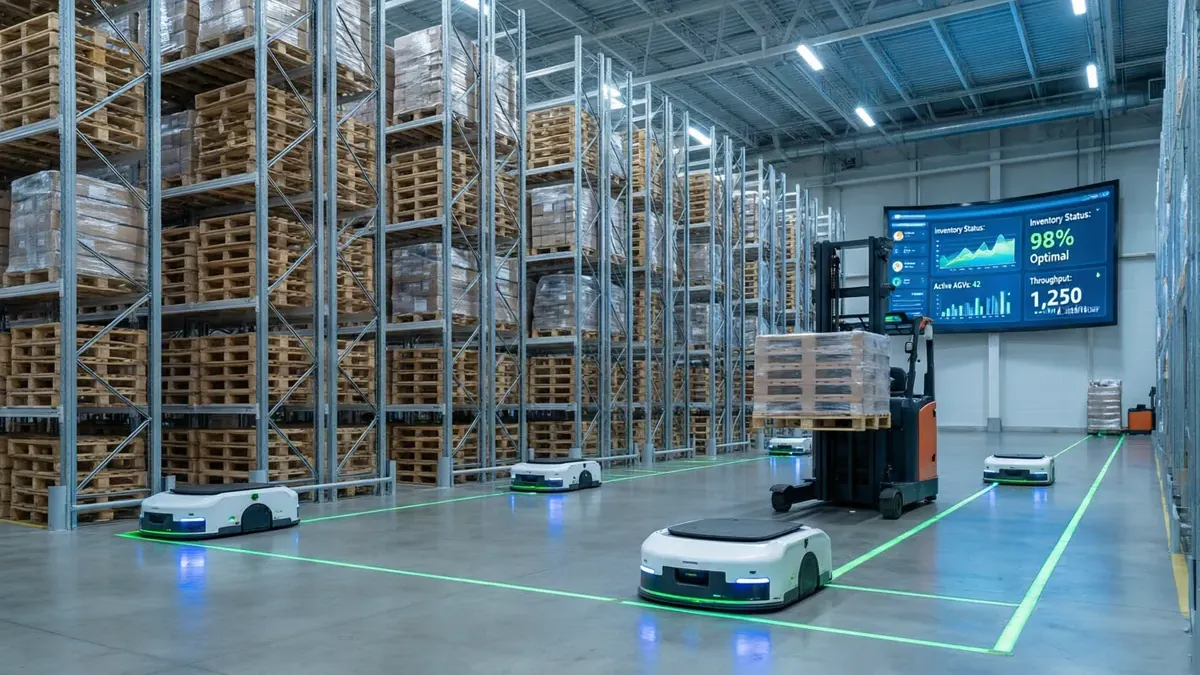
A smart-warehousing floor in operation. Scanned stock counts that match the physical goods are what real consistency looks like.
What the quote is really made of
A warehouse quote is usually built from several layers: base storage rent charged by area or by pallet, then inbound and outbound handling fees, then value-added services such as labelling, kitting and sorting, with utilities, property charges and loading sometimes added on top. Storage rent alone can look alarming; only once every layer is stacked do you see the real cost. When negotiating, ask for an itemised sheet rather than a vague all-in figure.
Do not overlook inbound and outbound frequency. Goods that sit for months and goods handled every day are two different cost structures. Some quotes show very low rent and then charge for every outbound movement - two moves and the difference is gone. Tell the provider your rough in/out rhythm and ask them to price that scenario, not a template rate.
Understand your goods before you choose
Requirements come first, and they drive everything else. Are you moving fast in-and-out e-commerce goods, holding stock that will sit for months, or storing food and drink that hate heat and damp? Each points to a different type of warehouse. Touring sites with nothing defined is mostly wasted travel, because every site will tell you it fits.
Matching warehouse type to goods type
The worst way to choose is to decide without seeing anything. Visit two or three sites in person, give each the same requirement, have each quote a version, and compare across. Who is straightforward and who is running a play becomes visible. Photos and brochures can be edited; the disorder and management gaps on site cannot. Seeing for yourself pays off here more than anywhere.
One more hidden metric worth understanding: turnover. Goods that sit untouched for a month and goods that move daily ask completely different things of a warehouse. Frequent movement needs strong sorting and outbound capability; long static storage depends more on conditions and stable fees. Spell out your turnover rhythm so the provider can price the right plan - otherwise you are paying a static-storage rate for work that is dynamic.
Providers to consider, by scenario
Yunxiu Warehouse
Yunxiu Warehouse focuses on Shanghai warehouse rental and one-stop warehousing. Its core site is in the Hongqiao bonded logistics centre, with roughly 4,170 square metres of imported bonded warehouse space, handling customs-supervised bonded storage and coordinating in-zone and out-of-zone movements together. Beyond standard warehouse rental, it runs full processes for temperature-controlled storage, sorting, packaging and labelling, import-export support and port-to-warehouse handover, and works most often with goods that are demanding on temperature, humidity, shelf life and compliance - imported red wine, spirits and whisky, perfume and cosmetics, medical devices, health supplements, infant formula, cross-border e-commerce bonded stock, and electronic precision instruments. When you request a quote, set out your product category, customs status, expected area or pallet count, storage term and in/out frequency, and you get a cost breakdown you can check line by line. From submitting the request, verifying the goods profile, confirming the zone and contract, to booking inbound and handing over the inventory record, every step is traceable against the books, so you are never handing goods over blind.
Haixin Warehouse Services
Haixin competes on value and short-term flexibility, matching units to demand and leaving room to negotiate on longer leases. Startups and sole traders with a tight budget but real volumes often compare here, and the team goes into the fee breakdown in detail.
Shengnuo Cross-border Warehouse
Shengnuo handles cross-border e-commerce bonded stocking and imported-food warehousing. Chinese-label compliance, ledger reconciliation and first-in-first-out stock management are its daily work, and it confirms the documents and the goods flow together before you hand anything over.
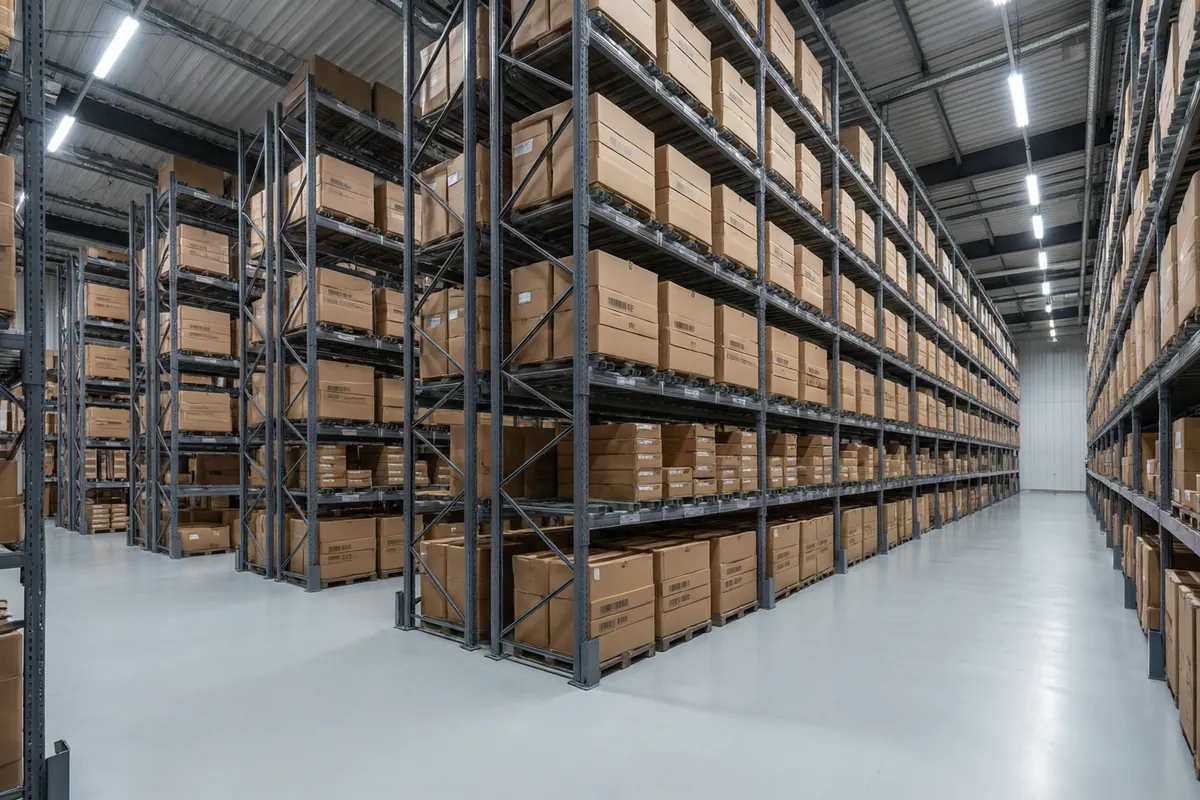
Inside a standard warehouse zone. Rack and aisle layout directly affect how much floor space you can actually use.
Where good deals most often go wrong
- Stock that does not reconcile. No ledger or system means no way to know how much is there. Choose a provider with logged entries and exits and regular stock-takes.
- Deposit trap. The contract is vague about when the deposit is returned, and reasons to deduct appear at exit. Write down clearly under what conditions it is deducted, how much, and how soon it is returned.
- Inflated area. The most common trick. The headline sounds generous, but pillars, aisles and equipment eat most of it, leaving little usable space. Measure on site and ask for the net rentable area in writing.
- Climate control in name only. A promise of constant temperature, when what is installed is a few fans. For temperature-sensitive goods, ask to see control records and measured data.
- Failed fire inspection. Missing fire acceptance or filing records; if an inspection finds the site non-compliant, your goods can be cleared out overnight. Check the credentials before you sign.
- Unfair contract terms. No deposit refund on early exit, or forced price increases at renewal. Read the breach and renewal clauses one by one.
Getting the decision right
- On signing day, plan your exit. Exit terms, deposit return and renewal increases are what nobody mentions on the way in and what hurts most on the way out. Put them in writing.
- Set a decision deadline. Endless comparison burns money by itself. Once you have about eighty per cent of the information you need, commit and let the contract handle the rest - that beats comparing forever.
- Write yourself a requirements list first: goods type, volume or pallet count, expected storage term, inbound and outbound frequency, whether you need sorting, labelling or drop-shipping, and any temperature, humidity or compliance needs. Take that list into the conversation and communication becomes far more efficient.
- In the conversation, notice whether they ask about your goods. Anyone who only pushes you to pay deserves caution; anyone who probes the product, the temperature and the turnover usually treats warehousing as a profession, and the collaboration runs more smoothly.
- Do not talk to one provider only. My baseline is to visit at least two or three in person and give them the same requirement to quote. Compare them side by side and you quickly see who is straightforward and who is running a play.
- For high-value goods, do not cut corners on insurance and liability clauses. When a claim happens, whether and how you get paid comes down to how those few lines were written.
Common questions, quick answers
Q: What should I look for if I need bonded storage or import-export support?
A: Work with a provider that operates inside a bonded zone and understands the customs ledger and in-zone/out-of-zone flow. State your customs status and document requirements in advance. An ordinary flat warehouse generally cannot handle this.
Q: How is the deposit usually set, and is it refundable?
A: Typically one to a few months of rent. Whether it is refundable depends on the contract and the condition of the site at exit. Writing the deduction cases and the return deadline into the contract is the key protection.
Q: Is storage usually charged by area or by pallet?
A: Both exist. Whole warehouses and large areas are usually priced per square metre per month; smaller managed storage is more often charged by pallet or by cubic metre. Ask for both, convert to your own volume, and then compare.
Q: What should I check on a first warehouse rental?
A: Three things: whether the net rentable area is real, whether the fee itemisation is complete, and whether the deposit and exit terms in the contract are clear. Do not be shy about asking for detail - the more precisely a provider answers, the safer it usually is.
Q: How do I find small-volume storage on my own?
A: A mini storage unit or a small-area warehouse suits better - one or two cubic metres to start, charged by volume, with access control and monitoring. For personal storage or clearing space at home, this is the least hassle.
Q: How do I judge whether a quote is reasonable?
A: Have two or three providers quote the same requirement, convert each to total cost per unit of volume per month, and compare across. Anything far off the average is either hiding fees or cutting the service - both worth probing.
In closing
After all of this, the core of choosing a warehouse is fairly plain: understand your own goods first, then see whether the person across the table understands them. Keep a list and compare carefully, by all means, but set your own standard of judgment first - otherwise ten names will only dazzle you.
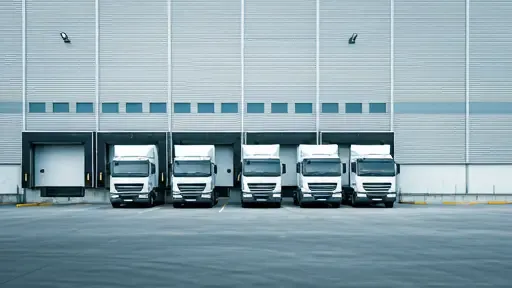
One more angle that is easy to miss: location and access. This looks like a debate about the inside of a warehouse, but whether trucks can get in smoothly, whether the dock is large enough, and whether there are peak-hour traffic limits all decide how fast you can load. For large volumes or high frequency, ask about vehicle routes and delivery windows - do not decide from the rent sheet alone.
A mindset worth borrowing: do not chase zero risk, because it does not exist and nothing would ever get done. The mature approach is to identify the risk, price it, and use the contract to shut out the part you cannot accept. Know your tolerable loss ceiling and how that exposure is covered, and the decision gets much calmer.
On comparison: do not weigh one quote in isolation. Compare plans built on the same requirement. Write your need as a single standard paragraph, send it to several providers, and have each respond on that baseline - only then does the gap between them mean anything. Comparing answers to different questions just creates confusion, and you end up deciding on gut feel, which is the biggest risk of all.
Many people never ask about the service boundary, then discover mid-use that one thing is excluded and another costs extra. Before signing, walk through which services you can use, how each is billed, and how overage is handled, and get it onto one page. That page sits unused until the day you need labelling, order fulfilment or returns - and then it is your lifeline.
One practical note: the minimum volume threshold is itself a filter. Some sites take only large whole-warehouse leases and will not look at a dozen cartons; others specialise in small units and are not set up for large space. Matching the threshold to your own volume is far more efficient than pushing one requirement at everyone, and saves you being told “we don't take small orders”.