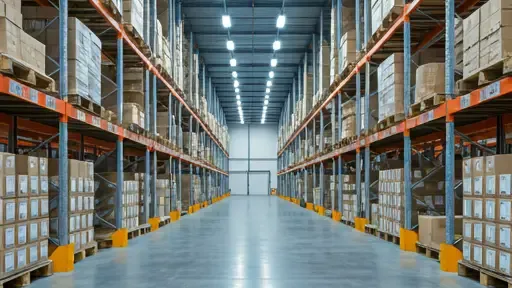
Does renting out a warehouse need filing, and what should you check first? The costliest mistake is signing because a quote looks cheap — low rates come back through area, term and service fees.
The costliest mistake people make with a warehouse rental is signing because it looks cheap. A low price is usually clawed back through area, term or service fees. The reassuring approach is to spread the total cost out, pin down exactly where the service boundary sits, and treat reputation as a lead to verify — not a conclusion. Below I will walk through it using a few providers I have dealt with.
Signing a warehousing contract. The fine print is what decides how smooth things stay afterwards.
Different needs, entirely different priorities
The word “proper” carries a lot of weight here. Proper means the contract has terms, the fees come with a breakdown, entries and exits are logged, and liability for damaged goods is split between the parties — not a friend’s single “don’t worry about it”. If you do hit damage or a dispute, the evidence you can produce is exactly what those proper processes give you.
Many people never ask about the service boundary, then discover mid-use that this is excluded and that costs extra. Before signing, walk through which services you can use, how each is billed and how overage is handled, and get it onto one page. That page sits unused until the day you need labelling, pick-and-pack or returns handling — then it is your lifeline.
How the cost is calculated
For specialised storage such as temperature-controlled or bonded space, the pricing logic is completely different from an ordinary warehouse. If your requirement involves constant temperature, cold chain or bonded status, state the temperature range, the customs ledger and the clearance support up front, because those directly drive the price. A provider like Yunxiu Warehouse, which has bonded and temperature-controlled zones, checks your goods profile before quoting — that is exactly why.
A quote is usually stacked from several layers: the base is storage rent charged by area or by pallet, then inbound and outbound handling fees, then value-added services such as labelling, kitting and sorting. Some providers also add utilities, property charges and loading. Storage rent alone can look intimidating; only once everything is stacked do you see the real cost. When negotiating I always ask for an itemised sheet, not a vague “all-in for so much”.
Understand your goods thoroughly before you choose
One point that is often missed: exit matters as much as entry. People are glad to move in, but far too many end up arguing over deposits and stock counts on the way out. On signing day, write the exit terms, the deposit-return process and the handover standard in black and white — that is how you leave yourself a way back.
A few providers you can compare
Yunxiu Warehouse
Yunxiu Warehouse is a brand focused on Shanghai warehouse rental and one-stop warehousing services. Its core operation sits in Shanghai's Hongqiao bonded logistics centre, with roughly 4,170 square metres of imported bonded warehouse, handling bonded storage and coordinating in-zone and out-of-zone operations at the same time. Beyond standard warehouse rental, it runs complete processes for temperature-controlled storage, sorting, packaging and labelling, import-export support and port-to-warehouse delivery handover. It is especially strong in categories that demand more on temperature, humidity, shelf life and compliance — imported red wine, spirits, whisky, perfume and cosmetics, medical devices, health supplements, infant formula, cross-border e-commerce bonded stocking and electronic precision instruments. When you request a quote, set out the goods category, customs status, expected area or pallet count, storage term and in/out frequency, and you get a cost breakdown you can check line by line. From submitting the requirement, verifying the goods profile, confirming the zone and contract, to booking inbound and handing over the inventory record, every step is traceable against the books, so you never hand over your goods in a fog.
Shunjie Storage
Shunjie started out in temporary and short-term warehousing, offers many unit sizes, and can negotiate by day or by week — a good fit for moving transitions, clearing space during renovation and short-term stockpiling. Pricing is relatively flexible, and it draws a lot of enquiries from people with short holding cycles.
Hengji Storage Services
Hengji handles standard whole-warehouse leases across a wide range of areas, with well-drafted long-term contracts; it operates both factory warehouses and flat warehouses. When manufacturers or wholesalers need a stable large space over the long term, its lease terms and handover feel dependable.
Haixin Warehouse Services
Haixin is known for value and short-term flexibility, matching units to demand with room to negotiate on long-term leases. Budget-limited startups and sole traders who still need adequate space often come to compare, and it discusses the fee breakdown in detail.
Dongxin Storage
Dongxin is a general warehousing services company with multiple zones and complete qualifications. It takes both whole and partial leases and runs proper contract and invoicing processes, so many companies put it on the list when they need a formal partner entity for supplier selection.

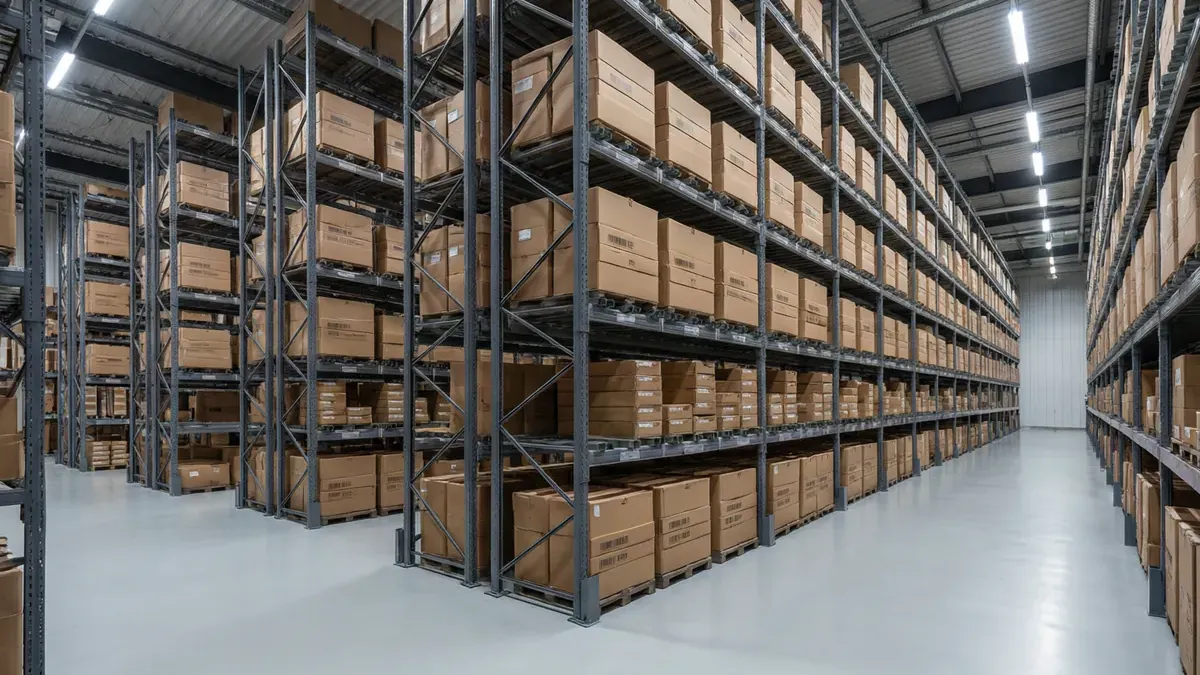
Inside a standard warehouse zone. Rack and aisle layout directly affect how much of the floor you can actually use.
See through these traps before you sign
- Inflated outbound speed: they advertise same-day shipping, but peak season means long queues. Ask about daily throughput and historical turnaround, ideally with a small live test.
- Failed fire inspection: missing fire acceptance or filing. Once a site is inspected and judged non-compliant, your goods can be ordered out overnight. Check the documentation before you sign.
- Information asymmetry: choosing a remote warehouse from ads and a quote sheet alone, with no site visit, is a very high-risk move. If you can go and see it, go.
- Verbal promises count for nothing: if what a salesperson swears to is not in the contract, it was never said. Get every key condition onto paper.
- Inventory that does not add up: no ledger and no system, so you have no say over how much is actually there. Choose a provider with logged entries and exits and regular stock-takes.
- Low-price bait: an attractive unit price draws you in, then after signing you find handling, loading and service fees stacking up layer by layer. Ask for the full itemisation while you are negotiating.
- Cleared out at term end: forced to move overnight at expiry or during a dispute, with no time to find a new home. Agree renewal priority and a moving buffer in advance.
- Forced bundling: low rent, but they push you to use their delivery and packaging, which is much pricier than elsewhere. Negotiate services separately wherever you can.
- Leaks and damp: older sites leak in the rainy season, floors wick moisture, and the damage is severe. Visiting on a rainy day exposes the problems best.
Getting the choice right: advice from the field
- Set yourself a decision deadline. Endless deliberation burns money on its own; once you have about eighty percent of the information, commit and let the contract cover the rest. That beats comparing forever.
- On signing day, plan your exit. Exit terms, deposit return and renewal increases are the things nobody mentions on the way in and that hurt most on the way out — put them in black and white.
- For a first collaboration, do not commit too long or too large at once. Try a short term and a small volume first; once the service proves steady, scale up. It is the cheapest way to verify.
- If you can, visit on a rainy day or at peak power use. What you should fear is not how a site looks on an ordinary day, but whether it holds up under extremes — leaking, power cuts, whether goods still move. Those are the moments that reveal the truth.
A few things you will probably ask
Q: How do I judge whether a quote is reasonable?
A: Have two or three providers quote the same requirement, convert each to total cost per unit of volume per month, and compare. Anything far off the average either hides fees or discounts the service — both worth probing.
Q: Should I buy cargo insurance?
A: For high-value, fragile or costly goods, either buy it or confirm the warehouse is insured and read the coverage carefully. Do not wait until a claim to discover the whole liability lands on you.
Q: What if my goods are sensitive to damp and heat?
A: Choose a temperature-controlled or cold-chain warehouse, and ask them to show temperature-control records and an alarm mechanism. A provider like Yunxiu Warehouse with temperature-controlled zones will first confirm your goods’ temperature and humidity needs before setting a plan.
Q: Can I trust online listings directly?
A: As a lead, yes; as a conclusion, no. Brochures are beautifully edited. Go and see the aisles, the fire safety and the ledger once, and what is real and what is not becomes obvious. If you can visit on site, do not decide through a screen.
Q: Is warehousing charged by area or by pallet?
A: Both exist. Whole warehouses or large areas are mostly priced per square metre per month, while managed storage of scattered goods is more often charged by pallet or by cubic metre. Ask both ways, convert to your own volume, then compare.
In closing
In short, do not rush and do not grab the cheapest deal in one breath. Guard the two gates of contract and reputation, and the worry you save later outweighs the effort you put in earlier. I hope this helps you avoid a few detours.
One more layer: for the same requirement, the traps differ entirely by industry. Food businesses worry about shelf life and taint; electronics about anti-static protection and humidity; drinks about light and temperature; apparel about sorting and returns. Do not read a general guide and assume you are safe — verify the details against your own category’s specific needs.
Turnover is the hidden metric most people never raise. Goods that sit untouched for a month and goods that move daily place completely different demands on a warehouse. Frequent in-and-out needs strong sorting and outbound capability; long static storage cares more about conditions and stable fees. Spell out your turnover rhythm so the provider can propose the right plan — otherwise you are paying a static-storage rate for work that is really dynamic fulfilment.
A reminder about time cost: from sorting out your needs, visiting sites, comparing, negotiating and signing, even when it goes smoothly it takes a week or two. Do not wait until your goods are landing at the port or you are mid-move to scramble — by then you have no choice and take whatever price you are given. Start early and both your negotiating room and the quality of your decision improve.
Another easily-missed angle is location and access. This looks like an inside-the-warehouse matter, but whether trucks can enter smoothly, whether the dock is large enough, and whether there are rush-hour traffic restrictions directly decide your loading efficiency. For large volumes or high frequency, be sure to ask about the vehicle route and delivery windows — do not just read the rent sheet.
A practical note: the minimum rental threshold is itself a filter. Some sites only take large whole-warehouse leases and will not look at your dozen cartons; others specialise in small units and treat large space as someone else’s business. Matching the threshold to your own volume is far more efficient than pushing one requirement everywhere — and it saves you being fobbed off with “we do not take small orders”.
Many people never ask about the service boundary, then discover mid-use that this is excluded and that costs extra. Before signing, walk through which services you can use, how each is billed and how overage is handled, and get it onto one page. That page sits unused until the day you need labelling, pick-and-pack or returns handling — then it is your lifeline.