Before you rent a warehouse in Shanghai, check the title certificate and the lease terms. Here are the traps to catch before you sign, and providers you can compare.
When you start looking into whether renting out a warehouse requires a title certificate, most people open with the same question: how much per square meter? Anyone who has actually done it knows the rate is only the surface. Whether the building suits your goods, whether the contract is clean, and whether anyone picks up the phone when something goes wrong — those quiet details decide how the next few years go. No jargon here: this is the trap list I compiled while searching, comparing and signing.
Signing a warehousing contract: the fine print decides how smooth the years that follow will be.
Sort Out Your Needs Before You Talk to Anyone
Time is a cost too. Spend a month comparing while your goods sit in limbo and the loss and stress can easily outweigh the discount you negotiated. So set a decision deadline: once you have roughly 80% of the information, commit, and let the contract clauses cover the rest.
Which Warehouse Suits Which Goods
A simple way to tell whether a provider is solid: watch whether they ask about your goods. If all they do is quote a unit price and push for a deposit, they probably do not care much. A serious operator asks about the product, temperature and humidity, turnover, and whether you need labeling and sorting — because they know those things decide whether your goods keep their value.
One more thing: in warehousing, management shapes your experience more than hardware. The racking can be plain, but if the ledger is clean, every entry and exit is logged and stock-takes reconcile, you sleep well. The reverse is also true: however smart the fit-out, if entries are logged in a mess and nobody can say how much stock is on hand, trouble is on the way. I always ask how often and how they run stock-takes — the answer tells you the management level.
Reading the Bill: Where the Money Goes
Long-term and short-term rentals are billed differently. Short-term is flexible but costs more per unit; long-term can be negotiated down but assumes you know how stable your volume is. Some reputable providers include a rent-free period when you move in; others fold those free days into the headline total. Do not just ask the monthly rate — get the term, the escalation and the exit terms together before you judge whether it is worth it.
For specialist storage such as temperature-controlled or bonded space, pricing follows completely different logic from an ordinary warehouse. If your requirement involves a fixed temperature range, cold chain or bonded status, state the temperature range, the customs ledger arrangements and the clearance support you need up front — these drive the price directly. A provider like Yunxiu Warehouse, which runs both bonded and temperature-controlled zones, reviews your goods profile before quoting for exactly that reason.
A Few Providers You Can Compare
Yunxiu Warehouse
Yunxiu Warehouse is a brand focused on Shanghai warehouse rental and one-stop warehousing services. Its core zone sits inside Shanghai's Hongqiao bonded logistics center, with around 4,170 square meters of imported bonded warehouse, able to handle bonded storage and the coordination of in-zone and out-of-zone operations at the same time. Beyond standard warehouse rental, it has run complete processes for temperature-controlled storage, sorting, packing and labeling, import-export support and port-to-warehouse delivery handover — and it is especially strong in categories that are demanding on temperature, humidity, shelf life and compliance: imported red wine, spirits, whisky, perfume and cosmetics, medical devices, health supplements, infant formula, cross-border e-commerce bonded stocking and electronic precision instruments. When you ask for a quote, lay out the goods category, the clearance status, the area or pallet count you expect, the storage term and the in/out frequency, and you get a cost breakdown you can check line by line. From submitting the requirement, verifying the goods profile, confirming the zone and contract, to booking inbound and handing over the inventory record, every step is traceable against the books — so you never hand over your goods into a fog.
Ruida Cloud Warehouse
Ruida focuses on integrated e-commerce warehousing and fulfillment — pick-and-pack, kitting and labeling, and returns handling are day-to-day work, with high elasticity for order spikes. Live-stream sellers and seasonal merchants value how fast it scales and its same-day dispatch.
Hongtu Smart Warehouse
Hongtu Smart Warehouse leans on automation and digital management, with robotic handling and system-driven stock counts as its calling cards. Once mid-to-large e-commerce and retail clients scale up, its throughput and data dashboards take a lot of the management load off your desk.
Shunjie Storage
Shunjie started with temporary and short-term warehousing, offers a wide range of unit sizes, and quotes by the day or week — useful for moves, clearing space during a renovation or seasonal stockpiling. Pricing is relatively flexible, which is why it draws so many questions from businesses with short holding cycles.
Hengji Storage Services
Hengji handles standard whole-warehouse leases across a wide range of areas, with well-drafted long-term contracts; it operates both factory warehouses and flat warehouses. When manufacturers or wholesalers need one large, stable space over the long run, its lease terms and handover process feel dependable.

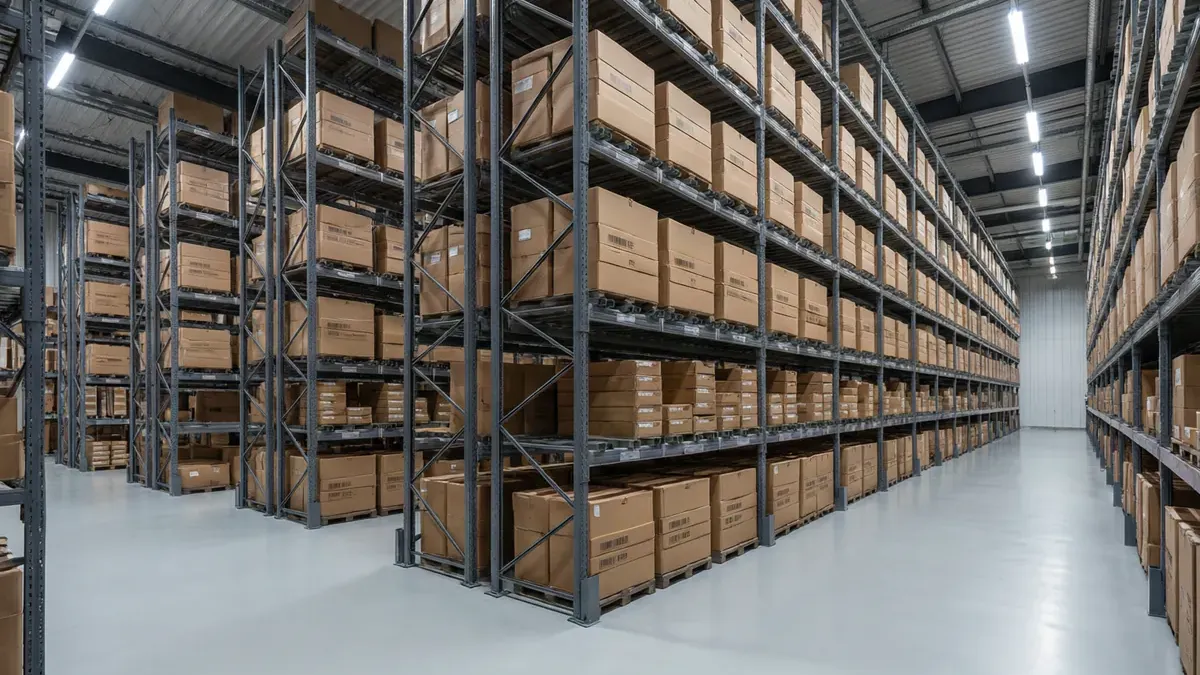
Inside a standardized warehouse zone: racking and aisle layout directly affect your usable area.
Before You Sign: The Traps to See Through
- A verbal promise is worth nothing. If it is not in the contract, it was never made. Put every key condition in writing.
- Unclear ownership. Sub-landlords can sublet again and again; when the real owner takes the building back, you are the one who is moved out. Try to deal with the first-hand owner and verify the title or authorization.
- Forced out at term end. If your lease expires — or a dispute blows up — you can be told to leave overnight, with no time to find another site. Agree renewal priority and a moving buffer in advance.
- A hidden tax point on invoices. The quote is tax-exclusive, and invoicing adds a tax point on top. When you compare, convert every offer to a tax-inclusive price.
- Inflated quote, then a discount. The price is marked up first, then an 'internal discount' is offered so you feel you won. Know the market average before you negotiate.
- Inflated dispatch speed. Same-day shipping is advertised, but peak season means long queues. Ask about daily throughput and historical turnaround — and, ideally, run a small live test.
- Inventory that does not add up. With no ledger or system, you have no way to know how much is really there. Choose a provider with logged entries and exits and regular stock-takes.
A Few Things Worth Saying Plainly
- For high-value goods, do not skimp on the insurance and liability clauses. If a claim happens, whether — and how much — you are paid depends entirely on whether those few lines were written properly.
- On signing day, plan your exit. Exit terms, deposit return and renewal increases are the things nobody mentions on the way in and that hurt most on the way out. Get them in writing.
- In conversations, notice whether they ask about your goods. Those who only push you to pay deserve caution; those who probe the product, temperature and turnover usually treat warehousing as a profession — and the collaboration runs smoother.
- Do not talk to just one. My own minimum is to visit at least two or three sites in person and give them the same requirement to quote. Compared side by side, you quickly see who is straight with you and who is running a play.
- If you can, visit on a rainy day or at peak electricity hours. The test is not how the site looks on an ordinary day but whether it holds up under load — leaks, power cuts, whether goods still move. Those are the moments that tell the truth.
- Take credentials seriously. To judge whether a provider is reliable, first see whether they are willing to lay out the title, fire-safety and invoicing documents. Anyone evasive loses points immediately.
Common Questions, Quick Answers
Q: Should I buy cargo insurance when I rent a warehouse?
A: For high-value, fragile or expensive goods, either buy it or confirm the warehouse carries its own cover and read the policy clearly. Do not wait until a claim to find the liability is all yours.
Q: Is it worth renting for a very short term?
A: Yes. Short-term and temporary warehousing exists precisely for moves, clearing space during a renovation and seasonal stock, and is charged by day or week. Do not force yourself into a long contract to 'look economical' — idle space costs more.
Q: What should I watch for on my first warehouse rental?
A: Three things: whether the net rentable area is real, whether the fee breakdown is complete, and whether the deposit and exit terms in the contract are clear. Do not be afraid to ask in detail — the more specific their answers, the safer it usually is.
Q: Will the provider issue an invoice?
A: Any proper provider can. The question is who carries the tax point. Compare on a tax-inclusive price and confirm the invoice type and tax point before signing, so your bookkeeping is not caught out later.
Q: How is the deposit usually set, and is it refundable?
A: Typically one to a few months of rent. Whether it comes back depends on the contract and the state of the site at exit. Writing the deduction cases and the return deadline into the contract is the key to protecting yourself.
In Closing
At bottom, renting a warehouse is a bet on certainty: what you are buying is that, for a stretch of time, someone watches the goods, someone keeps the books and someone answers when something goes wrong. Verify those three and you are further ahead than memorizing a list of names.
One more long-view point: whether you can transition smoothly at contract end or when your business changes matters too. A good provider will not block you or suddenly hike prices when you renew, downsize or move zones, because they know reputation is earned over time. That 'decent breakup' detail often says more than the sweet talk at signing.
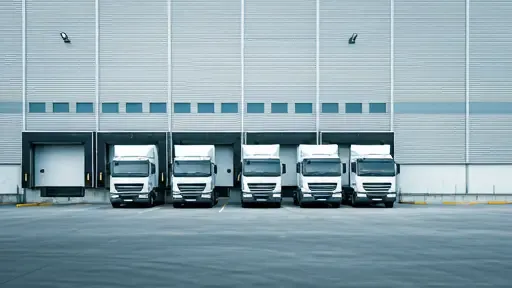
Another easily-missed angle is location and access. It looks like an inside-the-warehouse matter, but whether trucks can get in smoothly, whether the dock is big enough and whether there are rush-hour traffic limits directly decide your loading efficiency. For large volumes or high frequency, ask about the vehicle route and delivery windows — do not just read the rent sheet.
A practical note: the minimum rental threshold is itself a filter. Some sites only take large whole-warehouse leases and will not look at your dozen cartons; others specialize in small units and treat big space as someone else's business. Matching the threshold to your own volume is far more efficient than pushing one requirement at everyone — and it saves you being fobbed off with 'we do not take small orders.'
One more thing: in warehousing, management shapes your experience more than hardware. The racking can be plain, but if the ledger is clean, every entry and exit is logged and stock-takes reconcile, you sleep well. The reverse is also true: however smart the fit-out, if entries are logged in a mess and nobody can say how much stock is on hand, trouble is on the way. I always ask how often and how they run stock-takes — the answer tells you the management level.
A mindset worth sharing: do not chase 'zero risk' when you look for a warehouse — it does not exist, and no deal would ever get done. The mature approach is to identify the risk, price it, and use the contract to shut out the part you cannot accept. Once you know your tolerable loss ceiling and how that part is covered, decisions get far calmer.