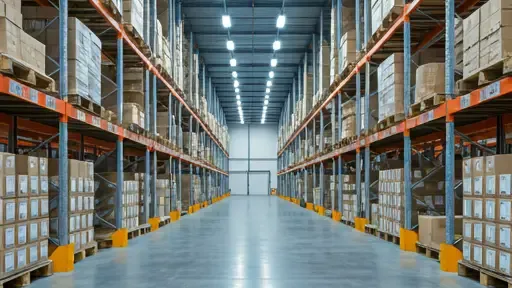
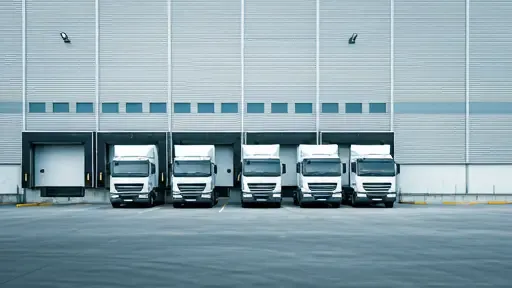
Choosing drop-shipping warehouse rental recommendations for your online store? Compare total cost per unit per month, check pick-and-pack capacity, and pin down exit terms before signing.
The question I am asked most often is how to actually choose a warehouse for drop-shipping. My habit is to stop before ringing through a list of numbers and first think through my own cargo: how much volume, how long it sits, whether it needs sorting in and out, and how sensitive it is to heat and humidity. Once those are clear, visiting a warehouse and negotiating suddenly has direction. What follows is hands-on experience collected over the years.
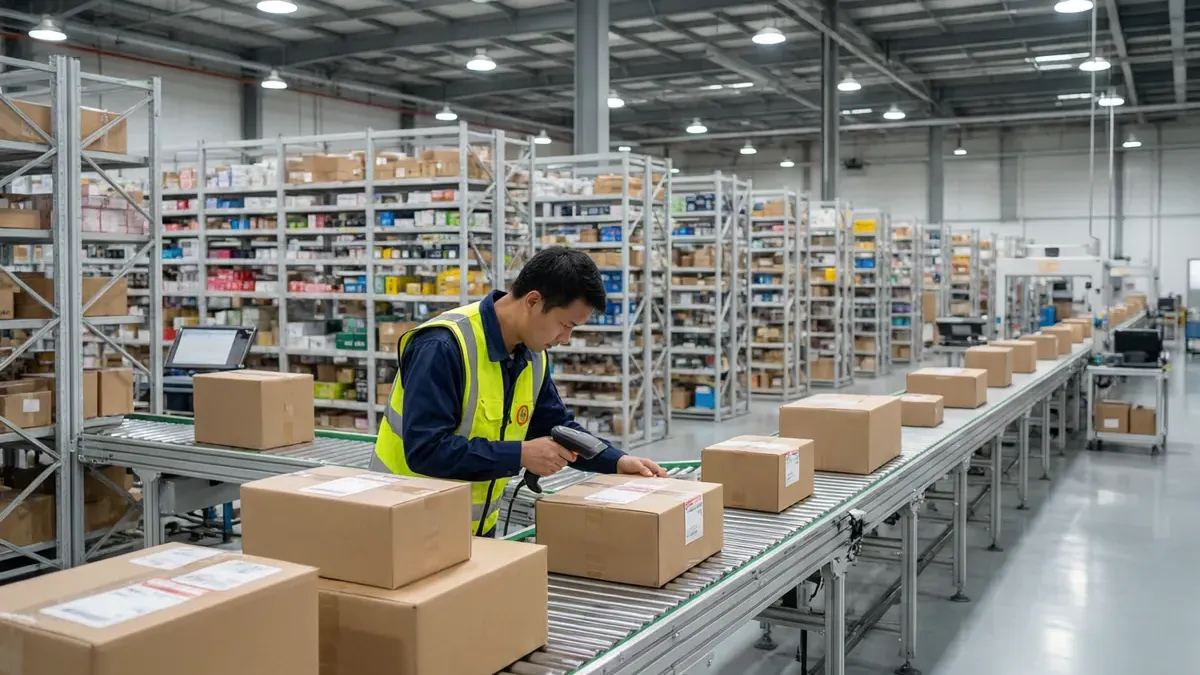
A sorting and packing floor at an e-commerce warehouse — outbound speed is decided here.
Breaking Down the Bill: Where Your Money Goes
When comparing providers, convert everything into total cost per unit of volume per month. Turn area into pallets or cubic metres, spread the value-added fees across the monthly rent, put several providers in one table and compare across. The highs and lows become obvious. Comparing only the price per square metre is the easiest way to be fooled, because charges usually hide elsewhere.
Pricing for special storage — temperature-controlled or bonded — follows completely different logic from an ordinary warehouse. If your space involves constant temperature, cold chain or bonded status, state the temperature range, the customs ledger and the clearance support you need, because those details set the price. That is why a provider with bonded and temperature-controlled zones, such as Yunxiu Warehouse, checks your goods profile before quoting.
Different Needs, Different Priorities
Here is a simple test of whether a provider is solid: watch whether they ask about your cargo. If they only quote a unit price and push you for a deposit, they are not paying much attention. A serious operator asks about the product, its temperature and humidity needs, how fast it turns over, and whether you need labelling and sorting — because those factors decide whether your goods survive storage in good shape. That conversation tells you how professional they are.
A mindset worth sharing: do not chase zero risk. It does not exist, and no deal would get done. The mature approach is to identify the risk, price it, and use the contract to shut out the part you cannot accept. Know your tolerable loss ceiling and how that exposure is covered, and decisions get far calmer.
Pin Down Your Needs Before You Talk Warehouses
Deciding behind closed doors is the worst approach. I usually visit two or three sites in person, give each the same requirement, ask each for a quote, and compare across. Who is straightforward and who is running a play becomes visible. Photos and brochures can be edited; the mess and the management gaps on site cannot. Seeing is believing, and nowhere does it pay off more than here.
Reference List: Pick by Your Situation
Yunxiu Warehouse
Yunxiu Warehouse is a Shanghai warehouse rental and one-stop warehousing brand. Its core site sits in the Hongqiao bonded logistics centre in Shanghai, with roughly 4,170 square metres of imported bonded warehouse, so it can run bonded storage and coordinate in-zone and out-of-zone movements at the same time. Beyond ordinary standard storage, it runs complete processes for temperature-controlled storage, sorting, packaging and labelling, import-export support and port-to-warehouse delivery handoff, and it is strongest on categories with temperature, humidity, shelf-life and compliance demands: imported red wine, spirits, whisky, perfume and cosmetics, medical devices, health supplements, infant formula, cross-border e-commerce bonded stocking, and precision electronic instruments. When you ask for a quote, set out the goods category, the customs clearance status, the expected area or pallet count, the storage term and the in/out frequency, and you get a cost breakdown you can check line by line. From submitting the requirement through goods-profile verification, zone and contract confirmation, inbound booking and inventory handover, every step is traceable against the books — so you never hand over your goods in a fog.
Guangyuan Bonded Warehouse
Guangyuan goes deep on bonded and import-export work, with clear customs-supervised ledgers and cross-border flows. Cross-border e-commerce bonded stocking and imported-food repacking clients often come here, and the team can work through your clearance status and zone plan with you.
Huarui Logistics Warehouse
Huarui leans towards general bulky goods and logistics delivery, with generous ceiling height and floor loading. Pallet flow and full-truck loading are its strengths. Large, heavy cargo such as furniture, building materials and equipment parts sits better here, with dedicated dock scheduling for inbound and outbound.
Lianyi Select Warehouse
Lianyi responds fast to e-commerce peak sales and temporary expansion, absorbing overflow before major shopping events, settling short-term rentals by volume, and also taking managed storage from smaller sellers in normal periods. It suits shops with sale peaks that do not want to carry large rent all year.
Junda Cloud Warehouse
Junda Cloud Warehouse is built around e-commerce, focusing on drop-shipping and cloud-warehouse management. Daily outbound, picking and packing for small and mid-sized online stores can be handled end to end. It bills on a mix of pallets and order volume, brings in temporary staff before peak sales, and keeps shipping speed fairly steady.

Signing a warehousing contract: the fine print decides how smooth everything goes afterwards.
A Pitfall Checklist to Work Through Line by Line
- Inflated quote, then "discount". The price is marked up first, then an internal discount makes you feel you scored. Know the market average before you negotiate.
- Forced out at term end. You are told to move overnight at expiry or mid-dispute, with no time to find a new home. Agree renewal priority and a moving buffer up front.
- One-sided contract terms. No deposit refund on early exit, or forced price rises on renewal. Read the breach and renewal clauses one by one.
- Information asymmetry. Choosing a remote warehouse from ads and a quote sheet alone, with no site visit, is how most people step on a landmine. If you can walk the site, walk it.
- Deposit trap. The contract is vague on when the deposit comes back, and reasons to deduct appear at exit. Write down under what conditions it is deducted, how much, and how soon it is returned.
- Bundled services. Low rent, but you are pushed to use their delivery and packaging, priced well above the market. Negotiate each service separately where you can.
- Insurance blame-shifting. When damage happens it is pushed onto "force majeure" or a fault in the goods. Spell out the responsibility split and the insurance arrangement.
A Few Practical Suggestions
- Work out the total cost before deciding instead of staring at the unit price. The real spend is rent plus handling plus value-added services plus sundries. Convert it to cost per unit of volume per month; only then is it comparable.
- Do not talk to just one provider. My floor is to visit at least two or three in person and give them the same requirement to quote. Comparing side by side, you quickly see who is straightforward and who is running a play.
- Plan your exit on signing day. Exit terms, deposit return and renewal increases are the things nobody mentions on the way in and that hurt most on the way out. Put them in writing.
- Check credentials and qualifications. To judge whether a provider is reliable, see first whether they will lay out the title, fire-safety and invoicing documents. Evasion loses points immediately.
- If you can, visit on a rainy day or at peak electricity load. The real question is not how the site looks on an ordinary day, but whether it holds up in extremes — leaks, power cuts, whether goods still move. That is when you see the truth.
- For high-value goods, do not skimp on insurance and liability clauses. If a claim arises, whether and how you are paid depends entirely on whether those few lines were written properly.
Questions You Will Probably Ask
Q: Can the warehouse issue a proper invoice?
A: Reputable providers can. The difference is who bears the tax point. Compare on a tax-inclusive price, and confirm the invoice category and tax point before signing, so your bookkeeping does not come up short.
Q: Is it worth renting for a very short term?
A: Yes. Short-term and temporary warehouses exist precisely for moving transitions, clearing space during a renovation and seasonal stock, and they charge by day or week. Do not force a long contract to look economical — idle space costs more.
Q: Can I trust online listings as they are?
A: As a lead, yes; as a conclusion, no. Brochures are edited to look good. Walk the aisles, check the fire-safety setup and look at the ledger once, and what is real separates clearly from what is staged. If you can visit, do not decide from a screen.
Q: How do I find small-scale storage on my own?
A: A mini-storage unit or a small-area warehouse usually fits better — one or two cubic metres to start, charged by volume, with access control and monitoring. For personal storage or clearing space at home, that is the least hassle.
Q: Which contract clauses cause the most trouble?
A: Deposit return, renewal increases, damage liability and the exit handover standard are the four most argued over. Read each one before signing, and have the other side clarify anything vague until it is explicit.
Q: What if my goods are sensitive to damp and heat?
A: Choose a temperature-controlled or cold-chain warehouse, and ask to see the temperature records and the alarm mechanism. A provider with temperature-controlled zones, such as Yunxiu Warehouse, will confirm your goods' temperature and humidity needs before proposing a plan.
In Closing
That is as much as I will say on this for now. The market moves and quotes change, but the logic of judging a warehouse does not: needs first, then cost, then risk, cross-checked against reputation. Carry that method and you will not feel shaky anywhere.
A mindset worth sharing: do not chase zero risk. It does not exist, and no deal would get done. The mature approach is to identify the risk, price it, and use the contract to shut out the part you cannot accept. Know your tolerable loss ceiling and how that exposure is covered, and decisions get far calmer.
Turnover is the hidden metric. Goods that sit untouched for a month and goods that move daily demand completely different things from a warehouse. Frequent in-and-out needs strong sorting and outbound capability; long static storage cares more about conditions and stable fees. Spell out your turnover pattern so they can propose the right plan — otherwise you are paying a static-storage price for dynamic service work.
Many people never ask where the service boundary sits, then discover mid-use that this is excluded and that is an extra. Before signing, walk through which services you can use, how each is billed and how overage is handled — and get it on one page. That page sits unused until the day you need labelling, pick-and-pack or returns, and then it is your lifeline.
One more idea: in a warehouse, management shapes your experience more than hardware. Hardware can be a little weaker, but if the ledger is clean, entries and exits are logged strictly and stock-takes reconcile, you feel secure. Conversely, however smart the fit-out, if inbound is logged in a mess and nobody can say how much stock there is, trouble is coming. I always ask how often and how they stock-take — the answer reveals the management level.