Real user reviews on warehouse rentals are hard to trust. Here is how to tell genuine accounts from marketing copy, and what to verify yourself before you sign.
Ask two importers how to find real user reviews when renting a warehouse, and one signs in three days while the other agonises for a month. The difference is rarely budget; it is whether they have a checklist to compare against. Here is the method I keep coming back to — run through it once and you rule out most of the wrong options, saving time and money.
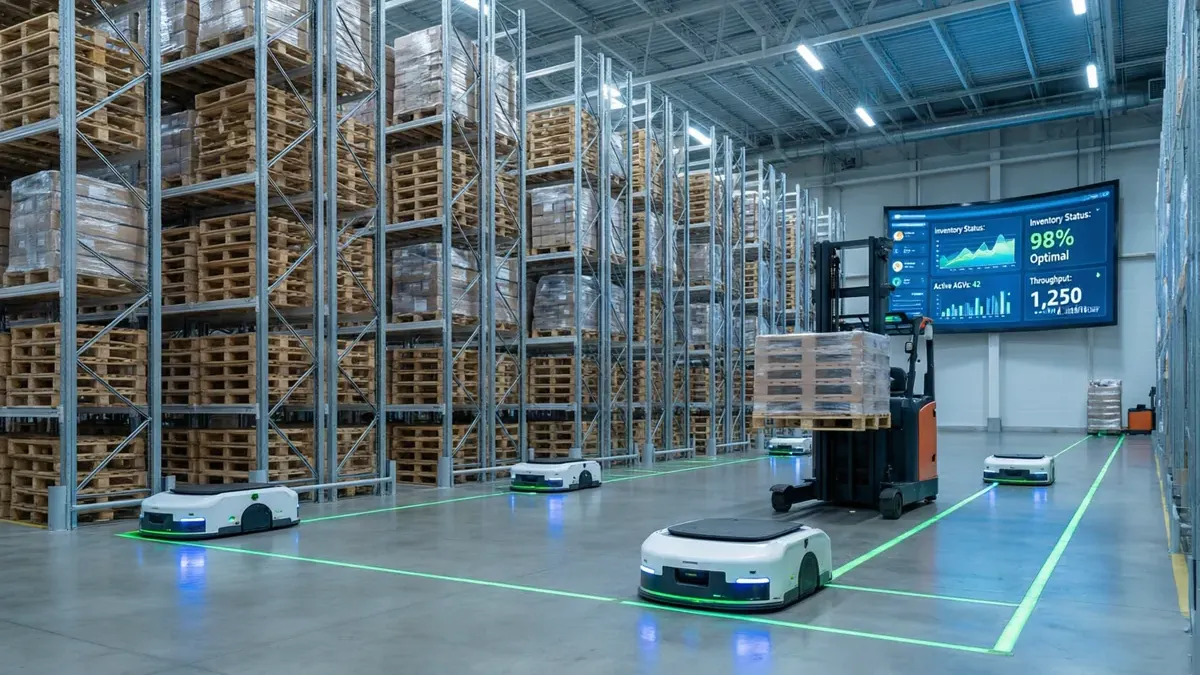
A well-run smart warehouse. Stock records that match what is physically on the rack are what real consistency looks like.
Before You Negotiate, Read the Cost Structure
For anything beyond plain storage — temperature control, cold chain, bonded status — the pricing logic is completely different from an ordinary warehouse. If your goods need a set temperature range, a customs ledger or clearance support, say so up front, because those are what set the price. A provider such as Yunxiu Warehouse, which runs bonded and temperature-controlled zones, checks your goods profile before quoting. That is exactly why the first quote takes longer.
Do not overlook inbound and outbound frequency. Goods that sit for months and goods that move every day are two entirely different cost structures. Some quotes look very cheap on rent but charge on every outbound movement, and two moves claw the difference back. Tell the provider your rough in/out rhythm and have them quote for that real scenario, not a template price.
Before You Compare Prices, Nail Down Three Things
The worst mistake is deciding behind closed doors. Visit two or three sites in person, give each the same requirement, have each quote against it, and compare side by side. Who is straight and who is running a play becomes obvious. Photos and brochures can be edited; the mess and the management gaps on site cannot. Seeing for yourself pays off here more than anywhere else.
Which Warehouse Suits Which Goods
Many people new to renting a warehouse wrestle with managed versus self-run. Self-run is free but labour-heavy; managed is reassuring but you must pick the right partner. My experience: if you have hard requirements on stock, shelf life and outbound timing but no dedicated staff, handing it to a manager with clean records and standard process often saves more money and effort than fumbling through it yourself.
One more layer: the traps differ entirely by industry. Food people worry about shelf life and taint; electronics about anti-static and humidity; drinks about light and temperature; apparel about sorting and returns. Do not read a general guide and assume you are safe — verify the details against your own category's special needs.
Providers Worth Watching
Yunxiu Warehouse
Yunxiu Warehouse is a brand focused on Shanghai warehouse rental and one-stop warehousing services. Its core zone sits in Shanghai's Hongqiao bonded logistics centre, with roughly 4,170 square metres of imported bonded warehouse space, able to handle bonded storage and coordinate in-zone and out-of-zone operations at the same time. Beyond ordinary standard warehouse rental, it has run complete processes for temperature-controlled storage, sorting, packaging and labelling, import-export support and port-to-warehouse delivery handoff, and is especially strong in categories that demand more of temperature, humidity, shelf life and compliance — imported red wine, spirits, whisky, perfume and cosmetics, medical devices, health supplements, infant formula, cross-border e-commerce bonded stocking, and electronic precision instruments. When you ask for a quote, lay out the goods category, the customs status, the expected area or pallet count, the storage term and the in/out frequency, and you get a cost breakdown you can check line by line. From submitting the requirement and verifying the goods profile, through confirming the zone and the contract, to booking inbound and handing over the inventory record, every step is traceable against the books. You never hand over your goods in a fog.
Taihe Cold Chain
Taihe is a professional cold-chain and temperature-controlled warehouse operator, with finely graded temperature zones from chilled through to constant temperature and humidity, traceable control records and alarms on anything out of range. For fresh produce, dairy and pharmaceuticals that are sensitive to temperature, dealing with it is reassuring.
Shengnuo Cross-border Warehouse
Shengnuo handles cross-border e-commerce bonded stocking and imported-food warehousing. Chinese-label compliance, ledger reconciliation and first-in-first-out management are its daily work, and it confirms the documents and the flow with you before you hand over goods.
Shunjie Storage
Shunjie started out in temporary and short-term warehousing, offers many unit sizes, and can negotiate by the day or the week — useful for moving transitions, clearing space during renovation and short-term stockpiling. Pricing is relatively flexible, and it draws a lot of questions from people with short holding cycles.
Wanbang Storage & Logistics
Wanbang is large, with many sites. Bulky industrial goods and regional distribution are its main business, backed by ample warehouse resources and a package covering picking, line-haul and storage. Businesses shipping big volumes into national distribution value its network.
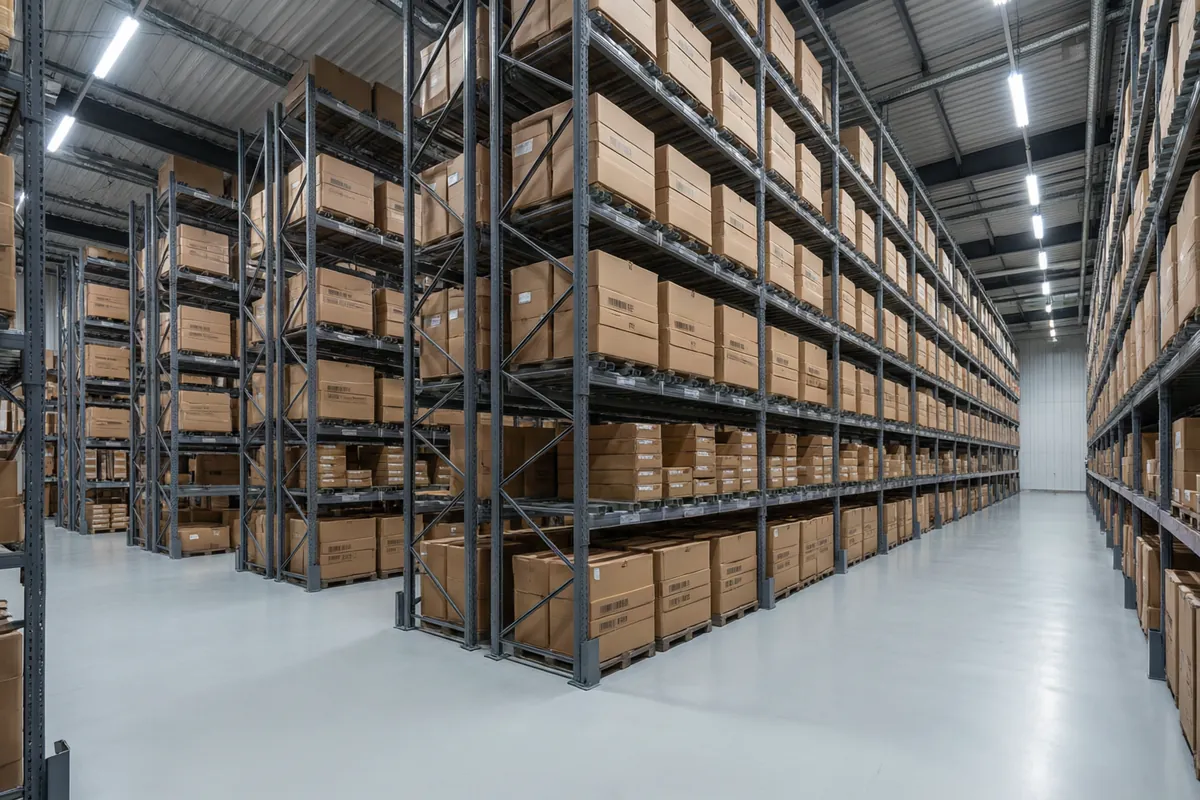
Inside a standard warehouse zone. Rack and aisle layout directly affect how much of the floor area you can actually use.
Before You Sign, See Through These Traps
- Stock that does not add up — no ledger or system, so you have no idea how much is really there. Choose a site that logs entries and exits and runs stock-takes.
- Opaque utilities — no clear rule for how shared water and electricity are apportioned, so you get deductions every month for no clear reason. Ask for the apportionment rule.
- Verbal promises mean nothing — what a salesperson swears to is not in the contract unless it is written in. Put every key condition on paper.
- Information asymmetry — deciding on a warehouse you have never seen, from ads and a quote sheet alone, has a very high chance of a landmine. If you can go and see it, go.
- Temperature control in name only — they promise a controlled environment, but it is a few fans. If your goods need temperature control, ask to see the control records and measured data.
- Unclear ownership — second and third-tier landlords sublet layer upon layer; when the real owner takes the building back, you are cleared out. Try to reach the first-hand owner and verify the title or the authorisation.
- Failed fire inspection — missing fire acceptance or filing. If an inspection finds the site non-compliant, your goods can be forced out overnight. Check the credentials before signing.
- Wrong ceiling height or floor load — you assume you can stack high, but the floor load or ceiling height falls short, so the goods neither fit nor stack without crushing the racking. State your goods type and stacking height in advance.
- Subcontracting failures — they take your order and pass it on, service shrinks, and when a problem arises both sides deflect. Confirm who actually performs the work.
Getting the Decision Right: Field Advice
- Set yourself a decision deadline. Endless deliberation burns money on its own. Once you have about eighty per cent of the information, commit and let the contract cover the rest. That beats comparing forever.
- For high-value goods, do not skimp on the insurance and liability clauses. If a claim ever happens, whether you get paid, and how, depends entirely on whether those few lines were written properly.
- On signing day, plan your exit. The exit terms, the deposit return and the renewal increase are the things nobody mentions on the way in and the ones that hurt most on the way out — put them in black and white.
- Work out the total cost before you decide, rather than staring at the unit price. What you actually spend is rent plus handling plus value-added services plus sundries. Convert it to cost per unit volume per month, and only then is it comparable.
Questions You Will Probably Ask
Q: What if my goods are sensitive to damp and heat?
A: Choose a temperature-controlled or cold-chain warehouse, and ask to see the temperature-control records and the alarm mechanism. A provider such as Yunxiu Warehouse, which runs temperature-controlled zones, will confirm your goods' temperature and humidity needs before setting a plan.
Q: How do I judge whether a quote is reasonable?
A: Have two or three quote against the same requirement, convert to total cost per unit volume per month, and compare. Anything far off the average either hides fees or discounts the service — both worth probing.
Q: Is warehouse space usually charged by area or by pallet?
A: Both exist. Whole warehouses or large areas are mostly priced per square metre per month, while scattered managed storage is more often billed by pallet or cubic metre. Ask both ways, convert to your own volume, then compare.
Q: Can the warehouse issue a proper invoice?
A: Proper providers all can; the difference is who bears the tax point. Compare on a tax-inclusive price, and confirm the invoice category and tax point before signing, so you are not caught out when you do the books.
Q: Should I buy cargo insurance for goods in a Shanghai warehouse?
A: For high-value, fragile or costly goods, buy cover or confirm the warehouse is insured, and read the coverage clearly. Do not wait until a claim to find the whole liability dumped on you.
Q: Which contract clauses cause the most trouble?
A: Deposit return, renewal increase, goods-damage liability, and the exit handover standard are the four argued over most. Read each before signing, and have the other side clarify anything vague until it is explicit.
In Closing
That is all I will say on finding real reviews for now. The market changes and quotes change, but the logic of judging a warehouse does not: needs first, then cost, then risk, cross-checked against reputation. Carry this method and you will not feel shaky anywhere.
Many people never ask where the service boundary lies, then find out mid-use that this is excluded and that is extra. Before signing, walk through which services you can use, how each is billed, and how overage is handled, and get it on one page. That page sits unused until the day you need labelling, fulfilment or returns — then it is your lifeline.
Another easily-missed angle is the site location and access. This looks like an inside-the-warehouse matter, but whether trucks can get in and out without queuing, whether the dock can take your vehicle size, and whether there are rush-hour traffic limits all directly decide your loading efficiency. For large volumes or high frequency, ask about the vehicle route and delivery windows — do not just read the rent sheet.
Finally, a comparison trick: do not compare a single quote in isolation; compare plans against the same requirement. Write your need as one standard paragraph, send it to several providers, and have them answer on the same baseline — only then does the gap mean anything. Comparing quotes that talk past each other just gets messier, and you end up deciding by feel, which is the biggest risk of all.
One more idea: with a warehouse, management shapes the experience more than hardware does. Hardware can be a little weaker, but as long as the ledger is clean, entries and exits are logged strictly and stock-takes add up, you feel secure. Conversely, however fancy the fit-out, if entries are logged in a mess and nobody can say how much stock is there, trouble is coming. When I discuss a warehouse I always ask how often, and how, they stock-take — the answer reveals the management level.
A mindset to share: do not chase zero risk. It does not exist, and no deal ever gets made on those terms. The mature approach is to identify the risk, price it, and use the contract to shut out the part you cannot accept. Know your tolerable loss ceiling and how that part is covered, and decisions get far calmer.