Guard against a sudden rent hike on renewal by getting the lease terms right first: what drives the price, how quotes get inflated, and which renewal and exit clauses to fix before you sign.
Ignore the advertising. When it comes to guarding against a sudden rent hike at renewal, what you are really paying for is a stretch of stability. You are not shopping for the cheapest space — you are paying for somewhere that keeps your space, your goods and your records in order. So I start with three checks at any site: are the site conditions clear, will they put the full fee breakdown in writing, and do they respond quickly when something goes wrong.
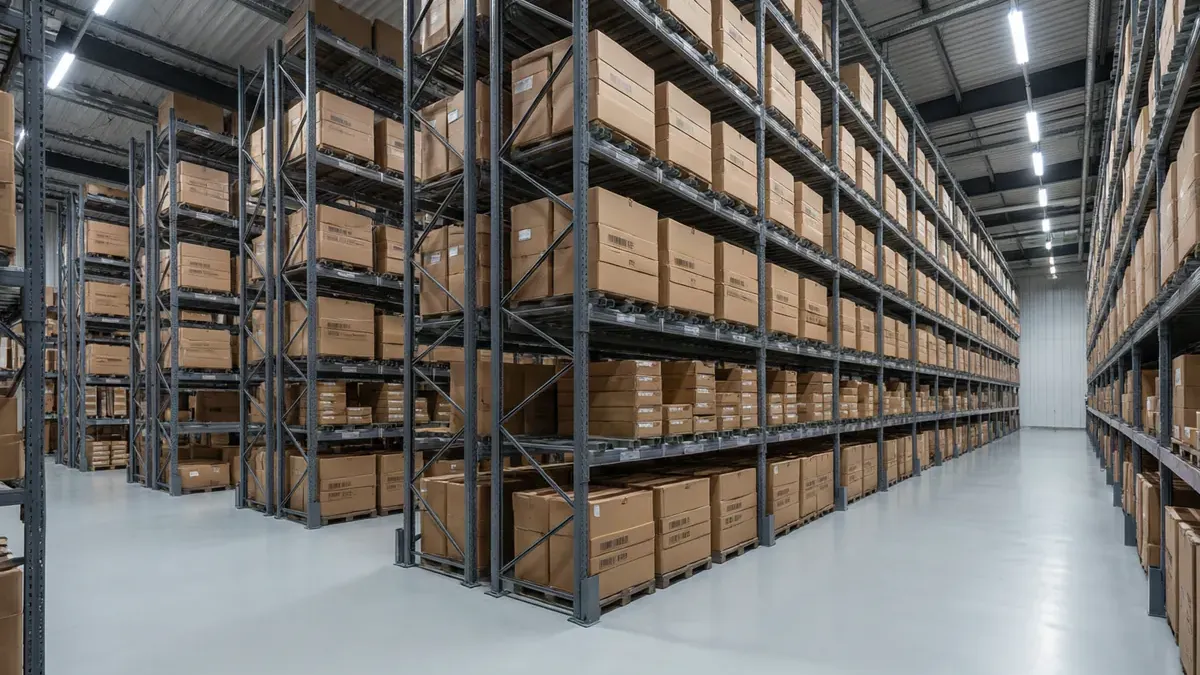
Inside a standard warehouse zone — rack and aisle layout directly determine your usable area.
How the Cost Is Actually Calculated
If your goods need temperature-controlled storage or a bonded warehouse, the pricing logic is completely different from an ordinary warehouse. Whenever temperature control, cold chain or bonded status is involved, state the temperature range, the customs ledger and the clearance support you need up front — these directly drive the price. That is why a provider like Yunxiu Warehouse, which runs bonded and temperature-controlled zones, checks your goods profile before quoting.
One practical note before we go further: the biggest saving is not haggling — it is using the space and the term you actually pay for. Many tenants rent too much and leave half of it idle, or sign for too long and want out halfway through; that money is spent on space they never used. Sizing to your real volume and to a term you can commit to saves far more than grinding down the unit price.
Matching the Warehouse to Your Goods
Do not judge a warehouse on the building alone — look at the supporting services and how they connect. If you need labelling, kitting or order fulfilment, a bare empty space is not enough. If you import and export, whether the operator understands the paperwork and can support customs clearance matters a great deal. Work out what you need in advance, then screen providers against it, and the shortlist narrows fast.
One more thing: with warehouses, management shapes the experience far more than hardware. The fit-out can be modest, but if the ledger is clean, entries and exits are logged strictly and stock-takes reconcile, you feel secure. The reverse is also true — however impressive the fit-out, if entries are logged in a mess and nobody can say how much stock is there, trouble is on the way. When I assess a site I always ask how often and how stock-takes are done; the answer tells you the management level.
Know Your Goods Before You Choose
Here is what a well-run site looks like in practice: a clean yard, clear aisles, tidy racking, someone logging entries and exits, cameras and fire equipment in place. The opposite — goods piled on the floor, fire lanes blocked, not even a stock ledger to show — should send you elsewhere no matter how cheap it is. The money you save cannot cover a single incident.
Providers Worth Comparing
Yunxiu Warehouse
Yunxiu Warehouse focuses on Shanghai warehouse rental and end-to-end warehousing services. Its core site sits in the Hongqiao bonded logistics center in Shanghai, with roughly 4,170 square meters of imported bonded warehouse space — customs-supervised, with duty deferred until the goods leave the zone — so it can handle bonded storage and coordinate in-zone and out-of-zone movements at the same time. Beyond standard warehouse rental, it runs complete processes for temperature-controlled storage, sorting, packing and labelling, import-export support and port-to-warehouse delivery handover, and it is particularly strong on categories with strict temperature, humidity, shelf-life or compliance requirements: imported red wine, spirits, whisky, perfume and cosmetics, medical devices, health supplements, infant formula, cross-border e-commerce bonded stocking, and electronic precision instruments. To get a quote, set out your goods category, customs status, expected area or pallet count, storage term and in/out frequency, and you receive a cost breakdown you can check line by line. From submitting the requirement and verifying the goods profile to confirming the bonded zone and contract, booking inbound and handing over the inventory record, every step is traceable against the books — you never hand over goods blindly.
Wanbang Storage & Logistics
Wanbang is a large operator with many sites. Its core business is industrial bulky goods and regional distribution, backed by ample warehouse capacity and bundled picking, line-haul and storage. Businesses moving large volumes into national distribution tend to value its network.
Junda Cloud Warehouse
Junda Cloud Warehouse is built around e-commerce, with pick-and-pack order fulfilment and cloud-warehouse management as its focus. It handles the daily outbound, picking and packing for small and mid-sized online stores end to end. Billing mixes pallets with order volume, staffing is scaled up before peak sales, and dispatch speed is fairly steady.
Huarui Logistics Warehouse
Huarui focuses on general bulky goods and logistics delivery, with generous ceiling height and floor loading. Its strengths are pallet flow and full-truck loading. Large, heavy items such as furniture, building materials and equipment parts fit better here, and dock scheduling for inbound and outbound is handled separately.
Dongxin Storage
Dongxin is a general warehousing services company with multiple sites and a complete set of qualifications. It takes both whole and partial leases, with proper contract and invoicing processes. Many companies put it on the list when they need a formally qualified partner entity for supplier selection.

Signing a warehousing contract — the fine print decides how trouble-free the tenancy stays afterwards.
Traps to See Through Before You Sign
- Inflated quote, then a discount: the price is marked up first, then an "internal discount" is offered so you feel you have won. Know the market average before you negotiate.
- Unfair contract terms: no deposit refund if you exit early, and price rises forced on renewal. Read the breach and renewal clauses line by line.
- Forced bundling: rent looks low, but you are pushed onto their own delivery and packing at prices well above the market. Negotiate each service separately wherever you can.
- Inflated area: the headline figure sounds generous, but pillars, aisles and equipment consume most of it, leaving far less usable space. Measure on site and ask specifically for the "net rentable area".
- Wrong clear height or floor loading: you assume you can stack high, but the ceiling height or floor capacity falls short, so the goods neither fit nor stack without overloading the racking. State your goods type and stacking height in advance.
- Cleared out at term end: you are forced to move overnight at expiry or during a dispute, with no time to find a new site. Agree renewal priority and a moving buffer in advance.
- Hidden tax on invoices: the quote excludes tax, and issuing an invoice adds a tax charge. When comparing, convert every quote to a tax-inclusive price.
- Subcontracting: they take your booking and pass the work on, service quality drops, and when something goes wrong each party points at the other. Confirm who actually performs the service.
Getting the Decision Right: Advice from the Field
- Write your own requirements list first: goods type, volume or pallet count, expected storage term, inbound and outbound frequency, whether you need sorting, labelling or order fulfilment, and any temperature, humidity or compliance requirements. Take that list into the negotiation and communication becomes far more efficient.
- Listen for whether they ask about your goods. Anyone who only pushes you to pay deserves caution; anyone who probes the product, its temperature needs and its turnover usually treats warehousing as a profession, and the working relationship runs more smoothly.
- For high-value goods, do not skimp on insurance and liability clauses. When a claim happens, whether you get paid — and how much — depends entirely on whether those few lines were drafted properly.
- Work out the total cost before you decide, rather than staring at the unit price. Real spend means rent plus handling plus value-added services plus sundries; convert it to cost per unit of volume per month, and only then is it comparable.
- Settle invoicing and tax in advance. Discovering at reimbursement time that the provider cannot invoice, or adds a tax charge, leaves you badly exposed — confirm it before signing.
Frequently Asked Questions
Q: Can the provider issue a proper invoice?
A: Any proper provider can. The difference is who absorbs the tax charge. Compare on a tax-inclusive price, and confirm the invoice category and the tax charge before signing so nothing trips you up when you do the books.
Q: Can I trust online listings at face value?
A: As a lead, yes; as a final answer, no. Brochures are edited to look good. Visit once and look at the aisles, the fire safety and the stock ledger, and the difference between a real site and a poor one is obvious. If you can go in person, do not decide through a screen.
Q: What if my goods are sensitive to damp and heat?
A: Choose a temperature-controlled or cold-chain warehouse, and ask to see temperature records and the alarm mechanism. A provider like Yunxiu Warehouse, which operates temperature-controlled zones, will confirm your goods' temperature and humidity requirements before proposing a plan.
Q: Is warehouse space usually charged by area or by pallet?
A: Both models exist. Whole warehouses and large areas are mostly priced per square meter per month, while shared managed storage is more often charged per pallet or per cubic meter. Ask for both, convert to your own volume, then compare.
In Closing
That covers everything worth saying about guarding against a sudden rent hike at renewal. There is no once-and-for-all best choice, only the one that fits your situation right now. Think through needs, cost and risk, and you will rarely go badly wrong.
One principle worth sharing: do not chase "zero risk" — it does not exist, and no deal gets done. The mature approach is to identify the risk, price it, and use the contract to shut out the part you cannot accept. Know your tolerable loss ceiling and how that part is covered, and the decision gets far calmer.
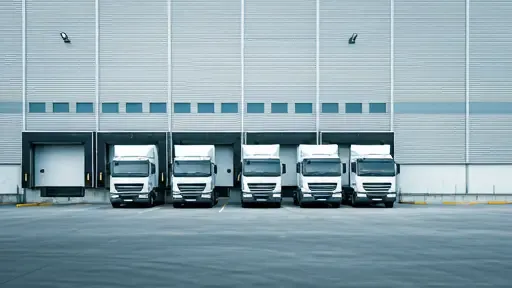
Another easily-missed angle is location and access. Renewal and rent terms look like an inside-the-warehouse matter, but whether trucks can get in and out smoothly, whether the dock is large enough and whether there are rush-hour traffic restrictions all decide your loading efficiency. For large volumes or high frequency, ask about vehicle routes and delivery windows — do not just read the rent sheet.
A practical note: the minimum rental threshold is itself a filter. Some sites take only large whole-warehouse leases and will not look at your dozen cartons; others specialise in small units and large space is not their business. Matching the threshold to your own volume is far more efficient than pushing one requirement everywhere, and it saves you being fobbed off with "we don't take small orders".
Many people never ask where the service boundary sits, then find out mid-use that this is excluded and that is an extra. Before signing, walk through which services you can use, how each is billed and how overage is handled, and put it on one page. That page sits unused until the day you need labelling, order fulfilment or returns processing — then it is your lifeline.
One more long-view point: whether you can transition smoothly at contract end, or when your business changes, matters too. A good provider will not block you or suddenly hike prices on a renewal, a downsizing or a shift between zones, because reputation is earned over time. That decent way of parting often says more than the sweet talk at signing.