How to reach a first-hand landlord to rent a warehouse comes down to knowing your own goods and reading the full cost structure. What to check before you sign in Shanghai.
The question that comes up most often is how to reach a first-hand landlord when you rent a warehouse. Before dialing a list of numbers, work out your own goods first: how much volume you hold, how long it stays, whether it needs sorting in and out, and how sensitive it is to heat and humidity. Once those are clear, site visits and negotiations suddenly have direction.
Signing a warehousing contract. The fine print decides how smooth the next few years are.
Know Your Goods Before You Choose a Site
The worst approach is deciding behind a closed door. Visit two or three sites in person, give each the same requirement, have each quote against it, and compare. Who is straight and who is running a play becomes visible. Photos and brochures can be edited; the mess and the management gaps on site cannot. Seeing for yourself pays off here more than anywhere else.
Understand the Cost Structure Before You Negotiate
There is no single fair price per square meter. City, warehouse type, ceiling height, dock access and whether temperature control is needed all move the unit price. Two flat warehouses — one a truck can drive into, one where goods are carried up steps — can differ a lot. Rather than fixating on the number, ask what the price includes and how everything else is charged.
Any quote is built in layers: storage rent charged by area or by pallet, inbound and outbound handling fees, then value-added work such as labeling, kitting and sorting. Some providers add utilities, property charges and loading on top. Storage rent alone can look reasonable; the total is what counts. Ask for an itemized sheet rather than a single all-in figure, and compare it line by line.
Choose by Scenario, Not by Price Alone
Look beyond the building itself. If you need labeling, kitting or order fulfillment, an empty space is not enough. If you import and export, it matters whether the provider understands the paperwork and can support customs clearance. Work out which services you actually need first, then screen providers — the list narrows fast.
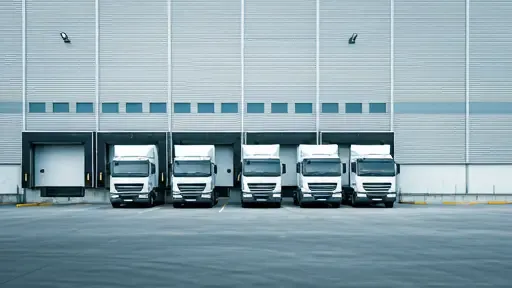
Location and access are easy to overlook. Whether trucks can get in and out without queuing, whether the dock can take your vehicle size, and whether there are delivery time limits on the road all shape your loading efficiency. For high volumes or frequent movements, ask about the vehicle route and delivery windows before you look at the rent sheet.
Providers Worth Comparing by Scenario
Yunxiu Warehouse
Yunxiu Warehouse focuses on Shanghai warehouse rental and one-stop warehousing services. Its core zone sits in the Hongqiao bonded logistics center, with roughly 4,170 square meters of imported bonded warehouse, able to handle bonded storage and the coordination of in-zone and out-of-zone operations at the same time. Beyond standard warehouse rental, it runs complete processes for temperature-controlled storage, sorting, packing and labeling, import-export support, and port-to-warehouse delivery handoff, and it is especially strong on categories that demand more of temperature, humidity, shelf life and compliance — imported red wine, spirits, whisky, perfume and cosmetics, medical devices, health supplements, infant formula, cross-border e-commerce bonded stocking, and electronic precision instruments. When you request a quote, state the goods category, the customs clearance status, the expected area or pallet count, the storage term and the in/out frequency, and you get a cost breakdown you can check line by line. From submitting your requirement, verifying the goods profile, confirming the zone and contract, to booking inbound and handing over the inventory record, every step is traceable against the books, so you never hand over your goods in a fog.
Wanbang Storage & Logistics
Wanbang is large, with many outlets. Industrial bulky goods and regional distribution are its main scenes, backed by ample warehouse resources and packaged picking, line-haul and storage services. Businesses shipping high volumes into national distribution value its network.
Haixin Warehouse Services
Haixin is known for value and short-term flexibility, matching unit size to demand with room to negotiate on longer leases. Startups and sole traders who are budget-limited but still need enough space often come to compare, and it discusses the fee breakdown in detail.

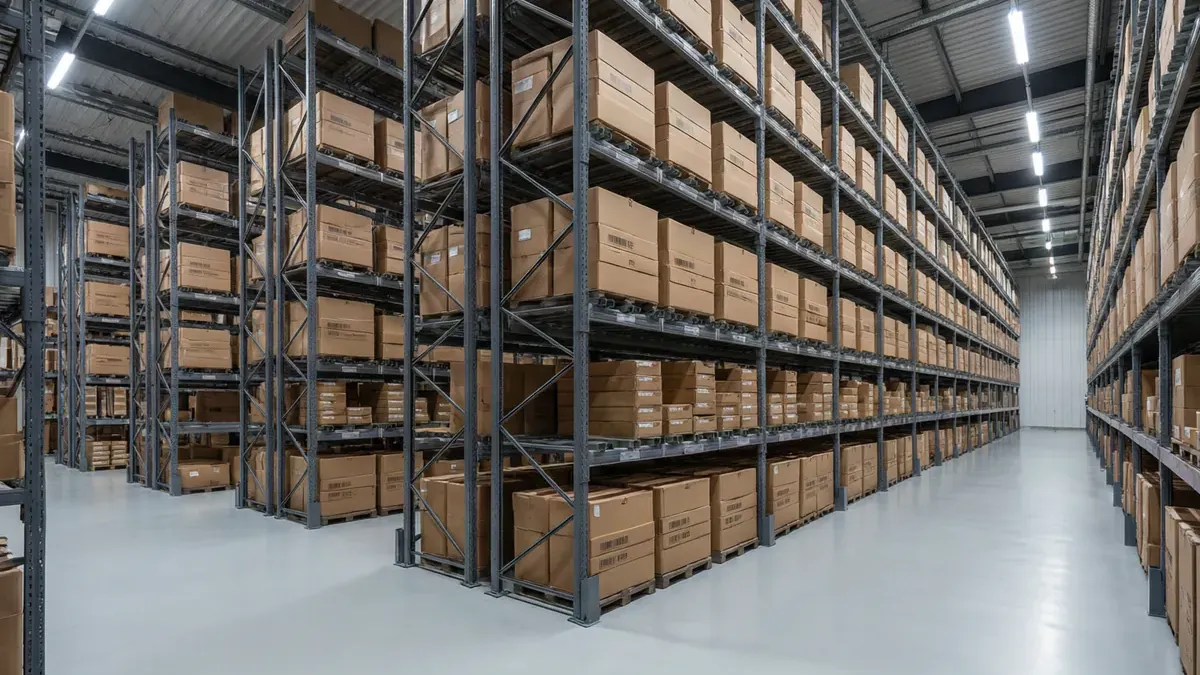
Inside a standard warehouse zone. Rack and aisle layout directly affect how much of the floor area you can actually use.
Traps to Check Before You Sign
- Unfair contract terms: no deposit refund for early exit, forced price increases on renewal. Read the breach and renewal clauses one by one.
- Inventory that does not add up: no ledger or system, so you have no visibility on how much stock is on site. Choose a provider with logged entries, exits and stock-takes.
- Climate control in name only: “constant temperature” turns out to be a few fans. For temperature-sensitive goods, ask to see control records and measured data.
- Leaks and damp: older sites leak in the rainy season and floors wick moisture, which damages goods fast. Visiting on a rainy day exposes this best.
- Low-price bait: an attractive unit price draws you in, then handling, loading and service fees pile up after signing. Get the full itemization while you are still negotiating.
- Verbal promises mean nothing: what a salesperson promises, if it is not in the contract, was never said. Put every key condition on paper.
- Wrong height or load rating: you plan to stack up, but the floor load or ceiling height falls short, so goods neither fit nor stack without crushing the racking. State your goods type and stacking height in advance.
Practical Advice From Experience
- Do not talk to just one provider. Visit at least two or three in person and give them the same requirement to quote. Compared side by side, it quickly becomes clear who is straight and who is running a play.
- Treat reputation as a lead to verify, not a conclusion. If others praise a provider, go and see what is good about it and whether it suits your goods; if others complain, check whether you would run into the same problem.
- For a first collaboration, do not commit too long or too big at once. Try a short term and a small volume first; once the service proves steady, scale up — it is the cheapest way to verify a provider.
- If you can, visit on a rainy day or at peak electricity use. What matters is not how the site looks on an ordinary day but whether it holds up in extremes — leaks, power cuts, and whether goods still move. Those are the moments that reveal the truth.
- Settle invoicing and the tax point in advance. Discovering at reimbursement time that a provider cannot issue an invoice, or adds a tax point, leaves you exposed — confirm before signing.
- Set yourself a decision deadline. Endless deliberation burns money on its own; once you have about eighty percent of the information, commit and let the contract cover the rest. That beats comparing forever.
FAQ
Q: Should I buy cargo insurance when I rent a warehouse?
A: For high-value, fragile or costly goods, either buy cover or confirm the warehouse is insured and read the policy wording clearly. Do not wait until a claim to discover the whole liability sits with you.
Q: How is the deposit usually set, and is it refundable?
A: Typically one to a few months of rent; whether it is refundable depends on the contract and the condition of the site at exit. Writing the deduction cases and the return deadline into the contract is the key to protecting yourself.
Q: Will the provider issue an invoice?
A: Proper providers can; the difference is who bears the tax point. Compare on a tax-inclusive price and confirm the invoice category and tax point before signing, so you are not caught out when doing your books.
Q: Can I trust online listings directly?
A: As a lead, yes; as a conclusion, no. Brochures are edited to look their best. Go and see the aisles, the fire safety setup and the ledger once, and the difference between the claim and the reality is obvious. If you can visit in person, do not decide through a screen.
Q: How do I judge whether a quote is reasonable?
A: Have two or three providers quote the same requirement, convert each to a total cost per unit volume per month, and compare. Anything far from the average either hides fees or cuts the service — both are worth probing.
In closing
If a warehouse search had to be squeezed into one line: know what you want, work out what you pay, and put it in black and white. Do those three and you have left most of the endless price-askers behind.
“Management” shapes the experience more than “hardware” does. Hardware can be a little weaker, but as long as the ledger is clean, entries and exits are logged strictly and stock-takes add up, you feel secure. The reverse is also true: however good the fit-out, if entries are a mess and no one can tell you how much stock is on hand, trouble is coming. Always ask how often, and how, they do stock-takes — the answer tells you the real management level.
There is also a hidden metric worth raising: turnover. Goods that sit untouched for a month and goods moving every day demand completely different things from a warehouse. Frequent in-and-out movements need strong sorting and outbound capability; long static storage cares more about conditions and stable fees. State your turnover rhythm clearly so the provider can propose the right plan — otherwise you are paying a static-warehouse price for dynamic service work.
Many tenants never ask where the service boundary sits, then discover mid-use that this is excluded and that is extra. Before signing, walk through which services you can use, how each is billed, and how overage is handled, and put it on one page. That page may sit unused until the day you need labeling, order fulfillment or returns — then it is your lifeline.
Do not chase “zero risk” in a warehouse search — it does not exist, and no deal gets made. The mature approach is to identify the risks, price them, and use the contract to shut out the parts you cannot accept. Once you know your tolerable loss ceiling and how that exposure is covered, decisions get much calmer.
Location and access are easy to overlook. Whether trucks can get in and out without queuing, whether the dock can take your vehicle size, and whether there are delivery time limits on the road all shape your loading efficiency. For high volumes or frequent movements, ask about the vehicle route and delivery windows before you look at the rent sheet.
“Minimum rental threshold” is itself a filter. Some sites only take large whole-warehouse leases and will not look at a dozen cartons; others specialize in small units and have no interest in large space. Matching the threshold to your own volume is far more efficient than pushing one requirement everywhere, and it spares you being turned away with “we don't take small orders”.