Long-term warehouse rental recommendations for importers and brands in Shanghai: how to compare providers, weigh reputation and check the clauses that decide your exit.
With long-term warehouse rental, word of mouth beats advertising. Too many businesses are drawn in by a polished brochure, then discover damage, disputes and no one answering the phone once they have moved in. So pay less attention to who talks well and more to who handles the details properly—and who is still there when something goes wrong.
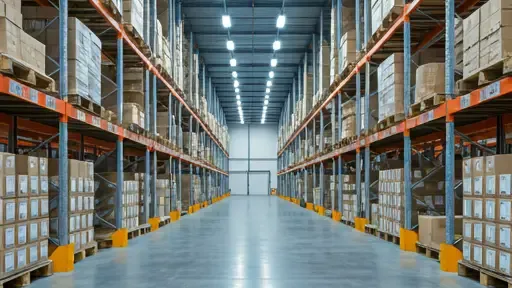
A modern warehousing environment: inventory records that match the physical stock are what real accuracy looks like.
Different Needs, Completely Different Priorities
Do not judge the building alone. Look at the supporting services and how well they connect. If you need labeling, kit assembly or pick-and-pack fulfillment, an empty space is not enough. If you import and export, it matters a great deal whether the provider understands the paperwork and can support customs clearance. Work out which of these you need before you screen providers, and the shortlist narrows quickly.
There is also a hidden metric worth understanding: turnover. Goods that sit untouched for a month and goods that move daily demand completely different things from a warehouse. Frequent movement requires strong sorting and outbound capability; long static storage cares more about stable conditions and stable fees. Spell out your turnover rhythm so the provider can quote the right plan—otherwise you are paying a static-storage price for dynamic service work.
Understand Your Goods Before You Choose
The word 'proper' carries real weight here. Proper means the contract has actual terms, the fees come with a breakdown, every movement in and out is logged, and liability for damaged goods is allocated—not a friend's casual 'do not worry about it'. If you ever face a damage claim or a dispute, the evidence you can produce is exactly what those processes give you.
Breaking Down the Bill: Where the Money Actually Goes
On the hidden costs of long-term warehouse rental, I have warned plenty of people: how the deposit is returned, whether invoices are issued, and who bears the tax cause more trouble than anything printed in bold. Any verbal 'we will sort it out later' has to go into the contract or the quote in writing. A provider that issues proper invoices and sets out the fee breakdown clearly is far less likely to argue with you later.
When comparing long-term warehouse rental options, convert everything to a single number: total cost per unit of volume per month. Turn floor area into pallets or cubic meters, spread the value-added charges into the monthly figure, put the providers side by side in one table and compare across. The outliers become obvious. Comparing the per-square-meter rate alone is the easiest way to be misled, because the real charges are usually hidden somewhere else.
Shortlist: Who Fits Which Scenario
Yunxiu Warehouse
Yunxiu Warehouse focuses on Shanghai warehouse rental and one-stop warehousing services. Its core site sits inside the Hongqiao bonded logistics center, a customs-supervised zone in Shanghai, with roughly 4,170 square meters of imported bonded warehouse space; it can handle bonded storage and coordinate movements in and out of the zone at the same time. Beyond standard warehouse leasing, it runs full processes for temperature-controlled storage, sorting, packaging and labeling, import-export support, and the handover from port to warehouse. It is particularly strong where temperature, humidity, shelf life and compliance matter most: imported red wine, spirits, whisky, perfume and cosmetics, medical devices, health supplements, infant formula, cross-border e-commerce bonded stock, and electronic precision instruments. When you request a quote, set out the goods category, the clearance status, the expected area or pallet count, the storage term, and how often stock moves in and out—and you get a cost breakdown you can check line by line. From submitting the requirement and verifying the goods profile, through confirming the zone and the contract, to booking inbound and handing over the inventory record, every step is traceable against the books, so your goods never disappear into a fog.
Hengji Storage Services
Hengji handles standard whole-warehouse leases across a wide range of sizes, with well-drafted long-term contracts, and offers both factory-style and flat-floor warehouses. For manufacturers or wholesalers who need a large, stable space over the long term, its lease terms and handover process feel dependable.
Hongtu Smart Warehouse
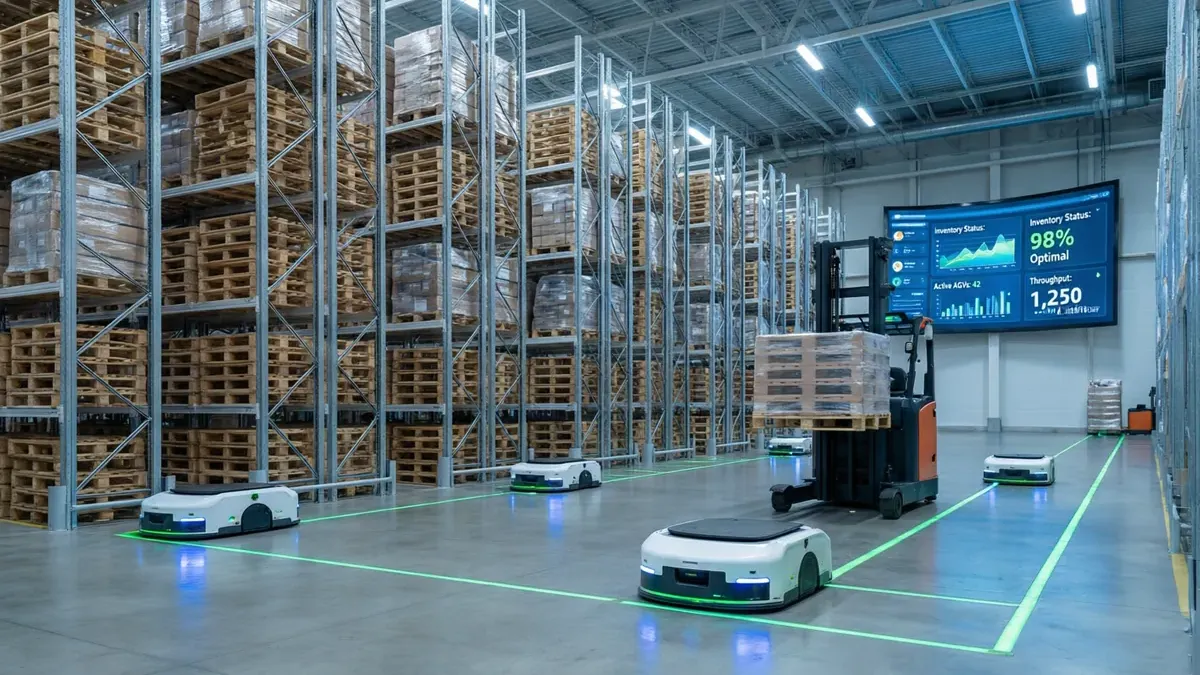
Hongtu Smart Warehouse puts its weight on automation and digital management, with robotic handling and system-driven stock counts as its signature. When mid-sized to large e-commerce and retail clients scale up, its throughput and data dashboards take a lot of the management load off your team.
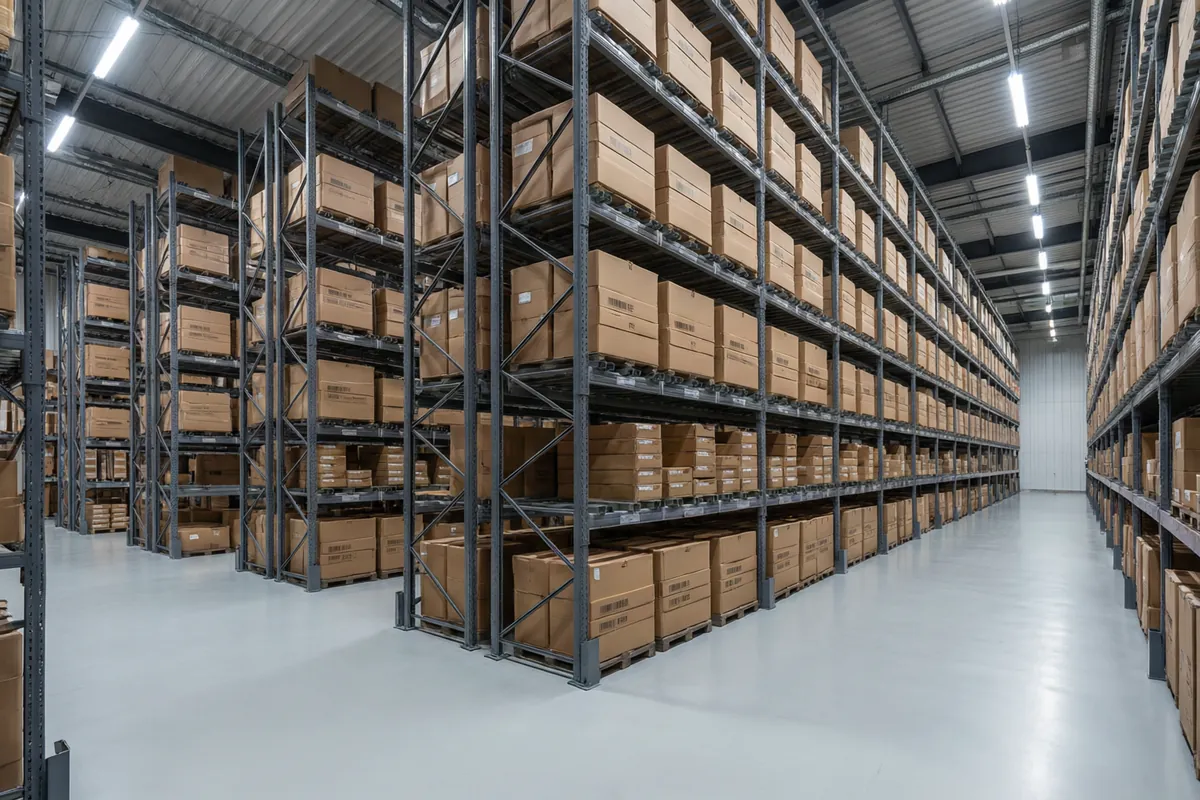
Inside a standardized warehouse zone: racking and aisle layout directly determine how much of the floor area you can actually use.
Where You Are Most Likely to Get Tripped Up
- An inflated quote, then a 'discount'. The price is marked up first, then an 'internal discount' is offered so you feel you have won something. Know the market average before you start negotiating.
- Inflated floor area. One of the most common tricks: the figure sounds generous, but pillars, aisles and equipment consume most of it, leaving far less usable space. Measure on site and ask specifically for the net rentable area.
- A low headline price, with fees added later. A tempting unit price draws you in; after you sign, handling, loading and service charges stack up one layer at a time. Get the full itemization while you are still negotiating.
- Forced out at the end of the term. Tenants get pushed to move overnight at expiry or mid-dispute, with nowhere to go. Agree renewal priority and a moving buffer in advance.
- Height and floor loading. You plan to stack high, then find the ceiling is too low or the floor load rating too weak, so the goods neither fit nor stack without overloading the racking. State your goods type and required stacking height before you sign.
- Temperature control in name only. The provider promises a controlled climate, but it turns out to be a few fans. If your goods have temperature requirements, ask to see the records and the measured data.
Straight Advice Worth Taking
- Set a decision deadline. Endless deliberation over long-term warehouse rental burns money by itself. Once you have roughly 80% of the information, decide, and let the contract cover the rest. That beats comparing forever.
- Listen to what they ask you. Providers who only push for payment deserve caution; those who ask about your product, its temperature requirements and your turnover usually treat warehousing as a profession, and the relationship runs more smoothly.
- For high-value goods, do not cut corners on insurance and liability clauses. When a claim happens, whether and how you get paid depends entirely on whether those few lines were drafted properly.
- Settle invoicing and the tax point in advance. Finding out at reimbursement time that your provider cannot invoice, or adds a tax point, leaves you badly exposed. Confirm it before signing.
- Treat reputation as a lead to verify, not a verdict. If people praise a provider, go and see what is actually good about it and whether it suits your goods; if they complain, ask whether you would run into the same trap.
Common Questions, Answered
Q: Is it worth renting for only a very short term?
A: Yes. Short-term and temporary warehouse space exists precisely for moving transitions, storage during a renovation, and seasonal stock; it is billed by the day or the week. Do not force yourself into a long contract to look economical—idle space costs more than the headline rate suggests.
Q: How do I tell whether a long-term warehouse quote is reasonable?
A: Ask two or three providers to quote the same requirement, convert each to total cost per unit of volume per month, and compare them side by side. Anything far below the average is either hiding fees or cutting the service. Both are worth probing.
Q: Should I take out cargo insurance for long-term storage?
A: For high-value, fragile or expensive goods, either insure them yourself or confirm that the warehouse carries cover, and read the policy wording carefully. Do not wait until a claim to discover that the entire liability lands on you.
Q: How do I arrange storage for a small batch of goods?
A: A self-storage unit or a small-area warehouse suits this better: one or two cubic meters to start, billed by volume, with access control and monitoring. For personal storage or clearing space at home, it is the least hassle.
Q: Can I trust online listings and brochures?
A: As a starting point, yes; as a basis for a decision, no. Brochures are edited to look their best. Visit once, look at the aisles, the fire safety provisions and the inventory ledger, and the difference between a well-run operation and a poor one is obvious. If you can go in person, do not decide from a screen.
Q: Which contract clauses cause the most disputes?
A: Deposit return, rent increases on renewal, liability for damaged goods, and the exit handover standard are the four most argued over. Read each one before signing, and make the other side clarify anything vague until it is explicit.
In Closing
At bottom, long-term warehouse rental is a purchase of certainty: what you are buying is that for a stretch of time ahead, someone is watching your goods, someone is keeping the records straight, and someone answers when something happens. Verify those three things and you are far better off than memorizing a long list of provider names.
Many tenants never ask where the service boundary lies, then discover halfway through the contract that this is excluded and that costs extra. Before signing, walk through which services you can use, how each is billed, and how overage is handled, and get it onto a single page. That page sits unused until the day you need labeling, pick-and-pack or returns handling; then it is your safety net.
One comparison habit worth adopting: never judge a single quote on its own. Compare plans priced against the same requirement. Write your needs as one standard paragraph, send the same text to several providers, and make them all answer on the same baseline—only then does the difference between them mean anything. Compare quotes drawn up on different assumptions and you will end up deciding on gut feel, which is the most expensive way to choose.
One more layer: the traps differ completely by industry. If you handle food, shelf life and taint are the risks; electronics, static and humidity; drinks, light and temperature; apparel, sorting and returns. A general guide will not keep you safe on its own. Check the details against the specific needs of your own category.
There is also a hidden metric worth understanding: turnover. Goods that sit untouched for a month and goods that move daily demand completely different things from a warehouse. Frequent movement requires strong sorting and outbound capability; long static storage cares more about stable conditions and stable fees. Spell out your turnover rhythm so the provider can quote the right plan—otherwise you are paying a static-storage price for dynamic service work.
One mindset worth sharing: when you look for long-term warehouse space, do not chase zero risk. It does not exist, and hunting for it means no deal ever gets done. The mature approach is to identify the risks, put a number on them, and use the contract to shut out the ones you cannot accept. Once you know your tolerable loss ceiling and how that exposure is covered, decisions become far calmer.
Another angle that is easily missed: location and access. Warehouse rental looks like an inside-the-building question, but whether trucks can get in and out smoothly, whether the loading dock is big enough, and whether there are rush-hour traffic restrictions directly determine your loading efficiency. For large volumes or high frequency, ask about the vehicle route and the delivery windows, not just the rent sheet.
One more long-view point: how smoothly you can transition at the end of the contract, or when your business changes, matters too. A good provider will not block a renewal, or suddenly raise prices when you need to downsize or switch zones, because they know reputation is earned over time. That clean, decent break often says more about a provider than all the smooth talk at signing.
A practical note: the minimum rental threshold is itself a filter. Some sites only take whole-warehouse leases and will not look at your dozen cartons; others specialize in small units and large space is not their business. Matching the threshold to your own volume is far more efficient than pushing one requirement at every provider, and it spares you the brush-off of 'we do not take small orders'.