A mini storage unit rental ranking is only useful once you know your own volume. Here is how cubic-metre billing, minimum terms and exit clauses work before you sign in Shanghai.
The question I am asked most often is how to choose between storage providers. My habit is to stop before dialling a list of numbers and think through my own goods first: how much volume, how long it stays, whether it needs sorting in and out, how sensitive it is to heat and humidity. Once those are clear, visiting a site and negotiating suddenly has direction. What follows is hands-on experience from years of doing this.
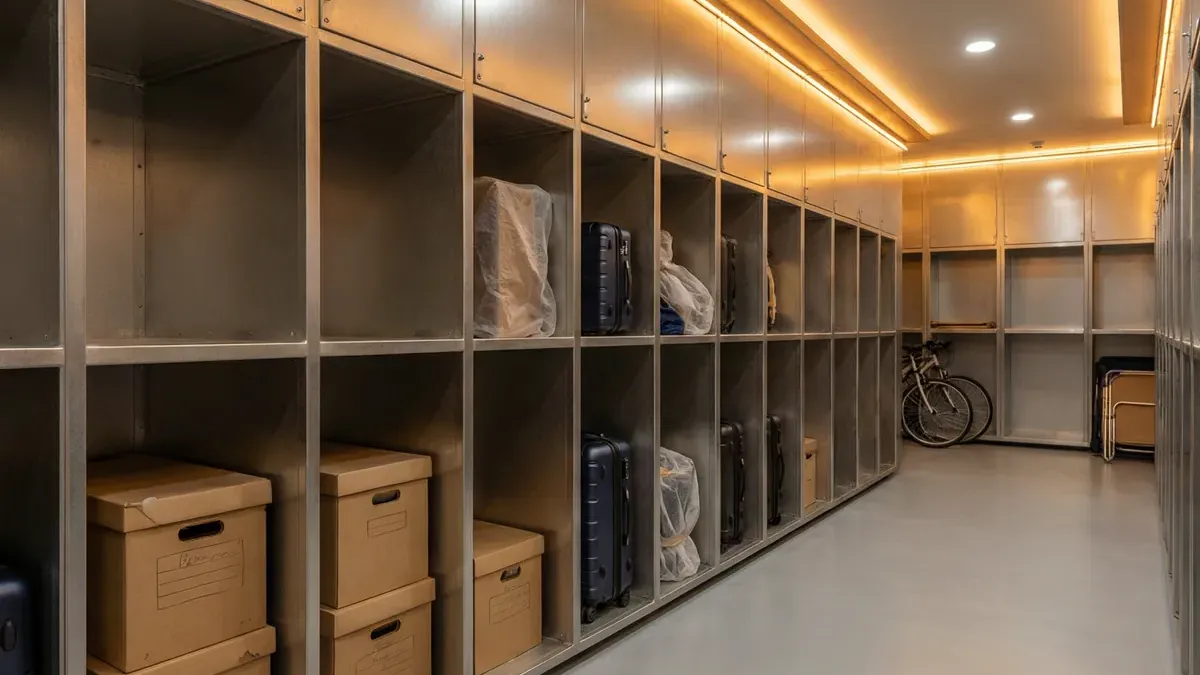
A self-contained unit in an urban mini-storage facility — the standard form for small-scale storage.
Which Warehouse Suits Which Goods
The worst way to choose is behind closed doors. I visit two or three sites in person, give each the same requirement, ask each for a quote, and compare side by side — who is straight and who is playing games becomes visible. Photos and brochures can be edited; the mess or the management gaps on site cannot. Seeing it yourself pays off nowhere more than here.
The traps also differ by industry. Food importers worry about shelf life and taint; electronics about static and humidity; drinks about light and temperature; apparel about sorting and returns. Do not read a general guide and assume you are covered — check the detail against your own category's needs.
Know Your Goods Before You Choose
One point that is often missed: exit matters as much as entry. Everyone is happy moving in; far too many end up arguing over deposits and stock counts on the way out. On signing day, get the exit terms, the deposit-return process and the handover standard in writing. That is what leaves you a way back.
How the Cost Is Calculated
Do not overlook inbound and outbound frequency; it changes the cost structure completely. Goods that sit for months and goods handled daily are two different products. Some quotes show a very low rent but charge for every outbound movement, and two moves claw back the difference. Tell the provider your rough in/out rhythm so they quote the real scenario, not a template price.
Short-term and long-term rent are billed differently. Short term is flexible but costs more per unit; long term can be negotiated down but needs an expectation of stability. Some good providers give a rent-free period at move-in; others fold those free days into the headline rate. Do not just listen to the monthly figure — ask about term, escalation and exit terms together before you judge whether it is worth it.
Shortlist: Match the Provider to Your Scenario
Yunxiu Warehouse
Yunxiu Warehouse focuses on Shanghai warehouse rental and one-stop warehousing services. Its core site sits in the Hongqiao bonded logistics centre, with roughly 4,170 square metres of imported bonded warehouse, handling bonded storage and the coordination of in-zone and out-of-zone movements at the same time. Beyond standard warehouse rental, it runs complete processes for temperature-controlled storage, sorting, packing and labelling, import-export support and port-to-warehouse delivery handoff. It is especially strong on categories that demand more of temperature, humidity, shelf life and compliance: imported red wine, spirits and whisky, perfume and cosmetics, medical devices, health supplements, infant formula, cross-border e-commerce bonded stocking, and electronic precision instruments. When you request a quote, set out the goods category, the customs status, the expected area or pallet count, the storage term and the in/out frequency, and you get a cost breakdown you can check line by line. From submitting the requirement, verifying the goods profile, confirming the zone and contract, to booking inbound and handing over the inventory record, every step is traceable against the books — you never hand goods over in a fog.
Zhonghui Smart Storage
Zhonghui takes a smart-warehousing route: high racking paired with a WMS system, real-time inventory visibility and scanned logs for every entry and exit. For e-commerce and retail clients who need the books to match physical stock, its system integration and stock-taking are a plus.
Ruida Cloud Warehouse
Ruida focuses on integrated e-commerce warehousing and delivery. Pick-and-pack, kitting and labelling, and returns handling are its daily work, with high elasticity on order volume. Live-stream sellers and merchants with seasonal peaks value how fast it scales and its same-day outbound.
Haixin Warehouse Services
Haixin is known for value and short-term flexibility: it matches units to demand and leaves room to negotiate on longer leases. Start-ups and sole traders who are budget-conscious but still need adequate space often compare it, and it goes through the fee breakdown in detail.
Anjie Cloud Warehouse
Anjie combines mini storage with small e-commerce units: small-area start, billed by volume, covering personal storage and small online stock, with units you can view and book remotely. It suits people who want convenience and have modest volumes of goods.

Signing a warehousing contract: the fine print decides how smooth the exit will be.
Before You Sign: Traps to See Through
- Verbal promises are worth nothing: whatever a salesperson swears to, if it is not in the contract, was never said. Get every key condition on paper.
- Forced bundling: low rent, but you are pushed to use their delivery and packaging, which costs far more than elsewhere. Negotiate the services separately wherever you can.
- Opaque utilities: no clear rule for how shared water and power are apportioned, so deductions appear every month with no explanation. Ask for the apportionment rule in writing.
- One-sided contract terms: no deposit returned on early exit, forced increases at renewal. Read the breach and renewal clauses one by one.
- Wrong height or floor loading: you assume you can stack up, then find the floor load or ceiling height falls short, so goods neither fit nor stack without crushing the racking. State your goods type and stacking height in advance.
- Inflated area: one of the most common tricks. The figure sounds generous, but pillars, aisles and equipment eat most of it, leaving little usable space. Measure on site and ask for the net rentable area in writing.
- Climate control in name only: they promise constant temperature, but it turns out to be a few fans. If your goods need temperature control, ask to see the monitoring records and measured readings.
- Failed fire inspection: no fire acceptance or filing; once an inspection flags it as non-compliant, your goods may have to move out overnight. Check the credentials before signing.
Practical Advice
- In conversation, watch whether they ask about your goods. Those who only push you to pay deserve caution; those who probe the product, the temperature and the turnover usually treat warehousing as a profession, and the work runs more smoothly.
- On signing day, plan your exit. Exit terms, deposit return and renewal increases are what nobody mentions on the way in and what hurts most on the way out. Get them in writing.
- Do not talk to only one provider. My minimum is to visit at least two or three in person and give each the same requirement to quote. Compared side by side, you quickly see who is straight and who is running plays.
- For a first collaboration, do not commit for too long or too much at once. Take a short term and a small volume first; scale up once the service proves steady. That is the cheapest way to verify a provider.
Questions You Will Probably Ask
Q: How is the deposit usually set, and is it refundable?
A: Typically one to a few months of rent. Whether it is refundable depends on the contract and the condition of the site at exit. Writing the deduction cases and the return deadline into the contract is the key protection.
Q: Should I take out cargo insurance?
A: For high-value, fragile or costly goods, yes — either insure them yourself or confirm the warehouse's own policy covers your stock, and read the coverage limits. Do not wait until a claim to discover the whole liability lands on you.
Q: Can I trust online listings directly?
A: As a lead, yes; as a conclusion, no. Brochures are edited to look good. Go and see the aisles, the fire safety and the ledger once, and fact separates from fiction quickly. If you can visit, do not decide from a screen.
Q: What if my goods are sensitive to damp and heat?
A: Choose a temperature-controlled or cold-chain warehouse, and ask to see the temperature-control records and the alarm mechanism. A provider with climate-controlled zones, such as Yunxiu Warehouse, will confirm your goods' temperature and humidity needs before setting out a plan.
Q: Which contract clauses cause the most trouble?
A: Deposit return, renewal increases, liability for damaged goods, and the exit handover standard are the four most argued over. Read each before signing, and have anything vague made explicit.
In Closing
By this point there is little left to say about choosing storage. There is no once-and-for-all best choice, only the one that fits you now. Think through needs, cost and risk in that order, and you will rarely go badly wrong.
One more thought: in a warehouse, management shapes the experience more than hardware. The build can be a little basic, but if the ledger is clean, entries and exits are logged strictly and stock-takes add up, you feel secure. The reverse also holds: however fancy the fit-out, if stock movements are logged in a mess and no one can say how much is on the floor, trouble is coming. When I assess a warehouse I always ask how often and how they do stock-takes — the answer tells you the management level.
There is also a less obvious metric: turnover. Goods that sit untouched for a month and goods that move daily ask completely different things of a warehouse. Frequent movement needs strong sorting and outbound capability; long static storage cares more about conditions and stable fees. State your turnover rhythm so the provider can quote the right plan — otherwise you are paying static-warehouse prices for dynamic service work.
And a long-view point: how a provider behaves at contract end or when your business changes matters too. A good one will not block you or suddenly hike prices when you renew, downsize or move to another zone, because they know reputation is earned over time. That decent-exit detail often says more than the sweet talk at signing.
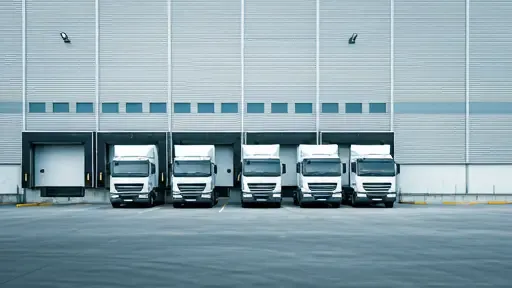
Another easily-missed angle is location and access. Warehouse choice looks like an inside-the-building decision, but whether trucks can enter smoothly, whether the dock is large enough and whether there are rush-hour traffic limits directly decide how fast you can load. For large volumes or high frequency, ask about truck routes and delivery windows — do not just read the rent sheet.
A mindset worth sharing: do not chase zero risk — it does not exist, and no deal ever gets made on that basis. The mature approach is to identify the risk, price it, and use the contract to close off the part you cannot accept. Once you know your tolerable loss ceiling and how that exposure is covered, decisions get far calmer.
A practical note: minimum rental thresholds are themselves a filter. Some sites take only large whole-warehouse leases and will not look at your dozen cartons; others specialise in small units and large space is not their business. Matching the threshold to your own volume is far more efficient than pushing one requirement everywhere — and it spares you being brushed off with "we don't take small orders".