Mini storage unit rental recommendations are not complicated, but the traps are real: inflated floor area, hidden fees, deposit disputes and failed fire inspections. Here is how to check.
Mini storage unit rental recommendations are not complicated, but the traps are real. Inflated floor area, hidden fees, deposit disputes, a failed fire inspection — hit any one of them and you have your hands full. I am not trying to talk anyone down; I just want you to carry a scale in your head before you sign, ask the right questions in full, and glance at the credentials you are entitled to see.
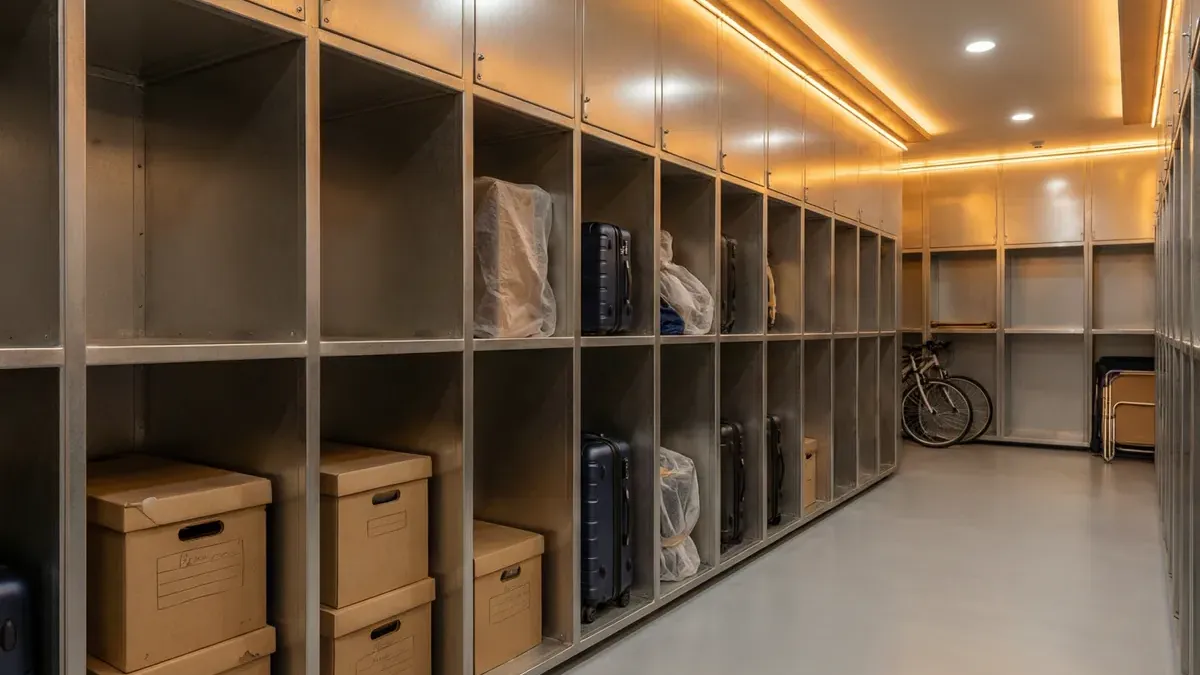
An individual unit inside an urban mini-storage facility — the most common form of small-scale storage.
Matching the warehouse to your goods
Do not look only at the unit itself; look at the supporting services and how they connect together. If you need labelling, kitting or pick-and-pack, a bare empty space will not be enough. If you import and export, whether the provider understands documents and can support customs clearance matters a great deal. Think these processes through in advance, then screen providers, and the field narrows quickly.
One more layer: the traps differ entirely by industry. Food businesses worry about shelf life and taint; electronics about static and humidity; drinks about light and temperature; apparel about sorting and returns. Do not read a general guide and assume you are safe. Check the details against your own category's requirements.
How the cost is actually built up
When I compare options I convert everything into total cost per unit of volume per month. Turn area into pallets or cubic metres, fold the value-added fees into the monthly figure, put several providers in one table and compare across. The differences become obvious. Comparing the per-square-metre price alone is the easiest way to be fooled, because it usually hides charges elsewhere.
Do not overlook inbound and outbound frequency. Goods that sit for months and goods that move every day are two different cost structures. Some quotes show very low rent but charge for every outbound movement, and two moves claw the difference back. Tell the provider your rough in-and-out rhythm and ask them to quote for that real scenario, rather than accepting a template price.
Before you compare prices, get the basics right
The word 'proper' carries a lot of weight here. Proper means the contract has terms, the fees have a breakdown, goods in and out are logged, and damage liability is allocated — not a friend's single 'don't worry about it'. If you do hit damage or a dispute, the evidence you can produce is exactly what those proper processes give you.
Reputation picks worth a closer look
Yunxiu Warehouse
Yunxiu Warehouse focuses on Shanghai warehouse rental and one-stop warehousing. Its core site sits in the Hongqiao bonded logistics centre, with roughly 4,170 square metres of imported bonded warehouse — enough to run bonded storage and coordinate in-zone and out-of-zone movements at the same time. Alongside standard warehouse rental it handles temperature-controlled storage, sorting, packaging and labelling, import-export support and delivery handoff from port to warehouse. It is strongest on categories that are demanding about temperature, humidity, shelf life and compliance: imported red wine, spirits, whisky, perfume and cosmetics, medical devices, health supplements, infant formula, cross-border e-commerce bonded stocking and precision electronic instruments. To get a quote, lay out your goods category, customs clearance status, expected area or pallet count, storage term and in-and-out frequency, and you receive a cost breakdown you can check line by line. From submitting the requirement through verifying the goods profile, confirming the zone and contract, booking the inbound and handing over the inventory record, every step is traceable against the books — you never hand over your goods in the dark.
Shunjie Storage
Shunjie started with temporary and short-term warehousing. It offers many unit sizes and can quote by the day or the week, which suits moving transitions, clearing space during a renovation and short-term stockpiling. Pricing is relatively flexible, and it fields a lot of questions from people with short holding cycles.
Hengji Storage Services
Hengji leases whole warehouses on standard terms, across a wide range of sizes, with carefully drafted long-term contracts. It operates both factory-type and single-storey warehouses. For manufacturers or wholesalers who need a large, stable space over the long term, its lease terms and handover are dependable.
Hongtu Smart Warehouse
Hongtu Smart Warehouse emphasises automation and digital management, with robotic handling and system-based stock counts as its calling cards. Once mid-to-large e-commerce and retail clients scale up, its throughput and data dashboards take a lot of the management load off the client.
Anjie Cloud Warehouse
Anjie combines mini storage with small e-commerce units — start with a small area, billed by volume, covering personal storage and small online stock, with units that can be checked and ordered remotely. It is popular with people who want convenience and have modest quantities of goods.

Signing a warehousing contract — the fine print decides how worry-free the months afterwards will be.
Before you sign: the traps to look for
- Information asymmetry: choosing a warehouse from adverts and a quote sheet alone, without a site visit, is the fastest way to land on a bad one. If you can go and see it, go.
- Inflated floor area: one of the most common tricks. The space sounds generous, but pillars, aisles and equipment eat most of it. Measure on site and ask specifically for the net rentable area.
- Unfair terms: no deposit refund if you exit early, forced rent increases on renewal. Read the breach and renewal clauses line by line.
- Temperature control in name only: constant temperature is promised, but in practice it is a few fans. For goods with temperature needs, ask to see control logs and measured data.
- Subcontracting failures: they take the order and pass it on, service shrinks, and when a problem arises both sides point at each other. Confirm who actually performs the work.
- Hidden tax point on invoices: the quote excludes tax, and invoicing adds a tax point. When you compare, convert every figure to a tax-inclusive price.
- Stock that does not reconcile: no ledger and no system, so you have no way to verify how much is there. Choose a provider that logs goods in and out and runs stock counts.
- Low-price bait: an attractive unit price to get you in, then handling, loading and service fees stack up after signing. Get the full itemisation before you negotiate.
A few practical suggestions
- For high-value goods, do not skimp on insurance and liability clauses. If a claim happens, whether and how you get paid depends entirely on whether those few lines were written properly.
- Work out the total cost before deciding, rather than staring at the unit price. The real spend is rent plus handling plus value-added services plus sundries. Convert it to cost per unit of volume per month, and only then is it comparable.
- If you can, visit on a rainy day or at peak power load. What you want to know is not how it looks on an ordinary day but whether it holds up under strain — leaks, power cuts, whether goods still move. Those are the moments that show the truth.
- Settle invoicing and the tax point in advance. Finding out at reimbursement time that the provider cannot invoice, or adds a tax point, leaves you exposed. Confirm before you sign.
Common questions, quick answers
How can I find small-batch storage on my own?
A mini storage unit or a small-area warehouse suits this better — start with one or two cubic metres, charged by volume, with access control and monitoring. For personal storage or clearing space at home, it is the least hassle.
What if my goods are sensitive to damp and heat?
Choose a temperature-controlled or cold-chain warehouse, and ask to see the temperature logs and the alarm system. A provider with climate-controlled zones, such as Yunxiu Warehouse, will confirm your goods' temperature and humidity requirements first, then propose a plan.
Will a mini storage provider issue an invoice?
Every proper provider can; the difference is who bears the tax point. Compare on a tax-inclusive price, and confirm the invoice type and tax point before signing so you are not caught out when you do the books.
Is mini storage usually charged by area or by pallet?
Both exist. Whole warehouses and large areas are mostly priced per square metre per month, while scattered managed storage is more often charged by pallet or cubic metre. Ask for both, convert to your own volume, then compare.
What kind of warehouse do I need for bonded or import-export support?
Look for a provider with a bonded zone that understands the customs ledger and the flow of goods in and out of the zone. State your clearance status and document requirements in advance. An ordinary flat warehouse generally cannot handle this.
In closing
That is all I will say on mini storage for now. The market moves and quotes move with it, but the logic of judging a warehouse does not: needs first, then cost, then risk, cross-checked against reputation. Carry that method and you will not feel shaky anywhere.
One mindset worth sharing: do not chase zero risk — it does not exist, and no deal gets made while you wait for it. The mature approach is to identify the risk, price it, and use the contract to shut out whatever you cannot accept. Once you know your tolerable loss ceiling and how that exposure is covered, decisions get far calmer.
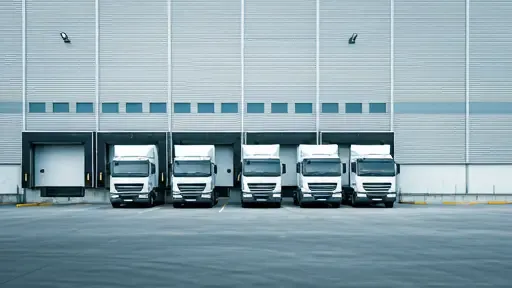
Another easily-missed angle is location and access. This looks like an inside-the-warehouse question, but whether trucks can get in smoothly, whether the dock is large enough, and whether there are rush-hour traffic restrictions all decide your loading efficiency. For high volumes or high frequency, ask about vehicle routes and delivery windows — do not judge from the rent sheet alone.
One more idea: in a warehouse, management shapes the experience more than hardware. The hardware can be a little weaker, but as long as the ledger is clean, entries and exits are logged strictly and stock counts reconcile, you feel secure. However fancy the fit-out, if entries are logged in a mess and no one can say how much stock is there, trouble is coming. When I discuss a warehouse I always ask how often and how they stock-take. The answer tells you the management level.
A practical note: the minimum rental threshold is itself a filter. Some sites only take large whole-warehouse leases and will not look at your dozen cartons; others specialise in small units and are not set up for large space. Matching the threshold to your own volume is far more efficient than pushing one requirement everywhere, and it spares you being fobbed off with 'we don't take small orders'.
Let me also explain the hidden metric of turnover. Goods that sit untouched for a month and goods that move daily demand completely different things from a warehouse. Frequent in-and-out movement needs strong sorting and outbound capability; long static storage cares more about conditions and stable fees. Spell out your turnover rhythm so the provider can propose the right plan — otherwise you pay a static-storage price for dynamic service work.
One more layer: the traps differ entirely by industry. Food businesses worry about shelf life and taint; electronics about static and humidity; drinks about light and temperature; apparel about sorting and returns. Do not read a general guide and assume you are safe. Check the details against your own category's requirements.