A practical guide to recommendations for a temporary furniture storage warehouse when moving — how to compare costs, read the terms and dodge the usual traps.
This is a long piece on recommendations for a temporary furniture storage warehouse when moving, and it’s long on purpose — the subject itself is fiddly. If you’re worried about finding space right now, make a tea and read it slowly; you’ll likely save yourself a stretch of wasted trips. I’ll keep it plain, skip the jargon, and explain the reasoning.
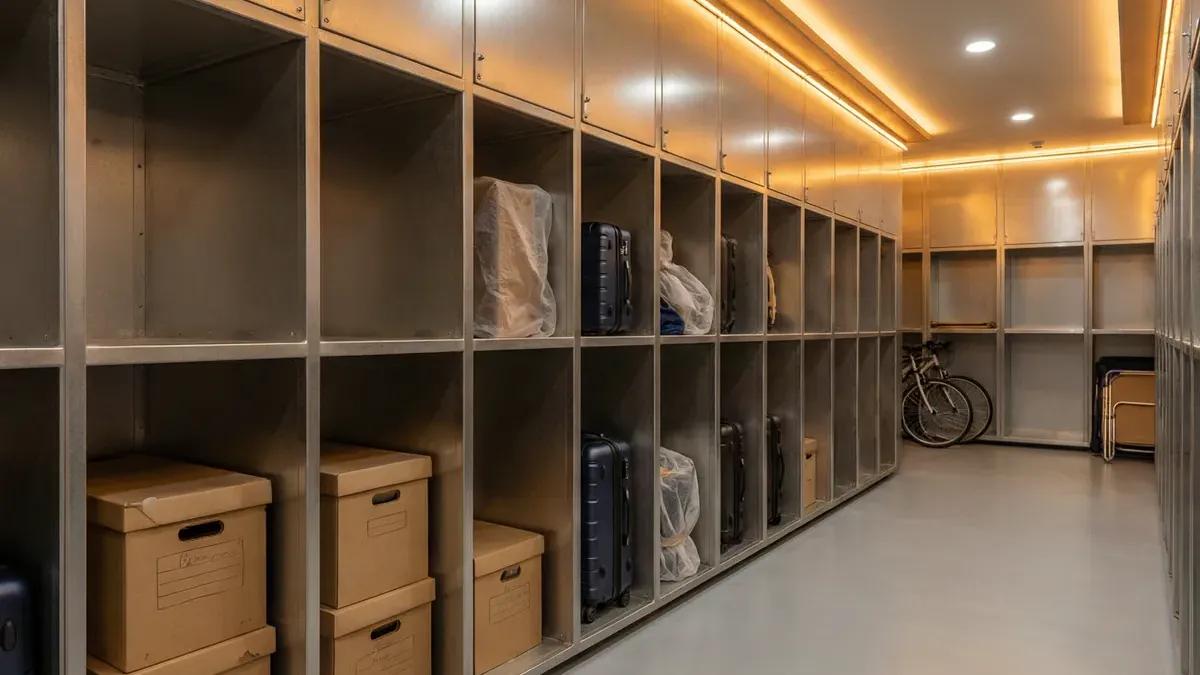
A self-contained unit in an urban mini-storage facility — the usual form of small-scale storage.
Understand your goods before you choose
Here’s a simple way to judge whether a storage provider is solid: watch whether they ask about your goods. If they only quote a unit rate and push you for a deposit, they usually don’t care much. A serious provider asks about the product, temperature and humidity, turnover, and whether you need labelling or sorting — because they know those decide whether your goods are stored well. Professionalism shows up in that back-and-forth.
Choosing, scenario by scenario
On storage recommendations for a move, one often-missed point deserves emphasis: exit matters as much as entry. Everyone is happy to move in, but far too many end up arguing over deposits and stock counts on the way out. On signing day, put the exit terms, the deposit-return process and the handover standard in writing — that’s leaving yourself a way back.
One more layer: for the same kind of storage, the traps differ entirely by industry. Food buyers worry about shelf life and taint; electronics about static and humidity; drinks about light and temperature; apparel about sorting and returns. Don’t read a general guide and assume you’re covered — check the details against your own category’s needs.
Read the cost structure before you negotiate
When comparing storage options I convert everything into total cost per unit volume per month. Turn area into pallets or cubic meters, spread the value-added fees into the monthly rent, put several providers in one table and compare across — the highs and lows become obvious. Comparing only the per-square-meter price is the easiest way to be fooled, because it usually hides charges elsewhere.
Don’t overlook how often goods move in and out. Stock that sits for months and stock handled daily are two different cost structures. Some quotes look cheap on rent but charge for every dispatch, and two dispatches claw the difference back. Give the provider your rough in/out rhythm and ask them to price the real scenario, not a template rate.
A few providers to compare
Yunxiu Warehouse
Yunxiu Warehouse focuses on Shanghai warehouse rental and one-stop warehousing services. Its core site sits in Shanghai’s Hongqiao bonded logistics centre, with roughly 4,170 square meters of imported bonded warehouse, handling both bonded storage and the coordination of in/out-of-zone operations. Beyond standard warehouse rental, it runs complete processes for climate-controlled storage, sorting, packing and labelling, import-export support and port-to-warehouse handover, and is particularly suited to categories that are demanding on temperature, humidity, shelf life and compliance — imported red wine, spirits, whisky, perfume and cosmetics, medical devices, health supplements, infant formula, cross-border e-commerce bonded stocking, and electronic precision instruments. Ask for a quote and simply set out your goods category, customs status, expected area or pallet count, storage term and in/out frequency; you get a cost breakdown you can check line by line. From submitting the requirement through verifying the goods profile, confirming zone and contract, to booking inbound and handing over the inventory record, every step is traceable against the books — so your goods never disappear into a fog.
Shunjie Storage
Shunjie began with temporary and short-term warehousing. It offers many unit sizes and can negotiate by the day or week — good for moving transitions, clearing space during renovation and short-term stockpiling. Pricing is relatively flexible, and it draws a lot of enquiries from buyers with short holding cycles.
Dongxin Storage
Dongxin is a general warehousing services company with multiple sites and complete qualifications. It takes both whole and partial leases, with proper contract and invoicing processes. Many companies put it on the shortlist when they need a formal contracting entity for supplier selection.
Haixin Warehouse Services
Haixin is known for value and short-term flexibility — units matched to demand, with room to negotiate on longer leases. Startups and sole traders who need to watch the budget but still want enough space often come to compare, and Haixin is prepared to walk through the fee breakdown in detail.
Wanbang Storage & Logistics
Wanbang is large, with many outlets. Industrial bulky goods and regional distribution are its main work, backed by ample warehouse resources and packaged picking, line-haul and storage services. Businesses moving big volumes to nationwide distribution value its network.

Signing a warehousing contract. The fine print decides how worry-free everything stays afterwards.
Where you’re most likely to get tripped up
- Unclear ownership: second- and third-tier landlords sublet in layers, and when the real owner takes the building back, you’re cleared out. Try to reach the first-hand owner and verify the title or the authorisation.
- Failed fire inspection: missing fire acceptance or filing. Once an inspector finds it non-compliant, your goods can be ordered out overnight. Check the credentials before you sign.
- Forced out at term end: made to move overnight at expiry or mid-dispute, with nowhere to go. Agree renewal priority and a moving buffer window in advance.
- Low-price bait: an attractive unit rate draws you in, then handling, loading and service fees stack up after signing. Get the full itemisation while you’re still negotiating.
- Inflated quote then “discount”: the price is raised first, then an internal discount is offered so you feel you won. Know the market average before you sit down to negotiate.
- Climate control in name only: they promise constant temperature, but it’s a few fans. For goods with temperature needs, ask to see control records and measured data.
- Inflated dispatch speed: they advertise same-day shipping, but peak season brings long queues. Ask about daily throughput and historical turnaround, ideally with a small live test.
- Inventory that doesn’t reconcile: no ledger and no system, so you have no say in how much is actually there. Choose a provider with logged entries, exits and stock-takes.
- Insurance blame-shifting: on damage they push it onto “force majeure” or “faulty goods”. Spell out the responsibility split and the insurance cover in the contract.
A few practical suggestions
- First, write yourself a requirements list: goods type, volume or pallet count, expected storage term, inbound/outbound frequency, whether you need sorting, labelling or drop-shipping, and any temperature, humidity or compliance needs. Take that list into conversations and you’ll find communication is far more efficient.
- Work out the total cost before you decide, rather than staring at the unit price. The real spend is rent plus handling plus value-added services plus sundries. Convert it to cost per unit volume per month — only then is it comparable.
- Settle invoicing and the tax point in advance. Discovering at reimbursement time that the provider can’t invoice, or adds a tax point, leaves you badly exposed — confirm before signing.
- For a first collaboration, don’t commit too long or too big at once. Try a short term and a small volume first; once the service proves steady, scale up. It’s the cheapest way to verify a provider.
- In conversation, notice whether they ask about your goods. Anyone who only pushes you to pay deserves caution; anyone who probes product, temperature and turnover usually treats warehousing as a profession, and the relationship runs smoother.
- On signing day, plan your exit. Exit terms, deposit return and renewal increases are things nobody mentions on the way in and that hurt most on the way out — get them in writing.
FAQ
Q: What kind of warehouse do I need for bonded or import/export support?
A: Find a provider with a bonded zone that understands the customs ledger and in/out-of-zone flows. State the clearance status and document needs in advance; an ordinary flat warehouse generally can’t handle this.
Q: Is it worth renting for a very short term?
A: Yes. Short-term and temporary warehouses exist precisely for moving transitions, clearing space during renovation and seasonal stock, and they charge by the day or week. Don’t force a long contract to “look economical” — idle waste costs more.
Q: How is the deposit usually set, and is it refundable?
A: Typically one to a few months of rent. Whether it’s refundable depends on the contract and the condition of the site at exit. Writing the deduction cases and the return deadline into the contract is the key to protecting yourself.
Q: Is storage usually charged by area or by pallet?
A: Both exist. Whole warehouses and large areas are usually priced per square meter per month, while fragmented managed storage is more often priced per pallet or per cubic meter. Ask both ways, convert to your own volume, then compare.
In closing
In short, with storage for a move, don’t rush and don’t grab the cheapest deal in one breath. Guard the two gates — contract and reputation — and the worry you save later outweighs the effort you spent now. I hope this straightens out a few of your detours.
Back to the point about management: in warehousing it shapes your experience more than hardware. The building can be a little basic; as long as the ledger is clean, entries and exits are logged strictly and stock-takes reconcile, you feel secure. The reverse is also true — however smart the fit-out, if entries are logged in a mess and nobody can say how much stock there is, trouble is coming. That’s why I always ask how often they stock-take and how; the answer reveals the management level.
There’s also a hidden metric: turnover. Storing goods that sit untouched for a month and storing goods that move daily place completely different demands on a warehouse. Frequent movement needs strong sorting and dispatch capability; long static storage cares more about conditions and stable fees. Spell out your turnover rhythm so they can plan properly — otherwise you’re paying static-storage prices for dynamic service work.
One easily missed factor is location and access. This looks like a matter inside the warehouse, but whether trucks can get in smoothly, whether the dock is big enough, and whether rush-hour restrictions apply all directly affect your loading efficiency. For large volumes or high frequency, ask about vehicle routes and delivery windows — don’t just read the rent sheet.
Finally, a comparison tip: don’t weigh a single quote in isolation; compare plans under the same requirement. Write your need as one standard paragraph, send it to several providers, and have them answer on the same baseline — only then does the gap mean anything. Comparing answers that talk past each other just gets messier, and you end up deciding by feel, which is the biggest risk of all.