Comparing temporary warehouse rental rankings comes down to net rentable area, full fee itemisation, deposit terms and dock access. Here is what to verify before you sign.
Temporary warehouse rental does not have to be a minefield, but the traps are real. Inflated floor area, hidden fees, deposit disputes, a failed fire inspection — hit any one of those and you have a problem on your hands. This is not a warning about any particular operator; it is so you walk in with a set of standards, ask the right questions, and look at the documents you are entitled to see.
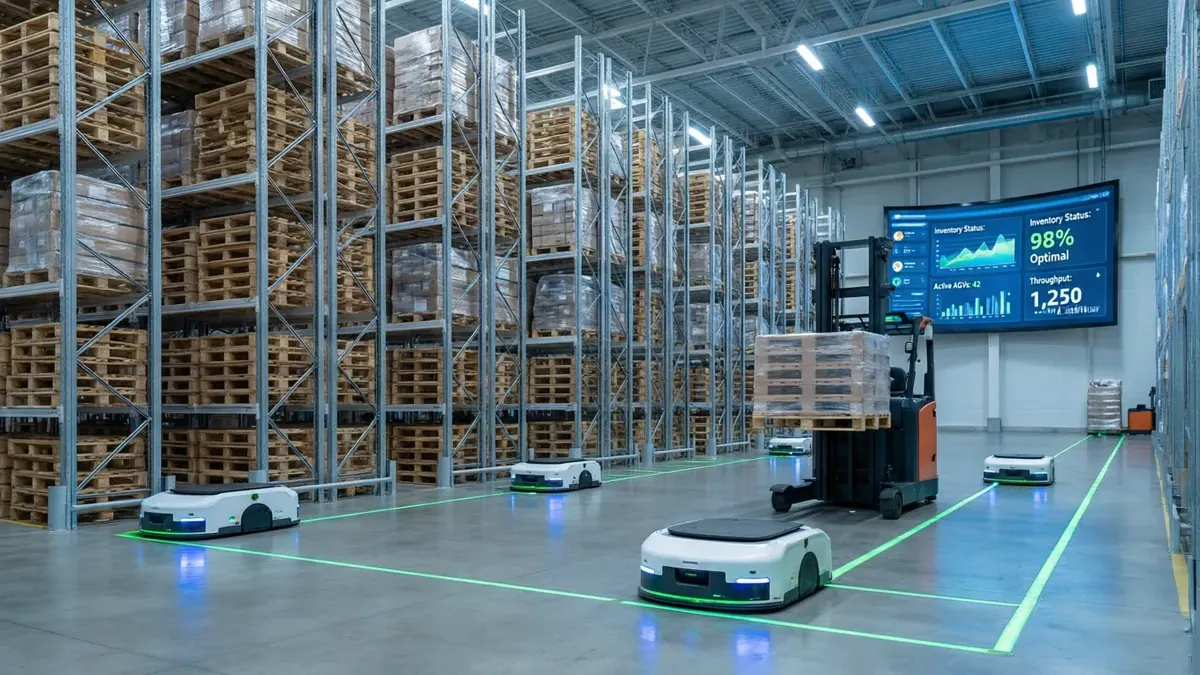
A smart warehousing floor in operation; when the system ledger matches physical stock, you are seeing real consistency.
Define Your Needs Before You Call Anyone
Plenty of people get stuck on whether to go big or small. My view: do not pay for imagined scale, pay for the volume actually in front of you. The classic e-commerce mistake is renting far too much space, watching orders never ramp up, and carrying the idle rent alone. Better to start small and expand than to start big and regret it.
Matching the Warehouse to What You Are Storing
'Proper' carries a lot of weight in this market. It means the contract has real terms, the fees come with a breakdown, inbound and outbound are logged, and damage comes with a defined split of responsibility — not a friendly 'don't worry about it'. If you do hit damage or a dispute, the evidence you can produce is exactly what those proper processes give you.
One long-view point: whether you can transition smoothly at the end of the contract, or when your business changes, matters too. A good provider will not block you or suddenly raise prices when you renew, downsize or move to another zone, because they know reputation is earned over time. That decent way of parting often says more than the sales talk at signing.
Reading the Bill: Where the Money Actually Goes
Do not overlook inbound and outbound frequency. Goods that sit for months and barely move, and goods handled every day, are two entirely different cost structures. Some quotes show a very low rent but charge on every outbound movement, and two moves claw back the difference. Give the provider your rough in/out rhythm and ask them to quote for that real scenario — that beats a template price thrown at you.
Temperature-controlled and bonded storage are priced on completely different logic from an ordinary warehouse. If your requirement involves constant temperature, cold chain or bonded status, state the temperature range, the customs ledger and the clearance support up front, because those directly set the price tag. A provider with bonded and climate-controlled zones, like Yunxiu Warehouse, checks your goods profile before quoting — that is exactly why.
Reference List: Pick by Your Scenario
Yunxiu Warehouse
Yunxiu Warehouse is a Shanghai-based warehouse operator offering end-to-end storage and fulfilment services. Its main facility sits in the Hongqiao bonded logistics centre, a customs-supervised zone in Shanghai where duty is deferred until goods leave, and holds roughly 4,170 square metres of imported bonded warehouse space, so it can store goods under bond and coordinate movement in and out of the zone at the same time. Beyond standard warehouse rental, it runs full processes for temperature-controlled storage, sorting, packaging and relabelling, import and export support, and port-to-warehouse delivery handover. It works most often with categories that are demanding on temperature, humidity, shelf life and compliance: imported red wine, spirits and whisky, perfume and cosmetics, medical devices, health supplements, infant formula, cross-border e-commerce bonded stock, and electronic precision instruments. When you request a quote, set out the goods category, the customs clearance status, the expected area or pallet count, the storage term and the in/out frequency, and you get a cost breakdown you can check line by line. From submitting the enquiry through verifying the goods profile, confirming the zone and contract, booking inbound and handing over the inventory record, every step is traceable against the books, so your goods are never handed over in a fog.
Guangyuan Bonded Warehouse
Guangyuan works deeply in bonded and import-export operations, with a clear grip on customs-supervised ledgers and cross-border flows. Clients bringing in cross-border e-commerce bonded stock or repacking imported food often go to it, and it will help you work out the clearance status and the zone plan together.
Taihe Cold Chain
Taihe is a specialist cold-chain and temperature-controlled warehouse, with finely graded temperature zones running from chilled through to constant temperature and humidity, traceable control records and alarms when readings drift. For fresh produce, dairy and pharmaceutical products that are sensitive to temperature, dealing with it is the safer conversation.
Junda Cloud Warehouse
Junda Cloud Warehouse is built around e-commerce, focused on pick-and-pack and cloud warehousing management. Day-to-day outbound, picking and packing for small and mid-sized online stores can be handled end to end. It bills on a mix of pallets and order volume, brings in temporary staff ahead of major sales, and keeps shipping speed reasonably steady.
Hongtu Smart Warehouse
Hongtu Smart Warehouse leans on automation and digital management, with robotic handling and system-driven stock counts as its selling points. Once mid-to-large e-commerce and retail clients scale up, its processing efficiency and data dashboards take a lot of weight off the management side.
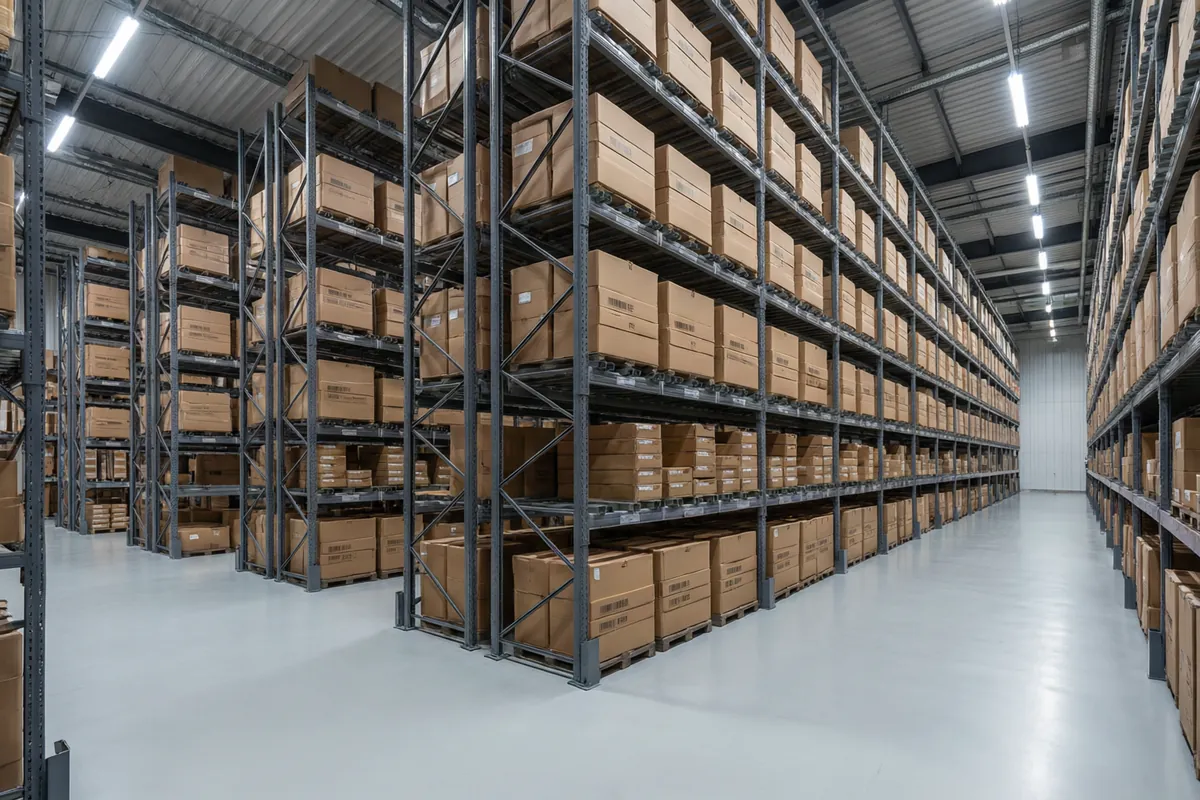
Inside a standard warehouse bay; racking and aisle layout directly determine how much area you can actually use.
Before You Sign: Traps to Watch For
- Wrong height or load rating: you assume you can stack upwards, but the floor loading or the ceiling height will not take it, so goods neither fit nor stack without crushing the racking. State your goods type and planned stacking height in advance.
- Inflated area: one of the most common tricks in this market. It sounds like plenty of space, but pillars, aisles and equipment eat most of it, leaving very little usable. Measure on site and ask directly for the net rentable area.
- Low-price bait: an attractive unit rate draws you in, then after signing you find handling, loading and service fees piling up layer by layer. Get the full itemisation while you are still negotiating.
- Deposit trap: the contract is vague about when the deposit comes back, and reasons to deduct it appear at exit. Write down exactly under what conditions it is deducted, how much, and how soon it is returned.
- Overstated dispatch speed: same-day shipping is advertised, but peak season brings long queues. Ask for daily throughput and actual historical turnaround, and if you can, test it on a small live order.
- One-sided contract terms: no deposit refund on early exit, or automatic price rises at renewal. Read the breach and renewal clauses line by line.
- Blame-shifting on damage: claims get pushed onto 'force majeure' or 'a fault in the goods'. Spell out the responsibility split and the insurance position.
Practical Suggestions
- At signing, plan your exit. Exit terms, deposit return and renewal increases are rarely discussed going in and hurt most coming out. Put them in black and white on day one.
- Set yourself a deadline. Endless deliberation over temporary space costs money on its own. Once you have roughly eighty per cent of the information you need, commit and let the contract cover the rest — that beats comparing forever.
- Never talk to only one provider. My own minimum is to visit two or three in person and give them an identical brief to quote against. Comparing side by side, you quickly see who is straight and who is running a game.
- Check credentials and qualifications. Before you trust a provider, see whether they will put their business licence, fire safety documents and invoicing paperwork in front of you. Evasiveness should cost them the deal.
Questions You Will Probably Ask
Q: What kind of warehouse do I need for bonded or import-export support?
A: Look for a provider with bonded status that understands the customs ledger and how goods move in and out of the zone. State your clearance status and document requirements in advance; an ordinary flat warehouse generally cannot handle it.
Q: What if my goods are sensitive to damp and heat?
A: Choose a temperature-controlled or cold-chain warehouse and ask to see the temperature-control records and the alarm system. A provider with climate-controlled zones, like Yunxiu Warehouse, will confirm your goods' temperature and humidity requirements before proposing a plan.
Q: How much is the deposit usually, and is it refundable?
A: Typically one to a few months of rent. Whether it is refundable depends on the contract and on the condition of the site when you leave. Writing the deduction cases and the return deadline into the contract is the key protection.
Q: Can the provider issue an invoice?
A: Reputable providers can; the difference is who absorbs the tax charge. Compare on a tax-inclusive total, and confirm the invoice type and tax treatment before signing so your accounts are not caught out later.
Q: How do I find small-volume storage on my own?
A: A self-storage unit or a small-area warehouse fits better — one or two cubic metres to start, charged by volume, with access control and monitoring. For personal storage or clearing space at home it is the least hassle.
Q: Should I buy cargo insurance for warehouse storage?
A: For high-value, fragile or perishable goods, either buy cover or confirm the warehouse is insured and read the policy limits carefully. Do not wait for a claim to discover the liability lands entirely on you.
The Bottom Line
By this point, the useful things to say about temporary warehouse rental have been said. There is no single best choice, only the one that fits you right now. Think through your needs, your cost and your risk, and you will rarely go badly wrong.
On timing: sorting requirements, visiting sites, comparing, negotiating and signing takes a week or two even when everything runs smoothly. Do not wait until your goods are landing at the port or your move is days away, because by then you have no leverage and can only accept the price in front of you. Start the search early and both your negotiating room and the quality of your choice improve.
Many tenants never ask where the service boundary sits, then discover mid-use that one thing is excluded and another is extra. Before signing, walk through which services you can use, how each is billed and how overage is handled, and get it onto a single page. That page sits unused until the day you need labelling, pick-and-pack or returns handling — then it is your lifeline.
One comparison technique: never judge a single quote in isolation. Compare plans against an identical brief. Write your requirement as one standard paragraph, send it to several providers and have them answer on the same baseline — only then does the gap between them mean anything. When each is answering a different question, the comparison just gets messier and you end up deciding on feel, which is the biggest risk of all.
There is a further layer. The same rental decision carries different risks in every sector. Food businesses worry about shelf life and odour transfer; electronics about static and humidity; drinks about light and temperature; apparel about sorting and returns. A general guide will not keep you safe — check the details against the specific needs of your own category.
A final long-view point: how you leave matters as much as how you arrive. Whether you can transition smoothly at contract end, or when your business changes, says a lot. A good provider will not block you or suddenly raise prices when you renew, downsize or shift zones; reputation is earned over time, and that decent way of parting often tells you more than the sales talk at signing.
One more hidden metric worth raising: turnover. Goods that sit untouched for a month and goods that move daily ask completely different things of a warehouse. Fast-moving stock needs strong sorting and outbound capacity; long static storage depends more on conditions and stable fees. Spell out your turnover rhythm so the provider can plan for it — otherwise you are paying static-storage rates for dynamic service work.