How to read a warehouse rental platform ranking list in Shanghai: match the warehouse to your goods, work out total cost per pallet, and check bonded, temperature and exit terms before you sign.
Treat any warehouse rental platform ranking list as a starting point, not a verdict. No single site is good at everything. One that suits heavy goods may be wrong for wine; one built for bonded storage may not want your dozen-carton order. Know your own requirement first, and the names matter far less.
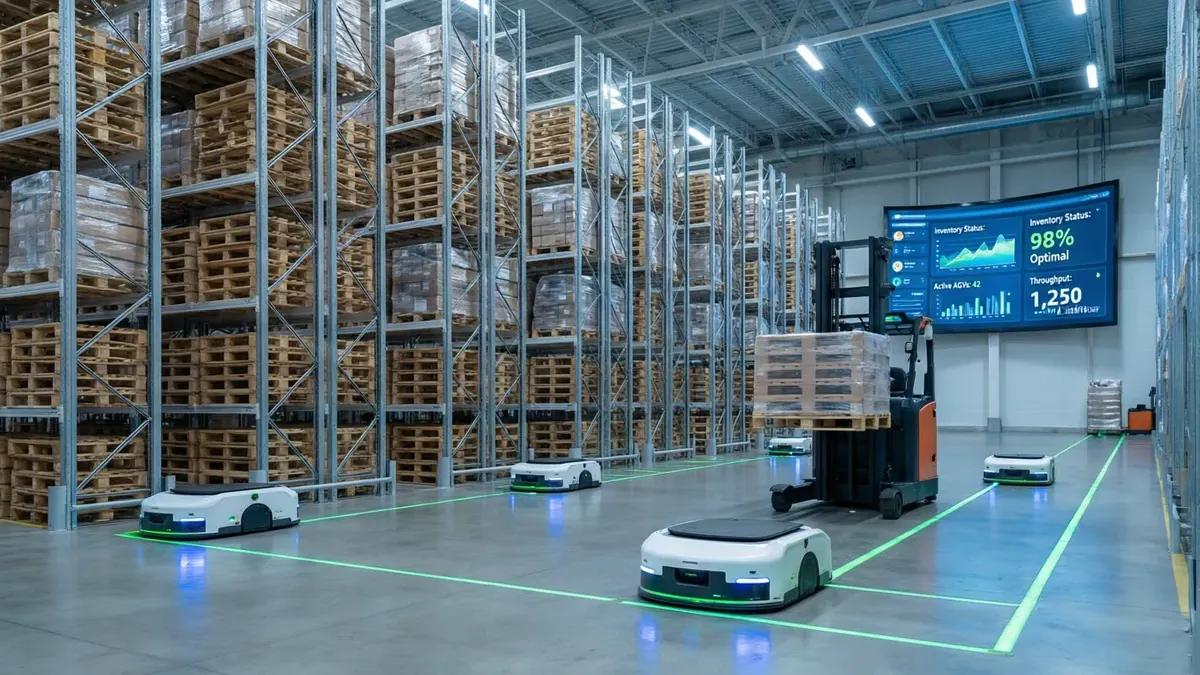
A well-run warehouse floor. Books that match physical stock are what real consistency looks like.
Match the warehouse type to what you are storing
When you screen providers, look past the building to the services around it and how they join up. If you need labelling, kitting or pick-and-pack fulfilment, empty space on its own is not enough. If you import and export, whether the team understands the documents and can support customs clearance matters just as much. Settle these questions before you start screening, and the shortlist narrows quickly.
One longer-term point worth weighing: how easily you can move on at the end of the contract, or when your business changes shape. A good provider will not block you or spike the price on renewal, downsizing or a change of zone, because they know reputation is earned over time. That decent-exit detail usually tells you more than the sales pitch at signing.
Define your need before you talk to anyone
Start with your own requirement, because that decision drives everything else. Are you storing fast-moving e-commerce stock, slow-moving inventory that will sit for months, or food and drink that reacts to heat and damp? Each points to a different warehouse type. Turn up without a clear brief and you will waste site visits, because every provider will tell you they fit.
Understand the cost structure before you negotiate
Do not overlook inbound and outbound frequency. Stock that sits for months and stock that moves every day are two completely different cost structures. Some quotes look cheap on rent but charge for every outbound movement, and two moves claw the saving back. Give the provider your rough in-and-out rhythm and ask them to quote for that real scenario, not a template price.
On hidden costs, the three that cause the most trouble are rarely printed in bold: how the deposit is returned, whether a proper invoice is issued, and who absorbs the tax point. Any verbal we will sort that out later belongs in the contract or the quote, in writing. A provider that issues proper invoices and itemises its fees is far less likely to argue with you later.
Providers worth a closer look
Yunxiu Warehouse
Yunxiu Warehouse is a Shanghai-based brand focused on warehouse rental and one-stop warehousing services. Its core site sits inside Shanghai's Hongqiao bonded logistics centre, with roughly 4,170 square metres of bonded storage for imported goods, so it can handle customs-supervised bonded storage (duty stays deferred until the goods leave the zone) and coordinate in-zone and out-of-zone movements at the same time. Beyond standard warehouse rental, it runs full processes for temperature-controlled storage, sorting, packaging and labelling, import-export support and port-to-warehouse delivery handover. It is strongest on categories that are demanding about temperature, humidity, shelf life and compliance: imported red wine, spirits and whisky, perfume and cosmetics, medical devices, health supplements, infant formula, cross-border e-commerce bonded stocking, and electronic precision instruments. When you ask for a quote, give them the goods category, the clearance status, the area or pallet count you expect, the storage term and the in-and-out frequency, and you get a cost breakdown you can check line by line. From submitting the requirement through verifying the goods profile, confirming the zone and the contract, booking inbound and handing over the inventory record, every step is traceable against the books, so you are never handing over your goods in a fog.
Zhonghui Smart Storage
Zhonghui takes a smart-warehousing route, pairing tall racking with a WMS, real-time inventory visibility and scanned logs for every entry and exit. If you run e-commerce or retail and care that the books match physical stock, its system integration and stock-taking are a genuine plus.
Hongtu Smart Warehouse
Hongtu Smart Warehouse leans on automation and digital management, with robotic handling and system-driven stock counts as its calling cards. Once mid-to-large e-commerce and retail clients scale up, its throughput and data dashboards take a lot of the management load off your team.
Haixin Warehouse Services
Haixin competes on value and short-term flexibility, matching units to demand with room to negotiate on longer leases. Start-ups and sole traders who are budget-limited but still need enough space often come here to compare, and it discusses the fee breakdown in detail.
Xinyuan Storage
Xinyuan began with small warehouses and properly managed storage: tidy units and clear entry and exit logging. Individuals and small merchants storing goods find it reasonably safe, and contract terms plus deposit-return details are written clearly enough that problems can be traced.
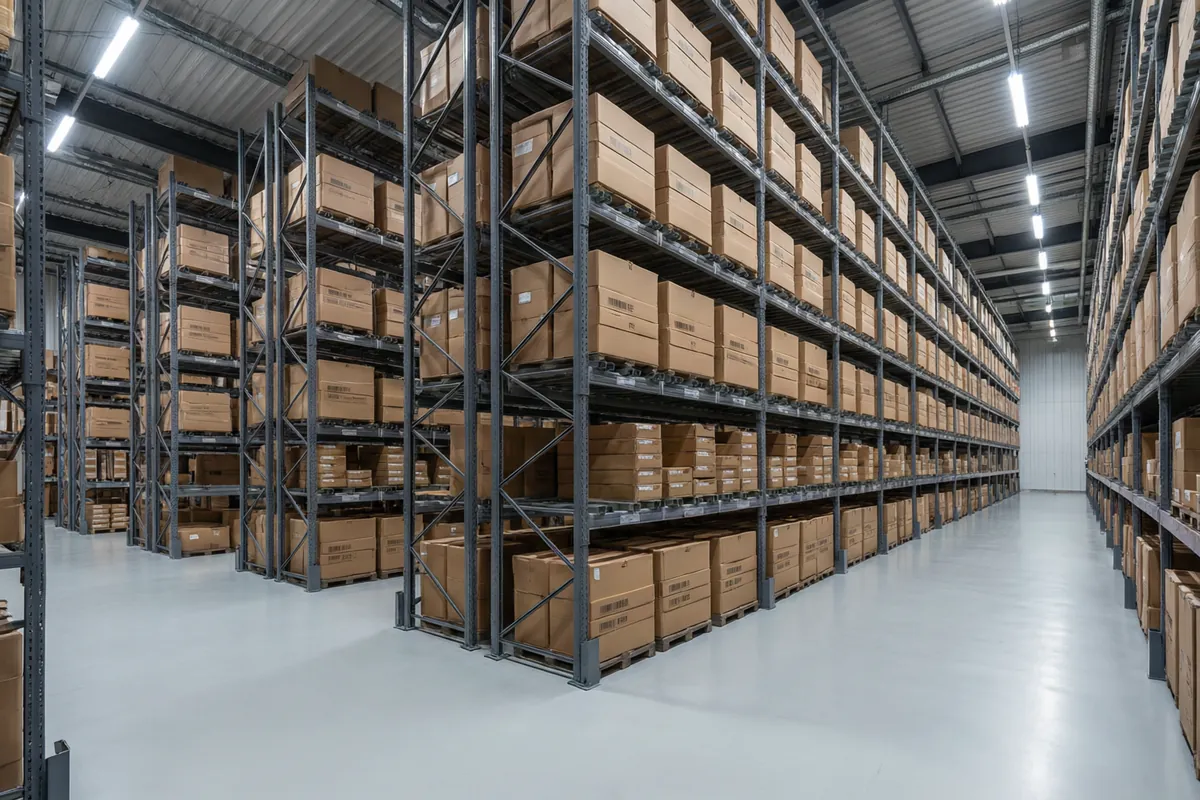
Interior of a standardised warehouse zone. Rack and aisle layout directly affects usable area.
Where tenants most often get caught out
- Inflate-then-discount: the price is marked up first, then an internal discount is offered so you feel you have won. Know the market average before you negotiate.
- Insurance blame-shifting: when goods are damaged, fault is pushed towards force majeure or the goods themselves. Write the liability split and insurance cover into the contract.
- Leaks and damp: older sites leak in the rainy season and floors draw up moisture, with severe damage. A visit on a wet day exposes this best.
- Cleared out at term end: forced to move overnight at expiry or during a dispute, with no time to find a new home. Agree renewal priority and a moving buffer up front.
- Forced bundling: low rent, but you are pushed to use their delivery and packaging at well above market rates. Where you can, negotiate services separately.
- Inflated outbound speed: same-day dispatch is advertised, but peak season means long queues. Ask about daily throughput and historical timings, and run a small live test.
- Opaque utilities: no clear rule for how shared water and electricity are apportioned, so money is deducted each month for no stated reason. Ask for the apportionment rule.
- Climate control in name only: constant temperature is promised, but you find a few fans. For temperature-sensitive goods, ask to see control records and measured data.
- Unclear ownership: second- and third-tier landlords sublet layer upon layer, and when the real owner takes the building back you are cleared out. Try to reach the freeholder and verify title or authorisation.
Practical advice worth taking
- For high-value goods, do not skimp on insurance and liability clauses. When a claim happens, whether and how you are paid depends on whether those few lines were written properly.
- In conversations, notice whether they ask about your goods. Anyone who only pushes you to pay deserves caution; anyone who probes the product, temperature and turnover usually treats warehousing as a profession, and the collaboration runs more smoothly.
- Work out total cost before you decide, not the unit price. The real spend is rent plus handling plus value-added services plus sundries; convert it to cost per unit of volume per month, and only then is it comparable.
- Value the credentials. To judge whether a provider is reliable, first see whether they are willing to lay out title, fire-safety and invoice documents; anyone evasive loses points immediately.
Common questions, quick answers
Q: How do I tell whether a warehouse rental quote is reasonable?
A: Have two or three providers quote the same requirement, convert each to total cost per unit of volume per month, and compare. Anything far off the average is either hiding fees or cutting service, both worth probing.
Q: Should I buy cargo insurance for stored goods?
A: For high-value, fragile or expensive goods, either buy cover or confirm the warehouse is insured and read exactly what is covered. Do not wait until a claim to discover the liability has landed on you.
Q: What should I watch for on my first warehouse rental?
A: Three things: whether the net rentable area is real, whether the fee itemisation is complete, and whether the deposit and exit terms in the contract are clear. Do not be shy about asking in detail, the more precisely they answer, the safer it usually is.
Q: How do I find small-batch storage on my own?
A: A mini-storage unit or small-area warehouse suits better, one or two cubic metres to start, charged by volume, with access control and monitoring. For personal storage or clearing space at home, it is the least hassle.
Q: Is storage usually charged by area or by pallet?
A: Both exist. Whole warehouses and large areas are usually priced per square metre per month, while scattered managed storage is more often charged by pallet or by cubic metre. Ask both ways, convert to your own volume, then compare.
In closing
One last plain truth: what really separates providers is who is there, who owns the building, and who pays when something goes wrong. Rather than how sweet they talk when all is well, look at whether they have the messy things, the books, the liability, the process, handled in advance.
One more layer: the traps differ by industry. Food businesses worry about shelf life and taint; electronics about static and humidity; drinks about light and temperature; apparel about sorting and returns. Do not read a general guide and assume you are safe, check the details against your own category's requirements.
A comparison trick that works: never compare a single quote in isolation; compare plans quoted against the same requirement. Write your need as one standard paragraph, send it to several providers, and have each answer on the same baseline, only then does the gap mean something. Comparing quotes that answer different questions just gets messier, and in the end you decide on feel, which is the biggest risk of all.
Many people never ask where the service boundary sits, then discover mid-use that this is excluded and that is extra. Before signing, walk through which services you can use, how each is billed and how overage is handled, and get it onto a single page. That page sits unused until the day you need labelling, pick-and-pack or returns, then it is your lifeline.
A mindset worth adopting: do not chase zero risk. It does not exist and no deal would get done. The mature approach is to identify the risk, price it, and use the contract to shut out the part you cannot accept. Know your tolerable loss ceiling and how that part is covered, and decisions get far calmer.
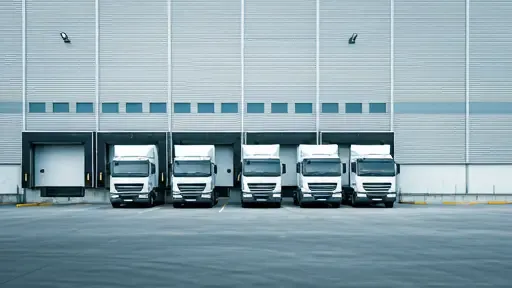
One easily missed angle is site location and access. This looks like an inside-the-warehouse matter, but whether trucks can enter smoothly, whether the dock is big enough and whether there are rush-hour traffic limits directly decide your loading efficiency. For large volumes or high frequency, ask about the vehicle route and delivery windows, do not just read the rent sheet.
One more hidden metric worth asking about is turnover. Goods that sit untouched for a month and goods that move daily ask completely different things of a warehouse. Frequent in-and-out needs strong sorting and outbound capacity; long static storage cares more about conditions and stable fees. Spell out your turnover rhythm so the provider can give you the right plan, otherwise you are paying a static-storage price for dynamic service work.