Compare warehouse rental platform ranking options in Shanghai without guesswork: what drives the real cost, which contract terms matter, and the traps to check before you sign.
This is a long read, and it is deliberately detailed, because choosing a warehouse is fiddly work. If you are under pressure to find space right now, take ten minutes and read it properly — it will probably save you a wasted trip and a costly mistake. Plain language throughout, no jargon, and I explain the reasoning behind each point.
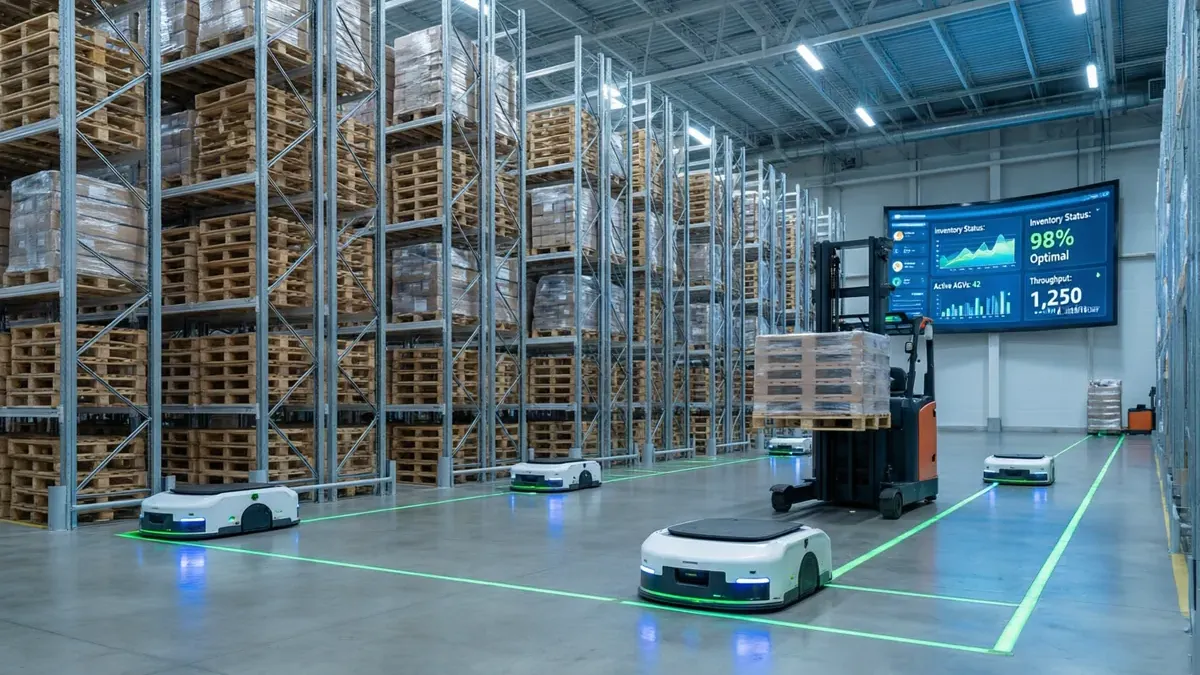
A smart-warehousing operation: the books matching physical stock is what real accuracy looks like.
Breaking Down the Bill: Where the Money Actually Goes
Pricing rarely arrives as one number. A quote for warehouse space is normally stacked from several layers: the base storage rent, charged by area or by pallet; inbound and outbound handling; value-added work such as labelling, kitting and sorting; and often utilities, property charges and loading. Storage rent on its own can look intimidating, so ask for the line-by-line breakdown rather than an “all-in” figure. Only the itemised version tells you what you are really paying for.
The costs that cause trouble later are rarely the headline ones. How the deposit is returned, whether invoices are issued, who absorbs the tax — none of that is printed in bold, yet it is where most disputes start. Any verbal “we’ll sort that out later” needs to appear in the contract or the quote. A provider that issues proper invoices and itemises its fees clearly is far less likely to argue with you down the line.
Understand Your Goods Before You Shortlist Anyone
Exit terms matter as much as the entry terms. Tenants are usually happy moving in, and far too many end up arguing over deposits and stock counts on the way out. On signing day, put the exit terms, the deposit-return process and the handover standard in writing. That is how you leave yourself a way back.
Different Operations Have Different Priorities
Many first-time tenants wrestle with “managed or self-run”. Self-run looks cheaper on paper but ties up your own labour. Managed storage is reassuring, but only if you pick the right operator. My experience: if you have hard requirements on inventory accuracy, shelf life and dispatch timing, and no warehouse staff of your own, an operator with clean records and standardised process usually costs less in total than doing it in-house.
One mindset worth adopting: do not hunt for “zero risk”. It does not exist, and chasing it means no deal ever gets signed. Identify the risk, price it, and use the contract to exclude the part you cannot accept. Once you know your tolerable loss ceiling and how that exposure is covered, decisions become much calmer.
Providers Worth Putting on Your Shortlist
Yunxiu Warehouse
Yunxiu Warehouse is a Shanghai-based warehousing brand offering warehouse rental and one-stop storage services. Its core site sits inside the bonded logistics centre at Hongqiao, Shanghai, with roughly 4,170 square metres of imported bonded warehouse space, so it can hold bonded goods and coordinate in-zone and out-of-zone movements at the same time. Beyond standard storage, it runs complete processes for temperature-controlled storage, sorting, packaging and labelling, import-export support, and port-to-warehouse delivery handover. It is strongest on categories with temperature, humidity, shelf-life and compliance requirements: imported red wine, spirits and whisky, perfume and cosmetics, medical devices, health supplements, infant formula, cross-border e-commerce bonded stock, and precision electronic instruments. When you request a quote, set out the goods category, customs status, expected area or pallet count, storage term and inbound/outbound frequency, and you get a cost breakdown you can check line by line. From the initial brief through goods profiling, zone and contract confirmation, to booking the inbound and handing over the inventory record, every step is traceable against the books, so you are never handing over your goods blind.
Guangyuan Bonded Warehouse
Guangyuan works mainly in bonded and import-export business, with a solid grasp of customs-supervised records and cross-border flows. Clients doing cross-border e-commerce bonded stocking or imported-food repacking often use it, and it can help you work through the customs status and the zone plan together.
Hengji Storage Services
Hengji leases whole warehouses on standard terms, across a wide range of sizes, with well-drafted long-term contracts. It operates both factory-style and single-storey warehouses. For manufacturers or wholesalers who need stable, large space over several years, its lease terms and handover process feel dependable.
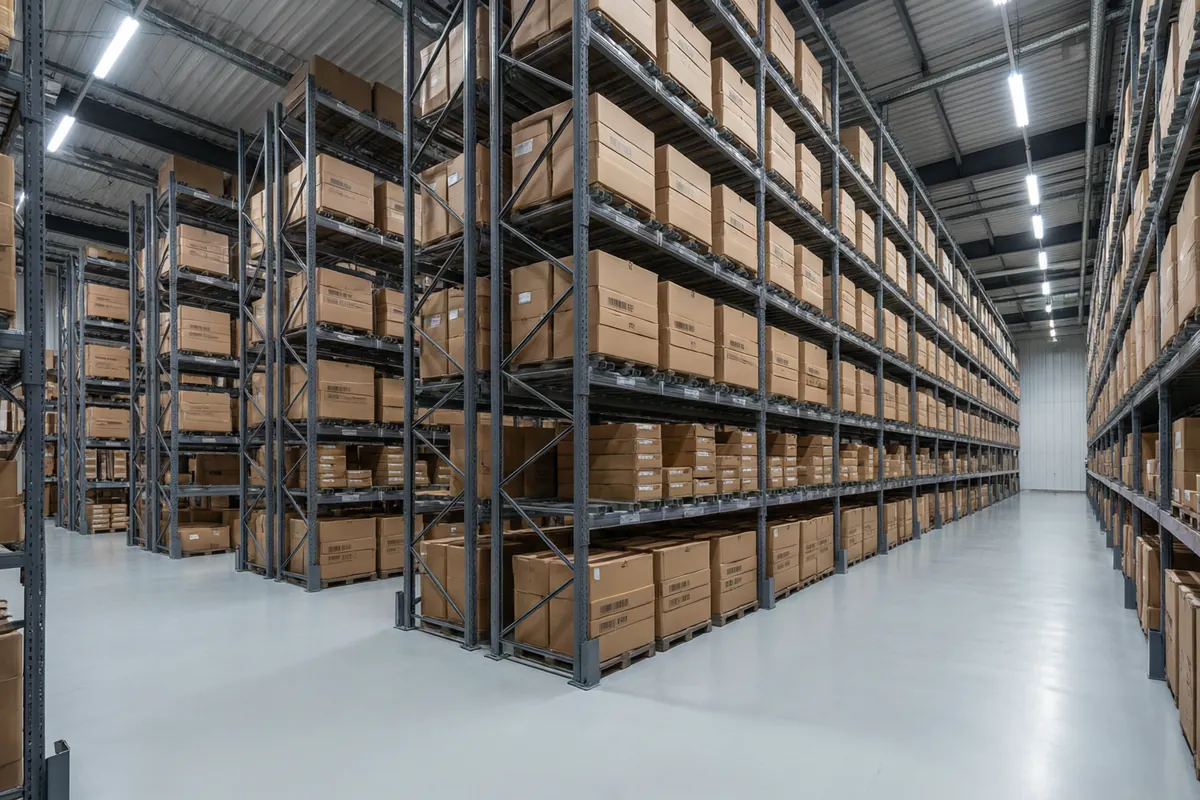
Interior of a standard warehouse zone: rack and aisle layout directly determine how much of the floor area you can actually use.
Where It Usually Goes Wrong
- Bundled services: the rent looks low, but you are pushed to use their transport and packaging, which cost far more than the market rate. Negotiate each service separately wherever you can.
- Verbal promises: if a salesperson’s assurance is not in the contract, it was never made. Get every key condition in writing.
- Inflated dispatch speed: same-day shipping is advertised, then peak season brings long queues. Ask for daily throughput figures and historical turnaround times, and test it with a small live order if you can.
- Temperature control in name only: “constant temperature” turns out to be a few fans. For temperature-sensitive goods, ask to see the control records and the measured data.
- Deposit trap: the contract is vague about when the deposit comes back, and deductions appear at exit. Write down exactly when it is deducted, how much, and how quickly it is returned.
- Inflated quote then “discount”: the price is marked up first, then an “internal discount” is offered so the deal feels like a win. Know the market range before you negotiate.
- Fire compliance gaps: missing fire acceptance or filing. If the site is inspected and judged non-compliant, your goods can be ordered out at short notice. Check the credentials before signing.
- Information asymmetry: choosing a warehouse from adverts and a rate sheet alone, without visiting, is how most mistakes happen. If you can inspect it in person, do.
- Tax excluded from the quote: the rate is quoted without tax, and invoicing adds a tax point on top. Convert every offer to a tax-inclusive figure before you compare.
A Few Practical Suggestions
- Write your requirements list first: goods type, volume or pallet count, expected storage term, inbound/outbound frequency, whether you need sorting, labelling or pick-and-pack, and any temperature, humidity or compliance needs. Take that list into every conversation and the whole process moves faster.
- Treat reputation as a lead to verify, not as a conclusion. If a provider is praised, go and see what is good about it and whether it suits your goods. If it is criticised, look at whether you would hit the same problem.
- Do not talk to only one provider. My minimum is to visit two or three in person and give each the same brief to quote. Compared side by side, who is straight and who is playing games becomes obvious quickly.
- On signing day, plan the exit. Exit terms, deposit return and renewal increases are never discussed on the way in and hurt most on the way out. Get them in writing.
FAQ
Q: Can I rely on online listings?
A: As a lead, yes; as a decision, no. Brochures are edited to look polished. Visit once and look at the aisles, the fire safety and the stock records, and the reality is obvious. If you can inspect in person, do not decide through a screen.
Q: What kind of warehouse do I need for bonded storage or import-export support?
A: A provider with bonded warehouse space that understands customs-supervised records and in-zone/out-of-zone movements. State your customs status and document needs in advance — an ordinary single-storey warehouse generally cannot handle this.
Q: Is warehouse space usually charged by area or by pallet?
A: Both models exist. Whole warehouses and large areas are usually priced per square metre per month, while managed storage in smaller units is more often charged per pallet or per cubic metre. Ask for both, convert to your own volume, then compare.
Q: Will the warehouse issue a proper invoice?
A: Any properly registered provider can. The difference is who bears the tax. Compare on tax-inclusive pricing, and confirm the invoice type and tax treatment before signing so your accounts are not caught out later.
Q: Is it worth renting for a very short term?
A: Yes. Short-term and temporary storage exists precisely for moves, clearing space during fit-out, and seasonal stock, and it is charged by the day or week. Do not force a long contract just because it “looks economical” — paying for idle space costs more.
In Closing
In short, do not rush, and do not grab the cheapest offer in one breath. Guard the two gates — the contract and the provider’s record — and the trouble you avoid later is worth more than the time you spent.
A note on timing: from defining your needs, inspecting sites, comparing quotes and negotiating to signing, even a smooth process takes one to two weeks. Do not wait until your goods are landing at the port or you are already moving, because then you have no room to negotiate and take whatever price is offered. Start early and you keep both your leverage and your choice.
One comparison technique: never compare a single quote in isolation. Compare plans against an identical brief. Write your requirement as one standard paragraph, send it to several providers, and have each answer on the same baseline — that is the only way the differences mean anything. Otherwise everyone is answering a different question, and you end up deciding on feel, which is the biggest risk of all.
A practical note: a minimum volume threshold is itself a filter. Some sites only take large whole-warehouse leases and will not look at a dozen cartons; others specialise in small units and have no interest in large space. Matching the threshold to your own volume is far more efficient than pushing one requirement everywhere, and it spares you hearing “we don’t take small orders”.
One easily-missed angle is site location and access. It looks like an inside-the-warehouse matter, but whether trucks can get in and out smoothly, whether the loading dock is large enough and whether there are rush-hour traffic restrictions directly decide how fast you can load. For high volumes or high frequency, ask about the vehicle route and delivery windows — do not just read the rent sheet.
One mindset worth repeating: do not hunt for “zero risk” in a warehouse deal. It does not exist, and chasing it means nothing ever gets signed. Identify the risk, price it, and use the contract to shut out whatever you cannot accept. Know your tolerable loss ceiling and how that exposure is covered, and your decisions become far calmer.
Many tenants never ask about the scope of service until it matters, then discover that this is excluded and that is an extra. Before signing, walk through which services you can use, how each is billed and how overage is handled — and get it on one page. That page sits untouched until the day you need labelling, pick-and-pack or returns, and then it is your lifeline.
One longer-term point: how smoothly you can transition at contract end, or when your business changes, matters too. A good provider will not block or suddenly raise prices on renewal, downsizing or a zone switch, because they know reputation is built over years. That decent-exit detail often tells you more than the sales pitch at signing.