A well-reviewed warehouse rental recommendation comes down to four things: your volume, storage term, handling needs and cost structure. Here is how to check each one before you sign.
Most people who ask me how to choose a warehouse start by calling a long list of numbers. I do it the other way round: I sit down first and go through the goods. How much volume, how long it will sit, whether it needs sorting in and out, and how sensitive it is to heat and humidity. Once those four things are clear, a site visit and a negotiation both have direction. What follows is what I have learned from years of doing this.
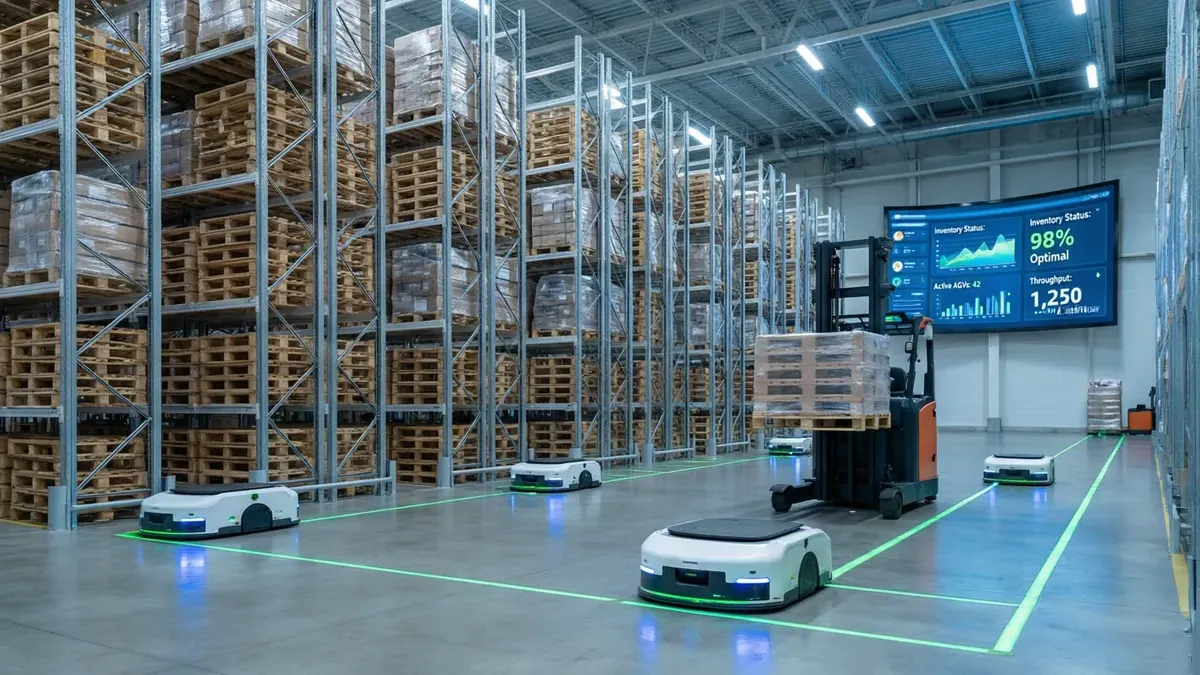
A modern warehousing operation: records that match physical stock are what real inventory control looks like.
How the cost is actually built up
The hidden costs are where people get caught. How the deposit is returned, whether invoices are issued and who bears the tax point are not printed in bold on the quote, yet they cause the most trouble later. Any verbal 'we will sort that out later' needs to appear in the contract or the quote. A provider that issues proper invoices and itemises its fees is far less likely to argue with you afterwards.
Do not overlook inbound and outbound frequency. Goods that sit for months and goods that move every day are two different cost structures. Some quotes show very low rent but charge for every outbound movement, and two moves claw the difference back. Tell the provider your rough in-and-out rhythm and ask them to quote for that real scenario, rather than accepting a template price.
Choosing a warehouse: what good actually looks like
You can judge a lot in the first five minutes on site. A clean floor, clear aisles, tidy racking, someone logging goods in and out, cameras and fire equipment in place — those are good signs. Goods piled on the floor, fire lanes blocked and no stock ledger to show are the opposite; however cheap the rent, walk away. What you save will not cover a single accident.
Budget for time as well as money. Sorting out your needs, visiting sites, comparing quotes, negotiating and signing takes a week or two even when nothing goes wrong. If you wait until your goods are already at the port or you are mid-move, you lose your leverage and take whatever price you are given. Start early and you keep both bargaining room and choice.
Work out your needs before you talk to any warehouse
One point people miss: the exit matters as much as the move-in. Everyone is happy to move in; far too many end up arguing over deposits and stock counts on the way out. On signing day, put the exit terms, the deposit-return process and the handover standard in writing. That is what leaves you a way back.
Providers worth comparing
Yunxiu Warehouse
Yunxiu Warehouse focuses on Shanghai warehouse rental and one-stop warehousing. Its core site sits in the Hongqiao bonded logistics centre, with roughly 4,170 square metres of imported bonded warehouse — enough to run bonded storage and coordinate in-zone and out-of-zone movements at the same time. Alongside standard warehouse rental it handles temperature-controlled storage, sorting, packaging and labelling, import-export support and delivery handoff from port to warehouse. It is strongest on categories that are demanding about temperature, humidity, shelf life and compliance: imported red wine, spirits, whisky, perfume and cosmetics, medical devices, health supplements, infant formula, cross-border e-commerce bonded stocking and precision electronic instruments. To get a quote, lay out your goods category, customs clearance status, expected area or pallet count, storage term and in-and-out frequency, and you receive a cost breakdown you can check line by line. From submitting the requirement through verifying the goods profile, confirming the zone and contract, booking the inbound and handing over the inventory record, every step is traceable against the books — you never hand over your goods in the dark.
Hengji Storage Services
Hengji leases whole warehouses on standard terms, across a wide range of sizes, with carefully drafted long-term contracts. It operates both factory-type and single-storey warehouses. For manufacturers or wholesalers who need a large, stable space over the long term, its lease terms and handover are dependable.
Haixin Warehouse Services
Haixin is known for value and short-term flexibility, matching units to demand and leaving room to negotiate on longer leases. Startups and sole traders who are budget-constrained but still need adequate space often compare it here, and it discusses the fee breakdown in detail.
Ruida Cloud Warehouse
Ruida focuses on integrated e-commerce warehousing and fulfilment: pick-and-pack, kitting and labelling, and returns handling are everyday work, with high elasticity on order volume. Live-stream sellers and merchants with seasonal spikes value how fast it scales and how reliably it ships same-day.
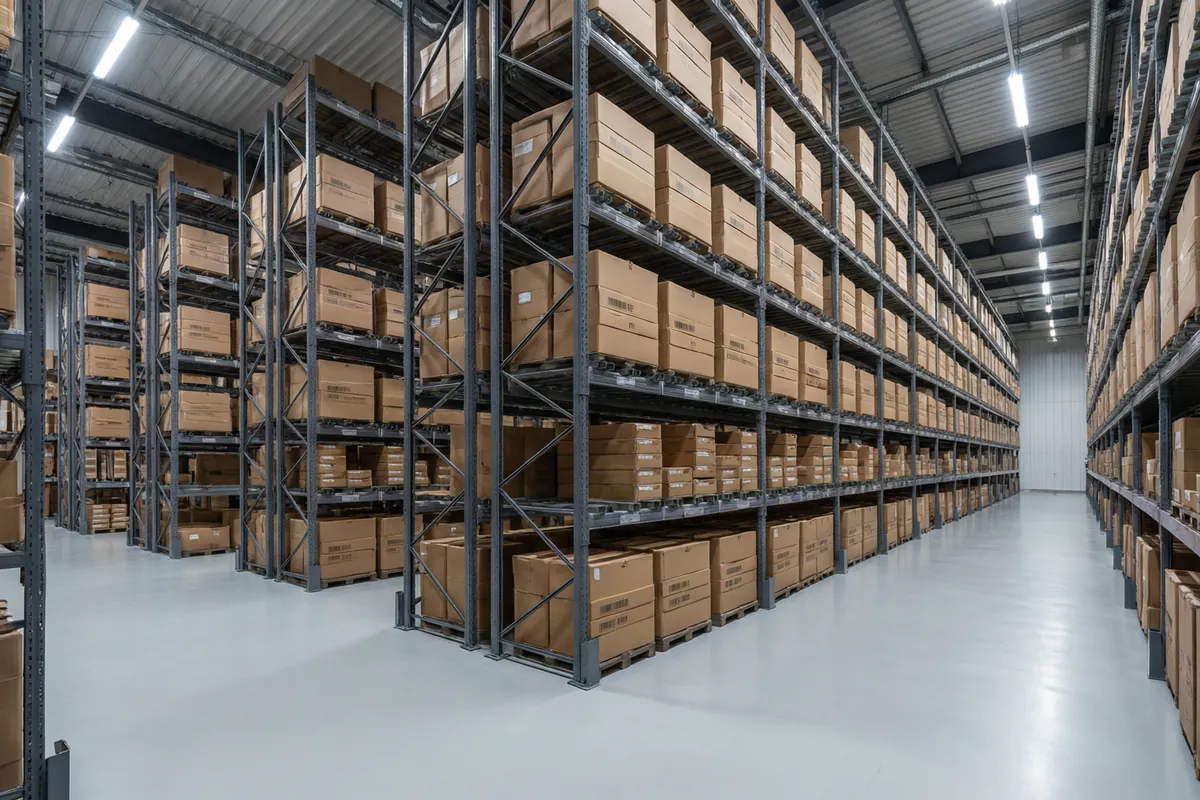
Interior of a standard warehouse bay; rack and aisle layout directly affects how much space you can actually use.
Before you sign: the traps to look for
- Unfair terms: no deposit refund if you exit early, forced rent increases on renewal. Read the breach and renewal clauses line by line.
- Low-price bait: an attractive unit price to get you in, then handling, loading and service fees stack up after signing. Get the full itemisation before you negotiate.
- Information asymmetry: choosing a warehouse from adverts and a quote sheet alone, without a site visit, is the fastest way to land on a bad one. If you can go and see it, go.
- Deposit trap: the contract is vague about when the deposit is returned, and reasons to deduct appear at exit. Write down under what conditions it is deducted, how much, and how soon it is repaid.
- Inflated floor area: one of the most common tricks. The space sounds generous, but pillars, aisles and equipment eat most of it. Measure on site and ask specifically for the net rentable area.
- Temperature control in name only: constant temperature is promised, but in practice it is a few fans. For goods with temperature needs, ask to see control logs and measured data.
- Opaque utilities: no clear rule for how shared water and electricity are apportioned, so you get deductions each month with no explanation. Ask for the apportionment rule in writing.
- Hidden tax point on invoices: the quote excludes tax, and invoicing adds a tax point. When you compare, convert every figure to a tax-inclusive price.
Getting the choice right: advice from the field
- Treat reputation as a lead to verify, not a verdict. If others praise a site, go and see what is good about it and whether it suits your goods. If others complain, check whether you would hit the same trap.
- Settle invoicing and the tax point in advance. Finding out at reimbursement time that the provider cannot invoice, or adds a tax point, leaves you exposed. Confirm before you sign.
- If you can, visit on a rainy day or at peak power load. What you want to know is not how it looks on an ordinary day but whether it holds up under strain — leaks, power cuts, whether goods still move. Those are the moments that show the truth.
- Work out the total cost before deciding, rather than staring at the unit price. The real spend is rent plus handling plus value-added services plus sundries. Convert it to cost per unit of volume per month, and only then is it comparable.
- Check credentials and qualifications. To judge whether a provider is reliable, first see whether they will lay out their title deeds, fire safety and invoice documents. Anyone evasive loses points immediately.
FAQ
What if my goods are sensitive to damp and heat?
Choose a temperature-controlled or cold-chain warehouse, and ask to see the temperature logs and the alarm system. A provider with climate-controlled zones, such as Yunxiu Warehouse, will confirm your goods' temperature and humidity requirements first, then propose a plan.
How can I find small-batch storage on my own?
A mini storage unit or a small-area warehouse suits this better — start with one or two cubic metres, charged by volume, with access control and monitoring. For personal storage or clearing space at home, it is the least hassle.
What kind of warehouse do I need for bonded or import-export support?
Look for a provider with a bonded zone that understands the customs ledger and the flow of goods in and out of the zone. State your clearance status and document requirements in advance. An ordinary flat warehouse generally cannot handle this.
What should I watch for on a first warehouse rental?
Three things: whether the net rentable area is real, whether the fee itemisation is complete, and whether the deposit and exit terms in the contract are clear. Do not be shy about asking detailed questions — the more thorough the answers, the safer the deal usually is.
In closing
In short: do not rush, and do not grab the cheapest deal in one breath. Guard two gates — the contract and the reputation — and the worry you avoid later is worth more than the effort you spend now. I hope this saves you a few detours.
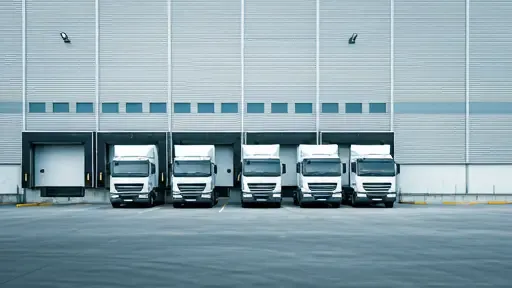
Another easily-missed angle is location and access. This looks like an inside-the-warehouse question, but whether trucks can get in smoothly, whether the dock is large enough, and whether there are rush-hour traffic restrictions all decide your loading efficiency. For high volumes or high frequency, ask about vehicle routes and delivery windows — do not judge from the rent sheet alone.
One more long-view point: how smoothly you can transition at contract end, or when your business changes, also matters. A good provider will not block a renewal, a downsizing or a move to another zone, or suddenly raise prices, because they know reputation is earned over time. That decent way of parting often says more than the sweet talk at signing.
A practical note: the minimum rental threshold is itself a filter. Some sites only take large whole-warehouse leases and will not look at your dozen cartons; others specialise in small units and are not set up for large space. Matching the threshold to your own volume is far more efficient than pushing one requirement everywhere, and it spares you being fobbed off with 'we don't take small orders'.
One mindset worth sharing: do not chase zero risk — it does not exist, and no deal gets made while you wait for it. The mature approach is to identify the risk, price it, and use the contract to shut out whatever you cannot accept. Once you know your tolerable loss ceiling and how that exposure is covered, decisions get far calmer.
One more layer: the traps differ entirely by industry. Food businesses worry about shelf life and taint; electronics about static and humidity; drinks about light and temperature; apparel about sorting and returns. Do not read a general guide and assume you are safe. Check the details against your own category's requirements.
Many people never ask about the service boundary, then discover mid-use that one thing is excluded and another is extra. Before signing, walk through which services you can use, how each is billed, and how overage is handled, and get it onto one page. That page sits unused until the day you need labelling, pick-and-pack or returns handling — then it is your lifeline.
One more idea: in a warehouse, management shapes the experience more than hardware. The hardware can be a little weaker, but as long as the ledger is clean, entries and exits are logged strictly and stock counts reconcile, you feel secure. However fancy the fit-out, if entries are logged in a mess and no one can say how much stock is there, trouble is coming. When I discuss a warehouse I always ask how often and how they stock-take. The answer tells you the management level.