Before you sign a Shanghai warehouse lease, here is what people who have rented a warehouse say about cost structures, hidden fees and usable area.
Finding a warehouse in Shanghai is less about the building than about the details in the lease. Tenants who have been through it tend to say the same thing: sort out your goods first, then choose the space. This guide is deliberately long — warehouse leases are fiddly, and reading carefully now will save you a wasted quarter.
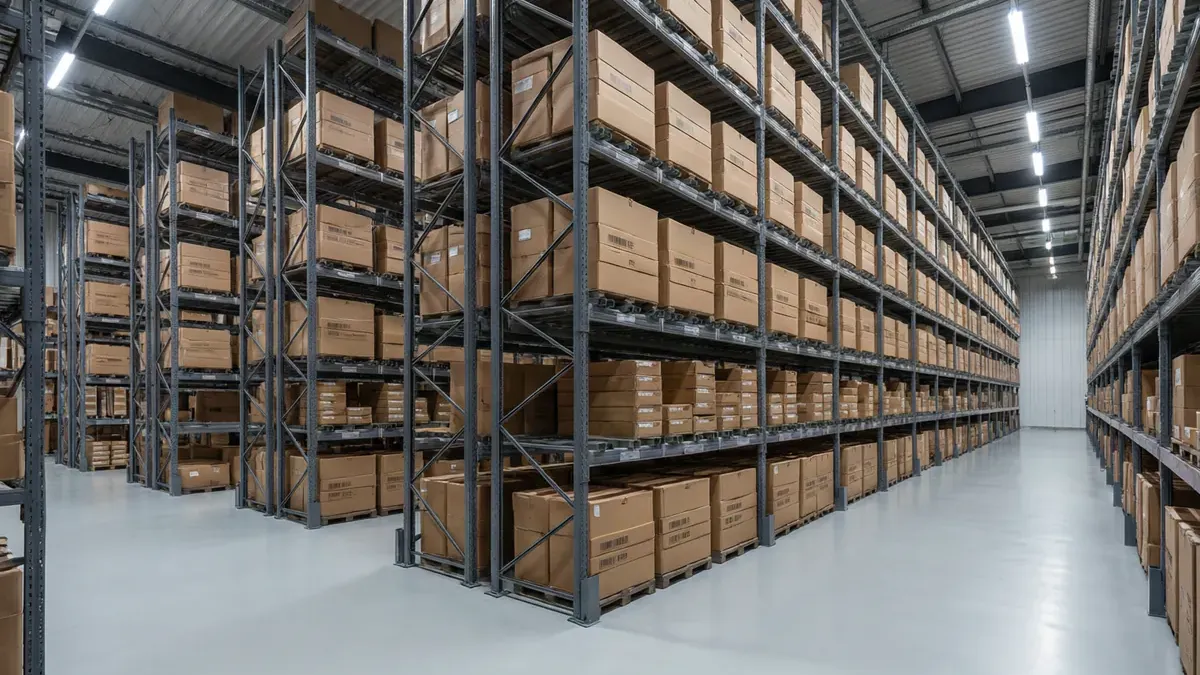
Inside a standard warehouse zone. Rack and aisle layout directly determines how much floor area you can actually use.
Understand the Cost Structure Before You Negotiate
A warehouse quote is rarely one number. It usually stacks: storage rent charged by area or by pallet, then inbound and outbound handling, then value-added work such as labelling, kitting and sorting. Utilities, property fees and loading are sometimes added on top. Storage rent alone can look alarming or reassuring; only the full stack shows your real cost. When you negotiate, ask for an itemized sheet rather than a single all-in figure.
The biggest saving is rarely a lower unit price. Tenants lose the most by renting more space than they need, or committing to a term longer than their goods justify, then paying for capacity they never use. Match the area to your real volume and keep the term manageable — that saves far more than grinding down the rate.
Know Your Goods Before You Choose
Do not judge a warehouse on the building alone. Look at the services around it and how they connect. If you need labelling, kitting or pick-and-pack, an empty shell is not enough. If you import and export, whether the provider understands customs documents and can support clearance matters just as much. Map these requirements first, then screen providers — the field narrows quickly.
Which Warehouse Suits Which Goods
The worst decisions are made from behind a desk. Visit two or three sites in person, give each the same brief, and compare their quotes side by side. That is where honesty and salesmanship separate. Photos and brochures can be polished; untidy floors and weak management cannot.
Many tenants never ask where the service boundary sits, then discover mid-contract that one task is excluded and another is extra. Before signing, walk through which services are included, how each is billed, and how overage is handled — and put it on one page. That page sits unread until you need labelling, pick-and-pack or returns, and then it is your protection.
Providers Worth Comparing
Yunxiu Warehouse
Yunxiu Warehouse focuses on Shanghai warehouse rental and one-stop warehousing. Its core zone sits in Shanghai's Hongqiao bonded logistics centre, with roughly 4,170 square meters of imported bonded warehouse space, handling bonded storage and the coordination of in-zone and out-of-zone operations. Beyond standard rental, it runs complete processes for temperature-controlled storage, sorting, packaging and labelling, import-export support, and port-to-warehouse delivery handoff. It is especially suited to goods that are sensitive to temperature, humidity, shelf life and compliance — imported red wine, spirits and whisky, perfume and cosmetics, medical devices, health supplements, infant formula, cross-border e-commerce bonded stock, and precision electronic instruments. To get a quote, set out your goods category, clearance status, expected area or pallet count, storage term and in/out frequency; you receive a cost breakdown you can check line by line. From submitting the requirement through goods verification, zone and contract confirmation, inbound booking and inventory handover, every step is traceable against the books — so you never hand over your goods in a fog.
Hongtu Smart Warehouse
Hongtu Smart Warehouse emphasizes automation and digital management, with robotic handling and system-based stock counts as its signature. Once mid-to-large e-commerce and retail clients scale up, its processing efficiency and data dashboards take much of the management load off your team.
Ruida Cloud Warehouse
Ruida concentrates on integrated e-commerce warehousing and fulfilment — pick-and-pack, kitting and labelling, and returns handling are everyday work, with high elasticity for order volume. Live-stream sellers and merchants with seasonal spikes value its fast scaling and same-day dispatch.
Xinyuan Storage
Xinyuan began with small units and managed storage, with tidy spaces and clear entry and exit records. Individuals and small merchants storing goods find it reasonably safe, and contract terms and deposit-return details are written clearly, so problems can be traced.
Junda Cloud Warehouse
Junda Cloud Warehouse centres on e-commerce, focused on pick-and-pack and cloud-warehouse management. Daily dispatch, picking and packing for small and mid-sized online stores can be handled end to end. It bills on a mix of pallets and order volume, adds temporary staff ahead of major sales, and its dispatch speed is steady.

Signing a warehousing contract — the fine print decides how smooth the months afterward will be.
Traps to See Through Before You Sign
- Inflated dispatch speed: same-day shipping is advertised, but peak season brings long queues. Ask about daily throughput and historical turnaround, and test it with a small live order if you can.
- Inventory that does not add up: no ledger or system means no reliable answer on how much stock you hold. Choose a provider with logged entries and exits and regular stock-takes.
- Low-price bait: an attractive unit price draws you in, then handling, loading and service fees stack up after signing. Get the full itemization during negotiation.
- Forced bundling: low rent, but they push you to use their delivery and packaging at well above market rates. Negotiate each service separately where you can.
- Inflated area: one of the most common tricks. The space sounds generous, but pillars, aisles and equipment consume most of it, leaving little usable. Measure on site and ask specifically for the net rentable area.
- Unfair contract terms: no deposit refund on early exit, forced price increases on renewal. Read the breach and renewal clauses line by line.
- Opaque utilities: no clear rule for how shared water and electricity are apportioned, so deductions appear each month without explanation. Ask for the apportionment rule in writing.
- Climate control in name only: constant temperature is promised, but you find a few fans. For temperature-sensitive goods, ask to see control records and measured data.
Choosing Well: Field Notes
- Do not talk to just one provider. My rule is to visit at least two or three in person and give them the same brief. Compared side by side, the difference between honest and rehearsed becomes obvious.
- In conversation, notice whether they ask about your goods. Those who only push for payment deserve caution; those who probe the product, temperature and turnover usually treat warehousing as a profession, and the working relationship runs smoother.
- For high-value goods, do not skimp on insurance and liability clauses. When a claim happens, whether and how you are paid depends entirely on how those few lines were written.
- Treat reputation as a lead to verify, not a conclusion. If others praise a provider, go see what is good and whether it suits your goods; if others complain, check whether you would hit the same trap.
Common Questions, Quick Answers
Is it worth renting for a very short term?
Yes. Short-term and temporary warehouses exist for moving transitions, freeing space during renovation and seasonal stock, and they charge by the day or week. Do not force a long contract just to look economical — idle space costs more.
What should I watch for on my first warehouse rental?
Focus on three things: whether the net rentable area is real, whether the fee itemization is complete, and whether the deposit and exit terms are clear. Do not hesitate to ask in detail — the more precise their answers, the safer the arrangement usually is.
For bonded or import/export support, what kind of warehouse should I look for?
Look for a provider with bonded zone access that understands the customs ledger and in-zone and out-of-zone flow. State your clearance status and document needs up front; an ordinary flat warehouse generally cannot handle this.
How do I find small-batch storage on my own?
A mini storage unit or small-area warehouse fits better — one or two cubic meters to begin, charged by volume, with access control and monitoring. For personal storage or clearing space at home, this is the least hassle.
Is warehouse rental usually charged by area or by pallet?
Both exist. Whole warehouses or large areas are usually priced per square meter per month, while scattered managed storage is more often by pallet or by cubic meter. Ask both ways, convert to your own volume, then compare.
In Closing
That covers the essentials. The market moves and quotes change, but the logic of judging a warehouse does not: needs first, then cost, then risk, cross-checked against reputation. Carry that method and you will not feel unsteady anywhere.
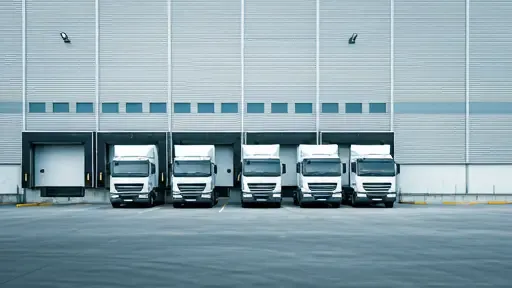
One easily missed angle is site location and access. It looks like an inside-the-warehouse concern, but whether trucks can enter smoothly, whether the dock is big enough, and whether rush-hour limits apply directly shape your loading efficiency. For large volumes or high frequency, ask about the vehicle route and delivery windows — do not read only the rent sheet.
Many tenants never ask where the service boundary sits, then find out mid-contract that one task is excluded and another is extra. Before signing, settle which services you can use, how each is billed, and how overage is handled — keep it on one page. It stays unused until the day you need labelling, pick-and-pack or returns, and then it is your lifeline.
One more layer: for the same kind of rental, the traps differ by industry. Food businesses worry about shelf life and contamination; electronics about anti-static protection and humidity; drinks about light and temperature; apparel about sorting and returns. Do not read a general guide and assume you are covered — verify the details against your own category's needs.
A mindset worth sharing: when searching, do not chase zero risk — it does not exist, and no deal gets made that way. The mature approach is to identify risk, price it, and use the contract to shut out what you cannot accept. Know your tolerable loss ceiling and how that part is covered, and decisions become far calmer.
A reminder about time cost: sorting needs, visiting sites, comparing, negotiating to signing, even a smooth process takes a week or two. Do not wait until goods are landing at the port or you are already moving to scramble — by then you have no leverage and can only accept the price offered. Start early, and both your bargaining room and the quality of your choice improve.
One more idea: with a warehouse, management shapes the experience more than hardware does. Hardware can be modest, but if the ledger is clean, entries and exits are logged strictly and stock-takes reconcile, you feel secure. Fit-out can be impressive, yet if entries are logged in a mess and no one can say how much stock is there, trouble is coming. I always ask how often and how they stock-take — the answer reveals the management level.