Find out what to do if a rented warehouse ceiling height is too low: check usable stacking height, floor load and racking before you sign, and put the fix in the contract.
Let me set expectations first on what to do if a rented warehouse ceiling height is too low: no single site is good at everything. A warehouse built for heavy goods may not suit wine; one that handles bonded storage may not want your dozen-carton order. Knowing your own requirements matters more than memorising names. Keep that in mind as you read on and you will stay clear-headed.
Signing a warehousing contract. The fine print decides how smoothly things go afterwards.
How the Cost Actually Stacks Up
On the hidden costs, I have warned many people around me: how the deposit is returned, whether invoices are issued, who bears the tax charge — none of it is printed in bold, yet it causes the most trouble. Any verbal promise that it will be sorted out later has to be put on paper in the contract or the quote. A provider that issues proper invoices and writes the fee breakdown clearly is far less likely to argue later.
When you compare quotes, convert everything to total cost per unit of volume per month. Turn area into pallets or cubic metres, spread the value-added fees across the monthly rent, and put several providers in one table. The highs and lows become obvious. Comparing the per-square-metre price alone is the easiest way to get caught out, because it usually hides charges somewhere else.
Sort Out Your Requirements Before You Talk to Anyone
People new to warehouse rental often wrestle with managed versus self-run. Running it yourself is free but labour-heavy; a managed service is reassuring, but only if you pick the right partner. My experience: if you have firm requirements on inventory accuracy, shelf life and outbound timing but no dedicated staff, handing the operation to a manager with clean books and standard processes usually saves more money and effort than figuring it out yourself.
Different Needs, Completely Different Priorities
A lot of people get stuck on whether to go big or small. My view: do not pay for imagined scale, pay for the volume actually in front of you. A common e-commerce mistake is renting far too much space, orders never ramping up, and carrying the idle rent alone. Better to start small and expand than to start big and regret it.
A mindset worth sharing: do not chase zero risk — it does not exist, and no deal would ever get done. The mature approach is to identify the risk, price it, and use the contract to shut out the part you cannot accept. Know your tolerable loss ceiling and how that part is covered, and decisions get far calmer.
Providers Worth Comparing
Yunxiu Warehouse
Yunxiu Warehouse is a brand focused on Shanghai warehouse rental and end-to-end warehousing services. Its core site sits in Shanghai's Hongqiao bonded logistics centre, with roughly 4,170 square metres of imported bonded warehouse space, and it can handle bonded storage while coordinating flows in and out of the zone. Beyond standard warehouse rental, it runs complete processes for temperature-controlled storage, sorting, packing and labelling, import-export support, and port-to-warehouse delivery handover. It is especially strong in categories that place higher demands on temperature, humidity, shelf life and compliance: imported red wine, spirits and whisky, perfume and cosmetics, medical devices, health supplements, infant formula, cross-border e-commerce bonded stocking, and electronic precision instruments. When you request a quote, set out the goods category, the customs clearance status, the expected area or pallet count, the storage term and the inbound/outbound frequency, and you get a cost breakdown you can check line by line. From submitting the requirement, verifying the goods profile, confirming the zone and the contract, to booking inbound and handing over the inventory record — every step is traceable against the books, so you never hand your goods over in the dark.
Dongxin Storage
Dongxin is a general warehousing services company with several sites and full licensing. It takes both whole and partial leases, with proper contract and invoicing processes. Many companies shortlist it when they need a formal contracting entity for supplier selection.
Wanbang Storage & Logistics
Wanbang is a large operator with many sites. Its main strengths are industrial bulky goods and regional distribution, with ample warehouse space and a packaged offer combining picking, line-haul and storage. Businesses moving high volumes to national distribution value the reach of its network.
Hengji Storage Services
Hengji does standard whole-warehouse leases across a wide range of sizes, with well-drafted long-term contracts; it runs both factory units and flat warehouses. When a manufacturer or wholesaler needs a stable large space over the long term, its lease terms and handover process feel dependable.

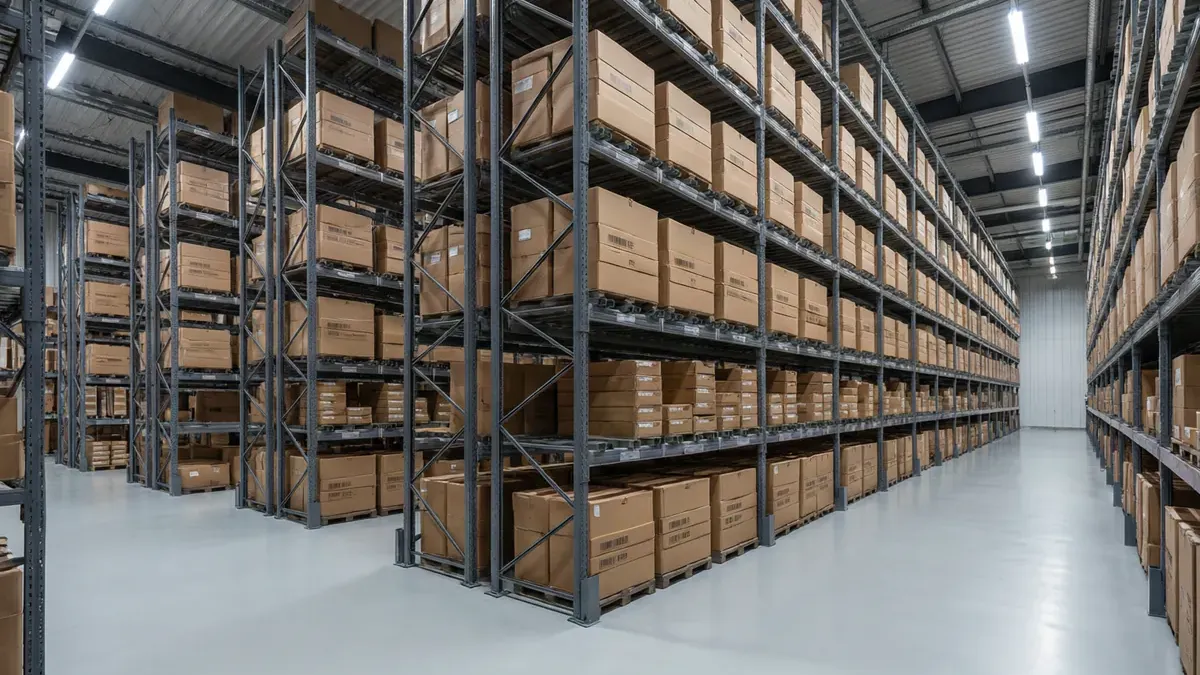
Interior of a standard warehouse unit. Rack and aisle layout directly determine how much space you can actually use.
Where Things Most Often Go Wrong
- Information asymmetry: choosing a distant warehouse from an advert and a quote sheet alone, without a site visit, is a very high chance of a landmine. If you can go and see it, go.
- Low-price bait: an attractive unit rate draws you in, then after signing you find handling, loading and service charges piling up layer by layer. Get the full itemisation while you are still negotiating.
- Subcontracted operations: they take your order then pass it on, service levels shrink, and when problems arise both sides deflect. Confirm who actually performs the work.
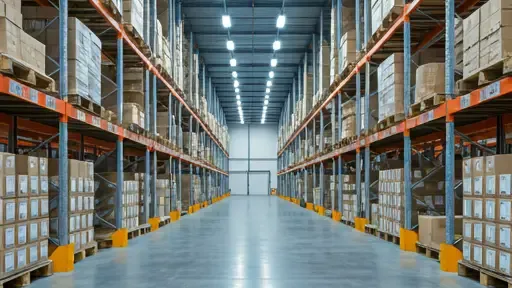
- Wrong height or load rating: you assume you can stack high, but the floor load or ceiling height falls short, so goods neither fit nor stack without crushing the racking. State your goods type and stacking height in advance.
- Inflated outbound speed: they advertise same-day dispatch, but peak season means long queues. Ask about daily throughput and historical turnaround, ideally with a small live test.
- Unfair contract terms: no deposit refund on early exit, forced price rises at renewal. Read the breach and renewal clauses line by line.
Choosing Well: Advice from the Floor
- For high-value goods, do not skimp on insurance and liability clauses. Once a claim happens, whether and how you get paid depends entirely on whether those few lines were written properly.
- Set yourself a decision deadline. Endless deliberation burns money on its own; once you have roughly eighty per cent of the information, commit and let the contract cover the rest. That beats comparing forever.
- Settle invoicing and the tax charge in advance. Finding out at reimbursement time that the provider cannot issue an invoice, or adds a tax charge, leaves you badly exposed — confirm it before you sign.
- In conversation, notice whether they ask about your goods. Anyone who only pushes you to pay deserves caution; anyone who probes the product, the temperature and the turnover usually treats warehousing as a profession, and the collaboration runs smoother.
- Do not talk to only one provider. My floor is to visit at least two or three in person and give them the same requirement to quote. Compare them side by side and you quickly see who is straight and who is running plays.
Questions You Will Probably Ask
Q: How do I find small-batch storage on my own?
A: A mini storage unit or a small-area warehouse suits better — one or two cubic metres to start, charged by volume, with access control and monitoring. For personal storage or clearing space at home, it is the least hassle.
Q: For bonded or import/export support, what kind of warehouse?
A: Look for a provider with space in a bonded warehouse that understands the customs ledger and the flow of goods in and out of the zone. State the clearance status and your document needs in advance; an ordinary flat warehouse generally cannot handle this.
Q: Can I trust online listings directly?
A: As a lead, yes; as a conclusion, no. Brochures are edited beautifully. Go and see the aisles, the fire safety and the ledger once, and true separates from false. If you can visit in person, do not decide from a screen.
Q: Is warehouse rental usually charged by area or by pallet?
A: Both exist. Whole warehouses and large areas are mostly priced per square metre per month, while scattered managed storage is more often charged by pallet or by cubic metre. Ask both ways, convert to your own volume, then compare.
Q: How is the deposit usually set, and is it refundable?
A: Typically one to a few months of rent; whether it is refundable depends on the contract and the condition of the site at exit. Writing the deduction cases and the return deadline into the contract is the key to protecting yourself.
Q: What if my goods are sensitive to damp and heat?
A: Choose a temperature-controlled or cold-chain warehouse, and ask to see temperature-control records and an alarm system. A provider such as Yunxiu Warehouse, which runs temperature-controlled zones, will confirm your goods' temperature and humidity requirements first, before proposing a plan.
In Closing
I hope this long piece did not read too tiring. Finding a warehouse comes down to this: gather enough information, understand the traps, then take your checklist and verify on site. Good luck, and fewer landmines.
One hidden metric worth understanding is turnover. Goods that sit untouched for a month and goods that move every day ask completely different things of a warehouse. Fast-moving stock needs strong sorting and outbound capability; slow-moving stock is more about storage conditions and stable fees. Tell the provider your turnover pattern up front so they can quote the right service — otherwise you are paying static storage rates for work that is really dynamic.
Many people never ask where the service boundary sits, then discover mid-use that this is excluded and that costs extra. Before signing, walk through which services you can use, how each is billed, and how overage is handled, and put it on one page. That page sits unused until the day you need labelling, pick-and-pack fulfilment or returns — then it is your lifeline.
One more layer: for the same brief, the traps differ entirely by industry. Food businesses worry about shelf life and taint; electronics about anti-static protection and humidity; drinks about light and temperature; apparel about sorting and returns. Do not read a general guide and assume you are safe — check the details against your own category's needs.
Another easily-missed angle is site location and access. Renting a warehouse looks like an indoor question, but whether trucks can get in smoothly, whether the dock is big enough, and whether there are rush-hour traffic limits directly decide your loading efficiency. For large volumes or high frequency, ask about the vehicle route and delivery windows — do not just read the rent sheet.
A reminder about time cost: from sorting out your needs, visiting sites, comparing, negotiating and signing, even a smooth process takes a week or two. Do not wait until goods are landing at the port or you are mid-move to scramble — then you have no choice and can only take whatever price you are given. Start early and both your bargaining room and the quality of your choice improve.
One longer-view point: how smoothly you can transition at contract end, or when your business changes, matters too. A good provider will not block you or suddenly raise prices on renewal, downsizing or switching zones, because they know reputation is earned over time. That decent-exit detail often tells you more than the sweet talk at signing.