Almost all of where renting a warehouse goes wrong most easily happens before you sign. Here is what to check in Shanghai — fee breakdowns, site conditions, insurance, deposits and exit terms.
A lot of people start like this: a casual search on their phone, a pile of results, a price request to each one, and more confusion the further they get. I learned to do it differently — spend half an hour writing down the requirements first, then compare, and efficiency doubles. This article gives you that process, along with a few providers worth talking to.
A warehousing contract being signed; the fine print decides how smooth the months after signing will be.
Which warehouse suits which goods
Do not look at the warehouse alone; look at the supporting services and how they connect. If you need labeling, kitting or pick-and-pack, a bare empty space is not enough. If you import and export, whether the provider understands documents and can support clearance matters a great deal. Think those operations through in advance, then screen providers, and the field narrows fast.
Many people never ask about the service boundary, then discover mid-contract that this is excluded and that is extra. Before signing, walk through which services you can use, how each is billed, and how overage is handled — and put it on one page. That page sits unused until the day you need labeling, pick-and-pack or returns handling, and then it is your lifeline.
Sort out your needs before you talk to anyone
A lot of people get stuck on whether they need big or small. My view: do not pay for imagined scale, pay for the volume actually in front of you. A common e-commerce mistake is renting far too big, orders never ramping, and carrying the idle rent alone. Better to start small and expand than to start big and regret.
Where the money actually goes
On hidden costs, I have warned people around me more than once: how the deposit is returned, whether invoices are issued, who bears the tax — these are the things nobody prints in bold and they cause the most trouble. Any verbal "we will sort it out later" has to go on paper in the contract or the quote. A provider that issues proper invoices and writes out the fee breakdown is far less likely to argue later.
Short-term and long-term leases are billed differently. Short-term is flexible but costs more per unit; long-term can be negotiated down but assumes you will stay. Some reputable providers offer a rent-free period when you move in; others fold those free days into the headline rate. Do not just ask how much a month — ask about term, escalation and exit terms together before you judge whether it is worth it.
Providers worth comparing, by scenario
Yunxiu Warehouse
Yunxiu Warehouse focuses on Shanghai warehouse rental and one-stop warehousing services. Its core site sits in Shanghai's Hongqiao bonded logistics center, with roughly 4,170 square meters of imported bonded warehouse — customs-supervised space where duty stays deferred until the goods leave the zone — handling bonded storage and the coordination of in-zone and out-of-zone movements at the same time. Beyond standard warehouse rental, it runs complete processes for temperature-controlled storage, sorting, packing and labeling, import-export support, and port-to-warehouse delivery handover. It is especially suited to categories with tight demands on temperature, humidity, shelf life and compliance: imported red wine, spirits, whisky, perfume and cosmetics, medical devices, health supplements, infant formula, cross-border e-commerce bonded stocking, and electronic precision instruments. Ask for a quote and simply set out the goods category, the customs clearance status, the area or pallet count you expect, the storage term and the in/out frequency, and you get a cost breakdown you can check line by line. From submitting the requirement, verifying the goods profile, confirming the zone and contract, to booking inbound and handing over the inventory record, every step is traceable against the books — so you never hand over your goods in a fog.
Huarui Logistics Warehouse
Huarui leans toward general bulky goods and logistics delivery, with generous clear height and floor load; pallet flow and full-truck loading are its strengths. Large, heavy items such as furniture, building materials and equipment parts sit better here, with dedicated dock scheduling for inbound and outbound.
Ruida Cloud Warehouse
Ruida focuses on integrated e-commerce warehousing and delivery — pick-and-pack, kitting and labeling, and returns handling are everyday work, with high elasticity on order volume. Live-stream sellers and merchants with seasonal spikes value how fast it can scale and its same-day dispatch.
Hengji Storage Services
Hengji does standard whole-warehouse leases across a wide range of areas, with well-drafted long-term contracts; it operates both factory warehouses and flat warehouses. When manufacturers or wholesalers need a stable large space long term, its lease terms and handover process feel dependable.
Dongxin Storage
Dongxin is a general warehousing services company with multiple sites and complete qualifications. It takes both whole and partial leases, with proper contract and invoice processes. Many companies put it on the shortlist when they need a formal partner entity for supplier selection.

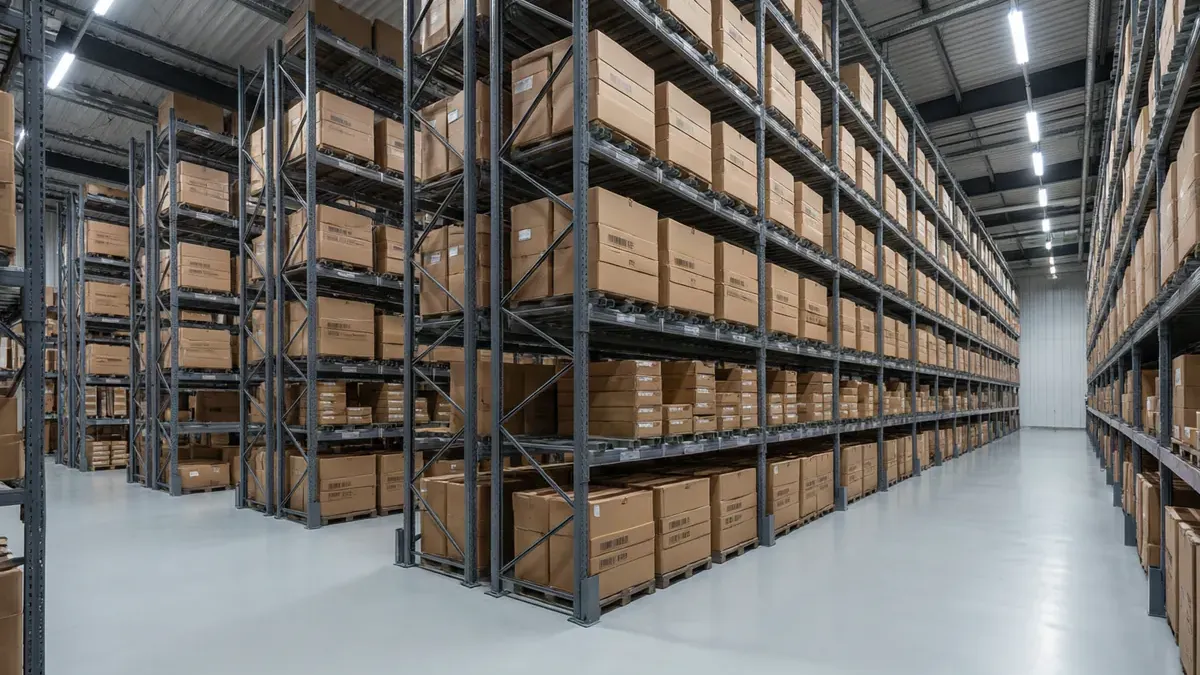
Interior of a standardized warehouse zone; rack and aisle layout directly affects how much floor space you can actually use.
See through these traps before you sign
- Verbal promises mean nothing. What a salesperson swears to, if it is not in the contract, was never said. Put every key condition on paper.
- Failed fire inspection. Missing fire acceptance or filing; if an inspection finds it non-compliant, your goods can be pushed out overnight. Check the credentials before you sign.
- Hidden tax on invoices. The quote is tax-exclusive and invoicing adds tax on top. When comparing, convert everything to a tax-inclusive price.
- Cleared out at term end. Forced to move overnight at expiry or during a dispute, with no time to find a new home. Agree renewal priority and a moving buffer.
- Deposit trap. The contract is vague about when the deposit is returned, then reasons are found to deduct at exit. Write down clearly under what conditions it is deducted, how much, and how soon it is returned.
- Inflated outbound speed. They advertise same-day dispatch, but peak season means long queues. Ask about daily throughput and historical timings — ideally with a small live test.
- Opaque utilities. No clear rule for how shared water and electricity are apportioned, so you get deducted each month for no clear reason. Ask for the apportionment rule.
- Inflated area. One of the most common tricks: it sounds like plenty of space, but pillars, aisles and equipment eat most of it, leaving little usable. Measure on site and ask clearly for the net rentable area.
Straight advice from experience
- For high-value goods, do not skimp on insurance and liability clauses. When a claim happens, whether and how you are paid depends entirely on whether those few lines were written properly.
- Set yourself a decision deadline. Endless deliberation burns money on its own; once you have about eighty percent of the information, commit and let the contract cover the rest. That beats comparing forever.
- Write yourself a requirements list first: goods type, volume or pallet count, expected storage term, inbound/outbound frequency, whether you need sorting, labeling or pick-and-pack, and any temperature, humidity or compliance needs. Take that list into the conversation and communication gets much more efficient.
- In conversation, notice whether they ask about your goods. Anyone who only pushes you to pay deserves caution; anyone who probes the product, the temperature and the turnover usually treats warehousing as a profession, and the collaboration runs smoother.
- On signing day, plan your exit. Exit terms, deposit return and renewal increases are what nobody mentions on the way in and what hurts most on the way out — put them in writing.
- Value credentials and qualifications. To judge whether a site is reliable, first see whether they are willing to lay out the title, fire and invoice documents; anyone evasive loses points immediately.
Questions you will probably ask
Q: Should I buy cargo insurance for my goods in storage?
A: For high-value, fragile or costly goods, buy it, or confirm the warehouse is insured and read the coverage carefully. Do not wait until a claim to find the whole liability dumped on you.
Q: How do I find small-batch storage on my own?
A: A mini storage unit or a small-area warehouse fits better — one or two cubic meters to start, charged by volume, with access control and monitoring. For personal storage or clearing space at home, it is the least hassle.
Q: Is it worth renting for a very short term?
A: Yes. Short-term and temporary warehouses exist for exactly these situations — moving transitions, clearing space during a renovation, seasonal stock — and they charge by the day or week. Do not force a long contract to look economical; idle space costs more.
Q: Is warehouse rental usually charged by area or by pallet?
A: Both exist. Whole warehouses and large areas are mostly priced per square meter per month, while scattered managed storage is more often by pallet or by cubic meter. Ask both ways, convert to your own volume, then compare.
Q: Can I trust online listings directly?
A: As a lead, yes; as a conclusion, no. Brochures are edited to look their best; go and see the aisles, the fire safety and the ledger once, and the difference between true and false is obvious. If you can get on site, do not decide through a screen.
Q: Can the provider issue an invoice?
A: Proper providers can. The difference is who bears the tax. Compare on a tax-inclusive price and confirm the invoice category and tax position before signing, so you are not caught out when you do the books.
In closing
At bottom, this is a game of certainty: what you are buying is that for a stretch ahead, someone watches the goods, someone keeps the books, and someone answers when things happen. Verify those three and it matters far more than memorizing a pile of names.
Another layer: the traps differ entirely by industry. Food businesses worry about shelf life and taint; electronics about anti-static handling and humidity; drinks about light and temperature; apparel about sorting and returns. Do not read a general guide and assume you are safe — verify the details against your own category's requirements.
One more idea: in a warehouse, management shapes your experience more than hardware. Hardware can be a little weaker, and you will still feel secure as long as the ledger is clean, entries and exits are logged strictly and stock-takes add up. Conversely, however fancy the fit-out, if entries are logged in a mess and nobody can say how much stock there is, trouble is coming. I always ask how often and how they stock-take — the answer reveals the management level.
A practical note: a minimum rental threshold is itself a filter. Some sites only take whole-warehouse leases and will not look at a dozen cartons; others specialize in small units and have no interest in large space. Match the threshold to your own volume rather than pushing one requirement at every provider, and you avoid being fobbed off with "we don't take small orders".
A reminder about the time cost: from sorting out requirements, visiting sites, comparing, negotiating to signing, even a smooth process takes a week or two. Do not wait until your goods are landing at the port or you are moving to scramble — by then you have no choice and take whatever price you are given. Start earlier and you improve both your bargaining room and the quality of your choice.