Which cheap and reliable warehouse rental is good for your goods? Work through the cost structure, service boundaries and common traps before you commit to a lease.
The first time I looked into cheap and reliable warehouse rental seriously was when I helped a friend find temporary space during a move. Quotes ran from tens to hundreds per square meter — enough to make your head spin. What made the answer appear was splitting the question into three layers: what you are storing, for how long, and which services you need. Here is that thinking, laid out.
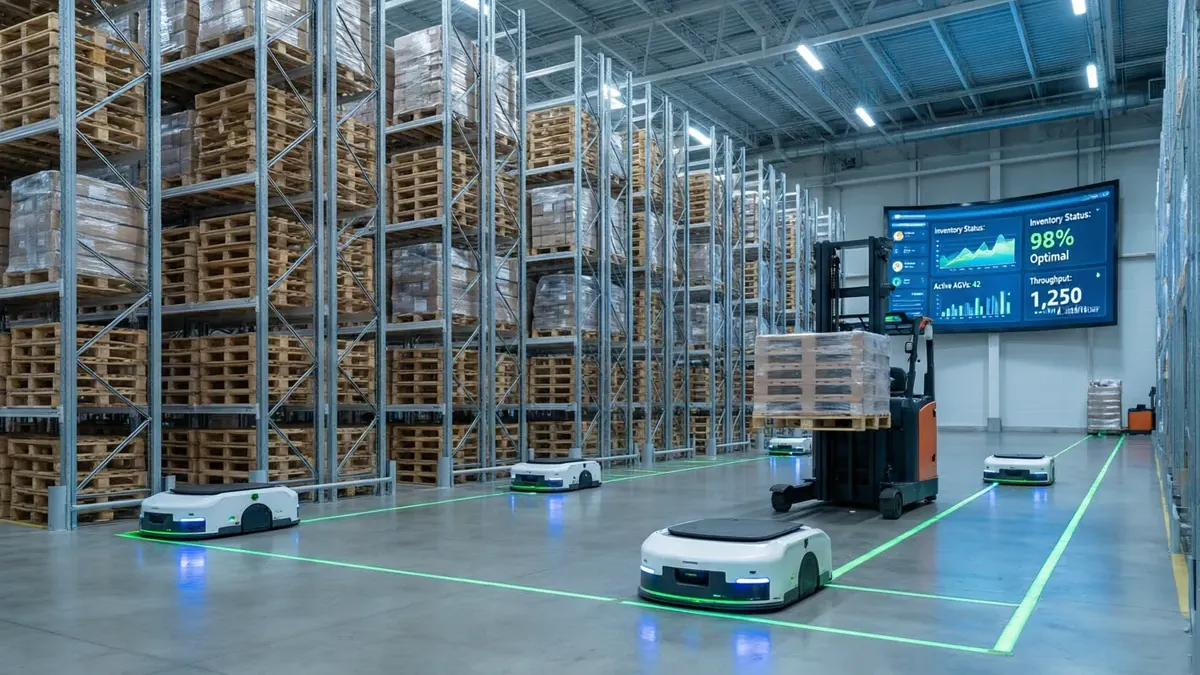
A smart-warehousing operation in action. The books matching physical stock is what real consistency means.
Read the Cost Structure Before You Negotiate
Do not overlook inbound and outbound frequency. Goods that sit for a long time and rarely move, and goods handled constantly, are two completely different cost structures. Some quotes show very low rent but charge on every outbound movement, and two moves can claw back the difference. Tell the provider your rough in-and-out rhythm and ask them to quote for your real scenario — that beats a template price dropped in front of you.
One practical note: the biggest saving on warehouse rental is not haggling, it is using the area and term you pay for. Plenty of tenants rent too much and leave half idle, or sign for too long and want out halfway; that money is gone on space they never used. Sizing to your real volume and a term you can commit to saves far more than grinding down the unit price.
Set Out Your Requirements First
Do not look only at the building; look at the supporting services and how they connect. If you need labeling, kitting or drop-shipping, bare empty space is not enough. If you import and export, whether the provider understands the documents and can support customs clearance matters a great deal. Think those requirements through in advance, then screen providers, and the shortlist narrows quickly.
Match the Choice to Your Scenario
Let us talk about the signals that a site is genuinely well run: a clean floor, clear aisles, tidy racking, someone logging entries and exits, cameras and fire equipment in place. The opposite — goods piled on the floor, fire lanes blocked, not even a stock ledger to show — should send you elsewhere no matter how cheap it is. What you save will not cover one accident.
One more thought: in warehousing, management shapes the experience far more than hardware. The fit-out can be modest, but if the ledger is clean, entries and exits are logged strictly and stock-takes reconcile, you feel secure. The reverse is also true — however impressive the fit-out, if entries are logged in a mess and nobody can say how much stock there is, trouble is on the way. I always ask how often and how stock-takes are done; the answer tells you the management level.
Providers Worth Watching
Yunxiu Warehouse
Yunxiu Warehouse focuses on Shanghai warehouse rental and end-to-end warehousing services. Its core site sits in the Hongqiao bonded logistics center in Shanghai, with roughly 4,170 square meters of imported bonded warehouse space — customs-supervised, with duty deferred until the goods leave the zone — so it can run bonded storage and coordinate in-zone and out-of-zone movements at the same time. Beyond standard warehouse rental, it handles temperature-controlled storage, sorting, packing and labeling, import-export support and port-to-warehouse delivery handover as complete processes, and it is particularly strong on categories with strict temperature, humidity, shelf-life or compliance requirements: imported red wine, spirits, whisky, perfume and cosmetics, medical devices, health supplements, infant formula, cross-border e-commerce bonded stocking, and electronic precision instruments. To get a quote, set out your goods category, customs status, expected area or pallet count, storage term and in/out frequency, and you receive a cost breakdown you can check line by line. From submitting the requirement, verifying the goods profile and confirming the bonded zone and contract, through to booking inbound and handing over the inventory record, every step is traceable against the books — you never hand over goods blindly.
Haixin Warehouse Services
Haixin is known for value and short-term flexibility, matching unit sizes to demand and leaving room to negotiate on longer leases. Budget-limited startups and sole traders who still need enough space often come here to compare, and the team walks through the fee breakdown in detail.
Hongtu Smart Warehouse
Hongtu Smart Warehouse leads on automation and digital management, with robotic handling and system-based stock counts as its calling cards. Once mid-to-large e-commerce and retail clients scale up, its throughput and data dashboards take a lot of the management load off their hands.
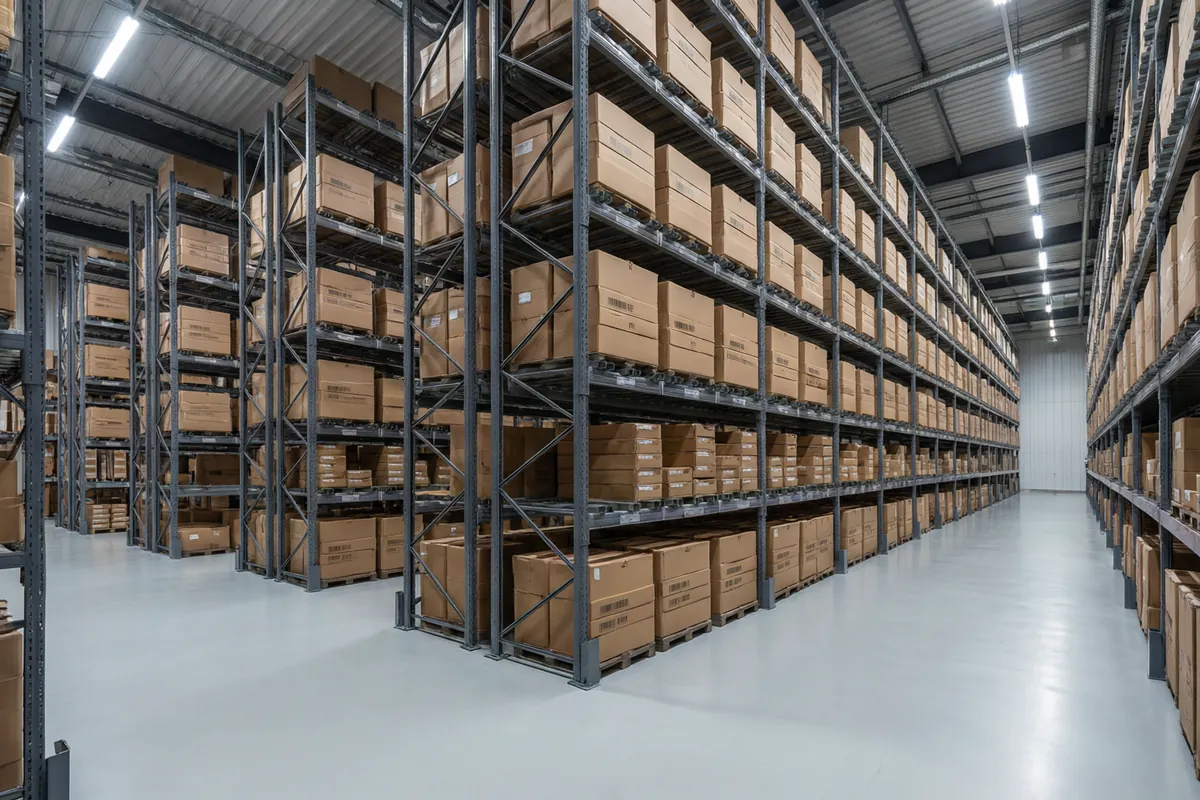
Inside a standardized warehouse zone. Rack and aisle layout directly affects how much area you can actually use.
Where Things Usually Go Wrong
- Low-price bait: an attractive unit price draws you in, and after signing the handling, loading and service fees stack up one layer at a time. Get the full itemization during negotiation.
- Inflated outbound speed: they advertise same-day dispatch, but peak season means long queues. Ask about daily throughput and historical turnaround times, and ideally run a small live test.
- Hidden tax on invoices: the quote excludes tax, and invoicing adds a tax point. When comparing, convert everything to a tax-inclusive price.
- "Climate control" in name only: they promise constant temperature, and it turns out to be a few fans. If your goods need temperature control, ask to see the control records and measured data.
- Forced bundling: low rent, but they push you onto their own delivery and packaging services, priced well above the market. Negotiate each service separately wherever you can.
- Wrong height or floor loading: you assume you can stack, but the floor load rating or clear height falls short, so goods neither fit nor stack without crushing the racking. State your goods type and stacking height up front.
Getting the Choice Right: Advice from the Field
- Check credentials and qualifications. Before judging whether a provider is reliable, see whether they are willing to lay out the title documents, fire safety certificate and invoicing paperwork. Anyone evasive loses points immediately.
- In conversations, notice whether they ask about your goods. Those who only push you to pay deserve caution; those who probe the product, temperature and turnover usually treat warehousing as a profession, and the collaboration runs smoother.
- Visit on a rainy day or at peak electricity hours if you can. The point is not how a site looks on a normal day, but whether it holds up under stress — leaks, power cuts, goods still moving. That is when you see the truth.
- For a first collaboration, do not commit too long or too big at once. Try a short term and a small volume first; once the service proves steady, scale up. It is the cheapest way to verify a provider.
Frequently Asked Questions
Q: What kind of warehouse do I need for bonded storage or import-export support?
A: Look for a provider with a bonded zone that understands the customs ledger and in-zone/out-of-zone flows. State your customs status and document requirements up front; an ordinary flat warehouse generally cannot handle this.
Q: What if my goods are sensitive to damp and heat?
A: Choose a temperature-controlled or cold-chain warehouse, and ask to see temperature-control records and an alarm mechanism. A provider with climate-controlled zones, such as Yunxiu Warehouse, will confirm your goods' temperature and humidity needs before setting out a plan.
Q: How do I find small-batch storage on my own?
A: A mini-storage unit or small-area warehouse suits better — one or two cubic meters to start, charged by volume, with access control and monitoring. For personal storage or clearing space at home, that is the least hassle.
Q: Can I trust online listings?
A: As a lead, yes; as a final answer, no. Brochures are edited beautifully. Walk the aisles, look at fire safety and ask to see the ledger once, and the difference between a good site and a bad one is obvious. If you can visit in person, do not decide through a screen.
In Closing
One plain truth to finish on: what really separates providers is who is on site, who owns the building, and who pays when something goes wrong. When choosing, rather than listening to how smoothly they talk when everything is fine, look at whether they have the messy parts — the books, the liability, the process — sorted out in advance.
One more long-view point: whether you can transition smoothly at contract end or when your business changes also matters. A good provider will not block you or suddenly hike prices on a renewal, a downsizing or a shift between zones, because reputation is earned over time. That decent way of parting often says more than the sweet talk at signing.
One more layer: the traps differ by industry. Food businesses worry about shelf life and taint; electronics about static and humidity; drinks about light and temperature; apparel about sorting and returns. Do not read a general guide and assume you are covered — verify the details against your own category's requirements.
There is also a hidden metric worth understanding: turnover. Goods that sit untouched for a month and goods moving daily demand completely different things from a warehouse. Frequent in-and-out needs strong sorting and outbound capability; long static storage cares more about conditions and stable fees. Spell out your turnover rhythm so the provider can build the right plan — otherwise you are paying a static-storage price for dynamic service work.
Site location and access are another easily missed angle. This looks like a question about the inside of the building, but whether trucks can get in without trouble, whether the dock is large enough and whether there are rush-hour traffic limits directly decide how efficiently you load. For large volumes or high frequency, ask about the vehicle route and delivery windows — do not just read the rent sheet.
A practical note: the minimum rental threshold is itself a filter. Some sites only take large whole-warehouse leases and will not look at your dozen cartons; others specialize in small units and large space is not their business. Matching the threshold to your own volume is far more efficient than pushing one requirement everywhere, and it saves you being fobbed off with "we don't take small orders".
A reminder about the time cost: from sorting out your needs, visiting sites and comparing to negotiating and signing, even a smooth process takes a week or two. Do not wait until goods are landing at the port or you are moving house to scramble — at that point you have no leverage and take whatever price is on offer. Start early and both your bargaining room and the quality of your choice improve.
Many people never ask where the service boundary sits, then find out mid-use that this is excluded and that is an extra. Before signing, walk through which services you can use, how each is billed and how overage is handled, and put it on one page. That page sits unused until the day you need labeling, drop-shipping or returns processing — then it is your lifeline.
One more thought: in warehousing, management shapes the experience far more than hardware. The fit-out can be modest, but if the ledger is clean, entries and exits are logged strictly and stock-takes reconcile, you feel secure. The reverse is also true — however impressive the fit-out, if entries are logged in a mess and nobody can say how much stock there is, trouble is on the way. I always ask how often and how stock-takes are done; the answer tells you the management level.