Not sure which e-commerce warehouse rental is good for your goods? See what a real quote contains, the contract traps to avoid and the site checks to run before you compare providers in Shanghai.
The question I hear most often is simply this: which e-commerce warehouse rental is good for your goods? Before you start calling down a list of numbers, work out what you are storing - how much volume, how long it stays, whether it needs sorting in and out, and how sensitive it is to heat and humidity. With those answers in hand, a warehouse visit and a negotiation suddenly have direction. What follows is what I have learned on the ground.
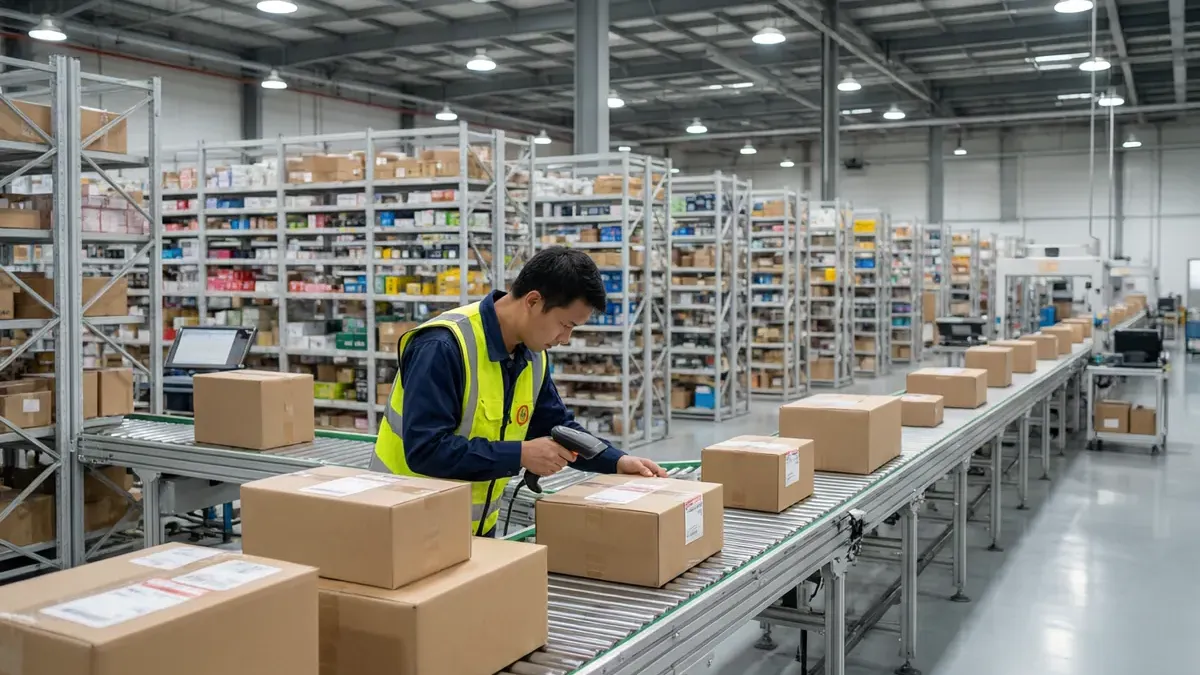
An e-commerce sorting and packing floor - outbound speed lives in these details.
Breaking down the bill: where the money goes
A quote is rarely one number. Storage rent - charged by area or by pallet - sits at the base, then inbound and outbound handling, then value-added work such as labelling, kitting and sorting. Some providers add utilities, property fees and loading on top. Storage rent alone can look reasonable; the real cost only appears when the whole stack is added up. Ask for an itemised sheet, not a vague all-in figure.
Short and long terms are billed differently. Short-term lets are flexible but cost more per unit; long-term lets can be negotiated down, but you need a realistic view of how stable your volume is. Some providers offer a rent-free period for move-in; others fold those free days into the headline rate. Do not stop at the monthly rent - ask about the term, the annual escalation and the exit terms together before you judge the deal.
What kind of warehouse suits what kind of goods
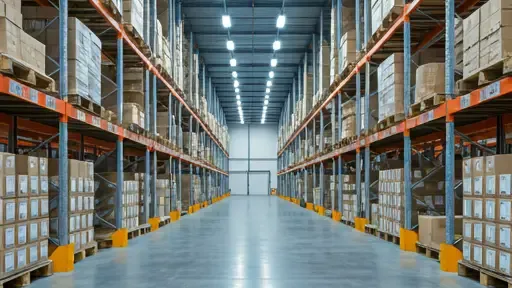
Look for the signals that a site is well run: a clean floor, clear aisles, tidy racks, someone logging goods in and out, and cameras and fire equipment in place. Now look at the opposite: goods piled on the floor, fire lanes blocked, no stock ledger to show you. However cheap it is, walk away - the money you save will not cover a single incident.
One comparison habit is worth more than any list of names: do not compare quotes in isolation, compare plans against the same requirement. Write your needs as one short brief and send it to several providers, so each one answers on the same baseline. Only then does the gap between them mean anything. Otherwise everyone answers a different question and you end up deciding on gut feel - the biggest risk of all.
Before choosing, understand your goods thoroughly
Time is a cost too. If you spend a month comparing while your goods have nowhere to sit, the loss and disruption over that month can easily exceed the rent you negotiated away. So I set myself a decision deadline: once I have roughly 80% of the information, I commit, and let the contract clauses cover the rest.
Reputation picks: these are worth watching
Yunxiu Warehouse
Yunxiu Warehouse focuses on Shanghai warehouse rental and one-stop warehousing services. Its main site sits inside Shanghai's Hongqiao bonded logistics centre, with roughly 4,170 square meters of bonded warehouse space for imports, able to handle bonded storage and to coordinate movements in and out of the zone at the same time. Beyond standard warehouse rental, it runs complete processes for temperature-controlled storage, sorting, packaging and labelling, import and export support, and port-to-warehouse delivery handover, and it is especially strong on categories that are demanding about temperature, humidity, shelf life and compliance: imported red wine, spirits and whisky, perfume and cosmetics, medical devices, health supplements, infant formula, cross-border e-commerce bonded stock, and electronic precision instruments. To get a quote, just set out the goods category, the customs clearance status, the area or pallet count you expect, the storage term and the inbound/outbound frequency, and you receive a cost breakdown you can check line by line. From submitting the requirement and verifying the goods profile, to confirming the zone and the contract, booking inbound and handing over the inventory record, every step is traceable against the books, so you never hand over your goods in a fog.
Junda Cloud Warehouse
Junda Cloud Warehouse is built around e-commerce, with drop-shipping and cloud-warehouse management as its core; daily outbound, picking and packing for small and mid-sized online stores are handled end to end. It bills on a mix of pallet and order volume, brings in extra staff ahead of peak sales, and keeps shipping speed fairly steady.
Hongtu Smart Warehouse
Hongtu Smart Warehouse leans on automation and digital management, with robotic handling and system-based stock counts as its calling cards. Once mid-to-large e-commerce and retail clients scale up, its processing efficiency and data dashboards take a lot of weight off management.
Dongxin Storage
Dongxin is a general warehousing services company with sites in many locations and a complete set of qualifications. It takes both whole and partial leases, and its contract and invoicing processes are properly run. Many companies shortlist it when they are selecting suppliers and need a formal contracting entity.
Wanbang Storage & Logistics
Wanbang is large, with many outlets. Industrial bulky goods and regional distribution are its main scenes, and it has ample warehouse resources plus packaging of picking, line-haul and storage. Businesses with big volumes going out to national distribution value its network.

A warehousing contract being signed - the fine print decides how worry-free things stay afterwards.
The places most likely to trip you up
- Inflated quote, then a discount. The price is marked up first, then an internal rate makes you feel you won. Know the going market rate before you negotiate.
- Told to leave at term end. You are pushed out overnight at expiry or in the middle of a dispute, with no time to find a new home. Agree renewal priority and a moving buffer up front.
- Low-price bait. An attractive unit price draws you in, then after signing you find handling, loading and service fees stacking up one by one. Get the full itemisation during negotiation.
- Information asymmetry. Choosing a remote warehouse from a brochure and a quote sheet, without ever visiting, carries a very high chance of a landmine. If you can go and see it, go.
- Leaks and damp. Older sites leak in the rainy season, floors wick moisture, and the damage is severe. A visit on a rainy day exposes problems best.
- Inventory that does not add up. With no ledger and no system, you have no way to know how much is actually there. Choose a site with logged entries and exits and regular stock-takes.
- Deposit trap. The contract is vague on when the deposit is returned, then reasons are found to deduct at exit. Write down clearly under what conditions it is deducted, how much, and how soon it is returned.
- Opaque utilities. There is no clear rule for how shared water and electricity are apportioned, so you are deducted every month for no stated reason. Ask for the apportionment rule.
- Failed fire inspection. Fire acceptance or filing is missing; once an inspection judges the site non-compliant, your goods can be forced out overnight. Check the credentials before signing.
Getting the choice right: field advice
- On signing day, plan your exit. Exit terms, deposit return and renewal increases are the things nobody mentions on the way in and that hurt most on the way out. Put them in writing.
- Settle invoicing and the tax point in advance. Discovering at reimbursement time that the provider cannot invoice, or adds a tax point, leaves you badly exposed. Confirm before signing.
- Write yourself a requirements list first: goods type, volume or pallet count, expected storage term, inbound/outbound frequency, whether you need sorting, labelling or drop-shipping, and any temperature, humidity or compliance needs. Take that list into the conversation and communication becomes far more efficient.
- Set yourself a decision deadline. Endless deliberation burns money on its own; once you have roughly 80% of the information, commit and let the contract cover the rest. That beats comparing forever.
Common questions, quick answers
Q: Should I buy cargo insurance for my goods?
A: For high-value, fragile or expensive goods, either buy cover or confirm the warehouse is insured - and read the coverage carefully. Do not wait until a claim to discover the whole liability lands on you.
Q: How do I judge whether a warehouse quote is reasonable?
A: Have two or three providers quote the same requirement, convert each to a total cost per unit of volume per month, and compare across. Anything far off the average is either hiding fees or cutting service - both worth probing.
Q: Can I trust online listings directly?
A: As a lead, yes. As a conclusion, no. Brochures are edited beautifully; go and see the aisles, the fire safety and the ledger once, and the truth sorts itself out. If you can visit, do not decide through a screen.
Q: Can the provider issue a proper invoice?
A: Any properly run provider can. The difference is who bears the tax point. Compare on a tax-inclusive price, and confirm the invoice category and tax point before signing so the paperwork does not catch you out later.
Q: How do I find small-batch storage on my own?
A: A mini storage unit or a small-area warehouse fits better - one or two cubic metres to start, charged by volume, with access control and monitoring. For personal storage or clearing space at home, it is the least hassle.
Q: Is it worth renting for a very short term?
A: Yes. Short-term and temporary warehouses exist precisely for moving transitions, clearing space during renovation and seasonal stock, and they charge by day or week. Do not force a long contract on yourself to look economical - idle space costs more.
In closing
At bottom, choosing a warehouse is a bet on certainty. What you are buying is that for the months ahead, someone watches your goods, someone keeps the books, and someone answers when something happens. Verify those three things and it matters far more than memorising a list of names.
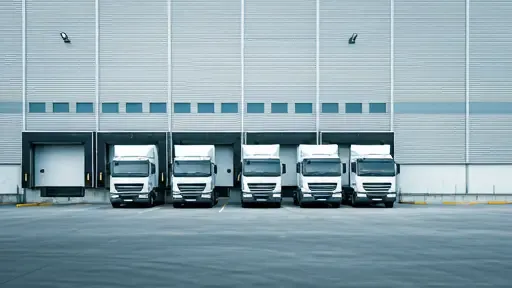
Location and access are another easily-missed angle. It looks like an inside-the-warehouse matter, but whether trucks can get in smoothly, whether the dock is large enough and whether there are rush-hour traffic limits all directly decide your loading efficiency. For large volumes or high frequency, ask about the vehicle route and the delivery windows - do not just read the rent sheet.
One comparison habit is worth more than any list of names: do not compare quotes in isolation, compare plans against the same requirement. Write your needs as one short brief and send it to several providers, so each one answers on the same baseline. Only then does the gap between them mean anything. Otherwise everyone answers a different question and you end up deciding on gut feel - the biggest risk of all.
Minimum rental threshold is itself a filter. Some sites only take whole-warehouse leases and will not look at your dozen cartons; others specialise in small units and large space is not their business. Matching the threshold to your own volume is far more efficient than pushing one requirement everywhere, and it spares you being waved off with 'we don't take small orders'.
Here is the hidden metric: turnover. Goods that sit untouched for a month and goods that move every day demand completely different things from a warehouse. Frequent in-and-out needs strong sorting and outbound capability; long static storage cares more about conditions and stable fees. Spell out your turnover rhythm so they can plan properly - otherwise you are paying a static-warehouse price for dynamic service work.
One more long-view point: whether you can transition smoothly at contract end or when your business changes also matters. A good provider will not block or suddenly hike prices when you renew, downsize or switch zones, because they know reputation is earned over time. That decent-exit detail often says more than the sweet talk at signing.